Six Pilgrims From Yathrib

🌿 Seeds of Faith Sprout Outside Makkah

Although most of the Makkan pagans rejected the message of the Prophet Muhammad ﷺ, a few sincere souls outside of Makkah embraced Islam. Their stories reflect the power of truth and the beauty of faith.

________________________________________

Suwayd bin Samit (رضي الله عنه)

A poet from Yathrib (modern-day Madinah), Suwayd came to Makkah to perform pilgrimage. When the Prophet Muhammad ﷺ invited him to Islam, Suwayd recited some of his own verses to the Prophet ﷺ. In response, the Prophet ﷺ recited verses from the Qur’an.

Overwhelmed by their beauty, Suwayd said,
“I have never heard words so sublime.”
He immediately embraced Islam. Later, he was martyred during the fighting between the tribes of Aus and Khazraj.

________________________________________

Ayas bin Mu‘adh (رضي الله عنه)

Ayas was also from Yathrib, belonging to the tribe of Aus. He came to Makkah with his people seeking help against their rivals, the Khazraj. When the Prophet Muhammad ﷺ invited him to Islam and recited verses from the Qur’an, Ayas exclaimed:
“By Allah, this is far better than what we came here for.”
However, his companion Abul Husayr threw pebbles in his face and rebuked him, saying,
“Leave this! We did not come for that.”

Ayas fell silent but kept the words of the Prophet ﷺ in his heart. When he returned to Yathrib, he fell ill. Just before his death, he was heard glorifying Allah, leaving little doubt that he had died a believer.

________________________________________

Abu Dharr Al-Ghifari (رضي الله عنه)

Abu Dharr had heard of Muhammad ﷺ through Suwayd bin Samit (رضي الله عنه) and Ayas bin Mu‘adh (رضي الله عنه), and his heart yearned to know more. He first sent his brother to Makkah to investigate the Prophet’s message. Unsatisfied with his brother’s vague report, Abu Dharr set out himself.

Upon arriving in Makkah, he was cautious and did not ask openly about the Prophet ﷺ, fearing the Quraysh. Eventually, ‘Ali ibn Abi Talib (رضي الله عنه) found him and brought him to the Prophet ﷺ. Upon hearing the message of Islam, Abu Dharr’s heart filled with conviction, and he accepted the faith immediately.

Filled with zeal, he went straight to the Ka‘bah and publicly declared his Islam. The Quraysh attacked him violently, and only the intervention of Al-‘Abbas (رضي الله عنه), the Prophet’s uncle, saved him. The next day, Abu Dharr repeated his declaration and was again rescued by Al-‘Abbas (رضي الله عنه).

Abu Dharr (رضي الله عنه) then returned to his tribe, Banu Ghifar, calling them to Islam. He remained steadfast until he later migrated to Madinah.

________________________________________

Tufayl bin ‘Amr Ad-Dausi (رضي الله عنه)

A well-known poet and chieftain of the Daus tribe near Yemen, Tufayl visited Makkah eleven years after the Prophet’s mission began. The Quraysh warned him against listening to Muhammad ﷺ, saying his words were “bewitching.” Out of caution, Tufayl stuffed cotton in his ears before entering the Ka‘bah.

There, he saw the Prophet Muhammad ﷺ praying and became curious.
“I am a poet,” he thought, “I can judge words for myself. If what he says is good, I will accept it.”

He removed the cotton and listened to the Prophet’s recitation. The beauty and truth of the Qur’an moved him deeply. Later, he followed the Prophet ﷺ home and asked him to explain Islam. After hearing the message, he accepted Islam immediately.
Tufayl (رضي الله عنه) then said,
“My people trust me. I will call them to Islam. Please ask Allah to give me a sign that will help them believe me.”

The Prophet ﷺ supplicated for him, and Tufayl’s face began to shine with light as a divine sign. Though his people were initially hesitant, his father and wife embraced Islam, followed later by many others. By the time he migrated to Madinah, seventy to eighty families from his tribe had become Muslim and accompanied him.

________________________________________

Dhimad Al-Azdi (رضي الله عنه)

Dhimad was a skilled exorcist from the Azd Shanwah tribe in Yemen. When he arrived in Makkah, he heard rumors that Muhammad ﷺ was insane. He approached the Prophet ﷺ and offered to cure him.

The Prophet ﷺ calmly said:
“All praise is due to Allah. We praise Him and seek His help. Whomever Allah guides, none can mislead, and whomever He allows to go astray, none can guide. I bear witness that there is no god but Allah, and that Muhammad is His Messenger.”

Dhimad was astonished by the eloquence and depth of these words. He asked the Prophet ﷺ to repeat them three times, and then declared:
“I have heard the words of sorcerers, soothsayers, and poets, but never anything like this!”
He immediately accepted Islam and pledged allegiance to the Prophet ﷺ.

________________________________________

Six Pilgrims from Yathrib (رضي الله عنهم)

In the eleventh year of the Prophet’s mission, six men from the Khazraj tribe of Yathrib came to Makkah for pilgrimage. Their names were:
• As‘ad bin Zurara (رضي الله عنه)
• ‘Awf bin Harith bin Rifa‘ah (رضي الله عنه)
• Rafi‘ bin Malik bin ‘Aylan (رضي الله عنه)
• Qutbah bin ‘Amir (رضي الله عنه)
• ‘Uqbah bin Nafi‘ (رضي الله عنه)
• Jabir bin ‘Abdullah bin Ri’ab (رضي الله عنه)
The Prophet Muhammad ﷺ met them at Mina and invited them to Islam. He recited verses from the Qur’an, and their hearts recognized the truth.
They said to one another:
“This is surely the Prophet the Jews have been threatening us with. Let us accept him before they do.”
All six embraced Islam and promised to spread the message among their people, pledging to meet the Prophet ﷺ again the following year.

________________________________________

🌙 The First Pledge of Al-‘Aqabah

The next year, five of the six returned, bringing along five new converts from the Khazraj and two from the Aus. The new believers were:
• Mu‘adh bin Harith (رضي الله عنه)
• Zakwan bin ‘Abdul Qays (رضي الله عنه)
• ‘Ubada bin As-Samit (رضي الله عنه)
• Yazeed bin Tha‘labah (رضي الله عنه)
• ‘Abbas bin ‘Ubada bin Fadlah (رضي الله عنه)
• Abul Haytham bin At-Tayhan (رضي الله عنه)
• ‘Uwaym bin Sa‘idah (رضي الله عنه)

They met the Prophet Muhammad ﷺ again at Mina, where he taught them more about Islam. They pledged allegiance to him in what became known as the First Pledge of Al-‘Aqabah.

They promised not to associate partners with Allah, not to steal, fornicate, kill their children, slander others, or disobey the Prophet ﷺ in what was right and good. Those who kept their pledge would have their reward from Allah, and those who broke it would face punishment in this world or the Hereafter as Allah willed.

________________________________________

🌸 Islam Spreads in Yathrib

After the pledge, the Prophet Muhammad ﷺ sent Mus‘ab bin ‘Umayr (رضي الله عنه) with them to teach the Qur’an and guide the people of Yathrib. Mus‘ab stayed with As‘ad bin Zurara (رضي الله عنه), and together they began inviting others to Islam.
One day, Sa‘d bin Mu‘adh (رضي الله عنه), the chief of the Aus tribe, sent his cousin Usayd bin Hudayr (رضي الله عنه) to confront them. With his spear in hand, Usayd approached them angrily.

Mus‘ab (رضي الله عنه) said gently,
“Sit and listen to what we have to say. If you like it, accept it; if not, we will stop.”
Usayd agreed, listened to the Qur’an, and was moved to tears. He accepted Islam on the spot and returned to Sa‘d, who soon came himself. After hearing Mus‘ab (رضي الله عنه), Sa‘d bin Mu‘adh (رضي الله عنه) too embraced Islam.

He returned to his tribe and declared:
“O Banu ‘Abd Al-Ashhal! How do you regard me among you?”
They replied, “You are our chief and the wisest among us.”
He said, “Then know that I will not speak to anyone who does not believe in Allah and His Messenger.”

That very day, his entire tribe accepted Islam—except one man, Usayram (رضي الله عنه), who embraced Islam later during the Battle of Uhud and was martyred before he had performed even one prayer.

When Mus‘ab bin ‘Umayr (رضي الله عنه) returned to Makkah before the next Hajj, he joyfully informed the Prophet Muhammad ﷺ of how Allah had guided the people of Yathrib. The Prophet ﷺ was overjoyed at the news.

The Israa and the Mi’raaj

The Night Journey and Ascension (Al-Israa wal-Mi’raaj)

Two of the most significant and extraordinary events in the blessed life of the Prophet Muhammad ﷺ were Al-Israa (the Night Journey) and Al-Mi’raaj (the Ascension).
Al-Israa refers to the miraculous night when Allah took His Messenger ﷺ from the Ka’bah in Makkah to Bait Al-Maqdis (the Sacred House of Worship, i.e. Solomon’s Temple) in Jerusalem. Al-Mi’raaj refers to the Prophet’s ascension from Jerusalem up through the heavens.

The Qur’an mentions Al-Israa in the following verse:
“Glory be to Him Who took His slave on a journey by night from the Sacred Mosque to the Farthest Mosque whose surroundings We have blessed, in order that We might show him some of Our signs. Verily, He is the All-Hearing, the All-Seeing.”
(Surah Al-Israa, 17:1)

Some scholars also interpret verses 7–18 of Surah An-Najm as referring to the Mi’raaj. There are differing opinions regarding when these events took place—some say during the first year of Prophethood, others say on the 17th of Ramadan in the twelfth year, or in Muharram or Rabi’ Al-Awwal of the thirteenth year of Prophethood.

________________________________________

The Miraculous Journey

The story of the Night Journey and Ascension is both wondrous and filled with lessons. One night, the Angel Jibreel (Gabriel) descended upon the Ka’bah with a creature called Al-Buraq—an animal larger than a donkey but smaller than a mule, able to reach the farthest horizon in a single stride. The Prophet Muhammad ﷺ mounted Al-Buraq, accompanied by Jibreel, and they traveled to Jerusalem.

Upon arrival, the Prophet ﷺ tied Al-Buraq to the same post where earlier prophets had tethered their mounts, then entered the Sacred Mosque. Inside, he found gathered all the previous prophets, whom he led in prayer.

Jibreel then presented two vessels—one filled with wine and the other with milk. The Prophet ﷺ chose the milk, upon which Jibreel said:
“You have chosen the natural and pure path. You and your followers will be rightly guided. Had you chosen the wine, your followers would have gone astray.”

________________________________________

The Ascension through the Heavens

After this, the Prophet ﷺ began his ascension (Mi’raaj).

• First Heaven: He met Adam (عليه السلام), who greeted him with peace and testified that Muhammad ﷺ was indeed the Messenger of Allah. Adam looked to his right and smiled, seeing the souls of the believers, then to his left and wept for the disbelievers.

• Second Heaven: The Prophet ﷺ met Yahya ibn Zakariya (John, son of Zechariah) and ‘Isa ibn Maryam (Jesus, son of Mary)—peace be upon them both. They exchanged greetings and affirmed his prophethood.

• Third Heaven: He met Yusuf (Joseph) عليه السلام, who also greeted him and testified to his prophethood.

• Fourth Heaven: He met Idrees (Enoch) عليه السلام, who likewise greeted him and confirmed his mission.

• Fifth Heaven: He met Haroon (Aaron) عليه السلام, who did the same.

• Sixth Heaven: He met Musa (Moses) عليه السلام. After greeting him and affirming his prophethood, Musa began to weep. When asked why, he said:
“I weep because a young man was sent as a prophet after me, and more of his followers will enter Paradise than mine.”

• Seventh Heaven: He met Ibraheem (Abraham) عليه السلام, resting against Bait Al-Ma’mur, a heavenly house of worship around which seventy thousand angels circumambulate daily, never to return again. Ibraheem عليه السلام also greeted him and confirmed his prophethood.

________________________________________

At Sidrat Al-Muntaha

The Prophet ﷺ was then taken to Sidrat Al-Muntaha, a magnificent tree in Paradise whose leaves were as large as elephant ears and its fruits like great pitchers. Golden moths adorned it, and no words can describe its beauty.

From there, the Prophet ﷺ was brought into the divine presence of Allah Almighty. Though human eyes cannot behold Allah’s majesty, the Prophet ﷺ stood close to Him. Allah then ordained fifty daily prayers for his followers.

As the Prophet ﷺ descended, Musa عليه السلام asked what Allah had commanded. When he heard “fifty prayers,” Musa advised him to ask for a reduction, saying, “Your followers will not be able to bear it.”

The Prophet ﷺ returned and requested a reduction. Allah reduced them to ten, and after further intercession between Musa and the Prophet ﷺ, the number was finally reduced to five daily prayers, with the reward of fifty.

When Musa again urged him to seek another reduction, the Prophet ﷺ replied:
“I feel ashamed before my Lord.”
A voice then declared:
“I have decreed My obligation and made it easy for My servants. Whoever performs these five prayers will receive the reward of fifty. My word does not change.”

________________________________________

The Return and the Test of Faith

The Prophet ﷺ returned to Makkah before dawn and shared the details of his miraculous journey. The Quraysh disbelievers mocked and ridiculed him. They ran to Abu Bakr (رضي الله عنه), expecting him to reject the story. But Abu Bakr (رضي الله عنه) replied:
“If he said so, then it is true.”

He explained that since he already believed Muhammad ﷺ received revelation from Allah through an angel, there was no reason to doubt this miracle. From that day forward, Abu Bakr (رضي الله عنه) was honored with the title As-Siddeeq—“the Truthful One.”
To challenge the Prophet ﷺ, the Quraysh asked him for details about Jerusalem and its mosque. The Prophet ﷺ described everything with perfect accuracy. He even told them of a caravan traveling from Jerusalem to Makkah, describing its camels and predicting its exact arrival time. When the caravan appeared as he said, they were silenced—but still refused to believe.

That same morning, Jibreel descended and taught the Prophet ﷺ how to perform the five daily prayers. From that day onward, Muslims prayed five times daily instead of only morning and evening prayers.

________________________________________

Inviting the Tribes to Islam

Once again, the Prophet Muhammad ﷺ began spreading the message of Allah beyond Makkah. Every year, tribes from across Arabia gathered at the great fairs of Ukaz, Mujanna, and Dhul Majaz.

Ukaz, located between Nakhlah and Ta’if, hosted markets during the first twenty days of Dhul Qa’dah. After that, tribes moved to Mujanna, and finally to Dhul Majaz, near Mount Rahmah in the plain of Arafah, during the first eight days of Dhul Hijjah. The pilgrimage (Hajj) rites followed soon after.

Taking advantage of these large gatherings, the Prophet ﷺ approached many tribes with the message of Allah’s Oneness and his own prophethood. Among those he invited were Banu Amir ibn Sa’sa’ah, Banu Abs, Banu Nadhar, Banu Al-Baka’a, Kinda, Kalb, Banu Al-Harith ibn Ka’b, Udhrah, and Hadhramaut.

None accepted his invitation at that time, though their responses varied. Some declined politely, others demanded succession after his death, some pointed out that his own tribe had rejected him, and a few insulted him. The tribe of Banu Haneefa, from whom the false prophet Musaylimah Al-Kadhdhab later arose, was particularly rude and disrespectful.

The Year of Sorrow and the Prophet’s Visit to Ta’if (Part 2)

The Polytheists Demand a Sign

The pagan leaders of Makkah had already been shown many clear signs affirming the truthfulness of Muhammed ﷺ as the Messenger of Allah, yet they stubbornly ignored them. Despite their refusal to accept any proof, they demanded that Muhammed ﷺ show them a clear miracle from Allah — not in sincerity, but only to mock and humiliate him before the people.

One day, as the Quraysh gathered at the Ka‘bah, they sent for the Prophet ﷺ, who came at once, thinking they wished to speak about embracing Islam. But instead, they repeated their old demands. They said, “O Muhammed, you claim to be a Prophet, yet the Prophets before you came with clear signs — Musa (Moses) had his miraculous staff, Saleh had the she-camel, and ‘Isa (Jesus) raised the dead. Show us something similar to prove that you are a true Prophet.”

They failed to understand that Prophets do not perform miracles of their own will; rather, it is Allah Who manifests such signs through them. Spiritually blind and deaf, as the Qur’an describes them, they refused to see the countless signs of Allah in His creation and in the Qur’an itself. They only desired to see acts of spectacle and illusion.

Thus, they challenged the Prophet ﷺ to perform one of several feats:
to turn Mount Safa into a mountain of gold, to remove the surrounding mountains and create a fertile plain, to make a spring gush forth, or even to bring their ancestors back to life so that they might testify to his truthfulness.

Allah mentions their arrogance in the Qur’an:
“We shall not believe in you until you cause a spring to gush forth for us from the earth, or until you have a garden of date palms and grapevines, and you cause rivers to flow abundantly within them, or you cause the sky to fall upon us in pieces as you claim, or you bring Allah and the angels before us face to face, or you ascend into the heavens — and even then, we will not believe in your ascension until you bring us a book we can read.”
(Surah Al-Isra’, 17:90–93)

The Quraysh swore that if the Prophet ﷺ showed them one of these signs, they would believe. Allah mentions their false oaths:
“They swear their strongest oaths by Allah that if they were given a sign, they would believe in it.”
(Surah Al-An‘am, 6:109)

So the Prophet ﷺ prayed to Allah to show them a sign. Jibreel (عليه السلام) descended with Allah’s message, giving the Prophet ﷺ a choice:
If Allah sent a miracle as they demanded and they still disbelieved, they would face the most severe punishment ever given to mankind. Alternatively, the miracle could be withheld, leaving the door of repentance and mercy open for them.
Out of his compassion for his people, Muhammed ﷺ said to Jibreel (عليه السلام):
“Let the door of repentance and mercy remain open.”
Allah revealed:
“Say, ‘Glory be to my Lord! Am I anything more than a human messenger?’”
(Surah Al-Isra’, 17:93)
This made it clear that Muhammed ﷺ, like all prophets before him, had no independent power to perform miracles — every sign comes only by the will of Allah.
Allah also said:
“Say, ‘All signs are in the power of Allah. But what will make you realize that even if every sign were shown to them, they would not believe?’”
(Surah Al-An‘am, 6:109)
And again:
“Even if We sent down the angels to them, and the dead spoke to them, and We gathered all things before their very eyes, they would not believe unless Allah so willed.”
(Surah Al-An‘am, 6:111)
Thus, Allah instructed the Prophet ﷺ and the believers to stop seeking to justify their faith before those whose hearts were sealed. Guidance rests only with Allah.

________________________________________

The Splitting of the Moon

When the Quraysh saw that no great spectacle had appeared, they thought they had found a weakness in Muhammed ﷺ. They mocked him, saying, “If you are truly a Prophet, then show us any sign — anything at all!”

The Prophet ﷺ prayed to Allah once more, asking for a sign that would leave no doubt. In answer to his prayer, Allah revealed a miraculous sign: the moon split into two distinct halves, so that one half appeared on one side of Mount Hira and the other on the opposite side.

The Prophet ﷺ said to them, “Behold — and bear witness!”
The Quraysh were astonished at what they saw. For a moment, disbelief left them speechless. Then they sneered, “This is nothing but sorcery from the son of Abu Kabsha! Perhaps he has bewitched our eyes. Let us wait until travellers arrive from other regions — if they too saw it, then the matter is true.”

When travellers later arrived in Makkah, they confirmed that they too had seen the moon split in two that night. The truth was undeniable, yet the Quraysh persisted in their stubborn disbelief.

Allah refers to this event in the Qur’an:
“The Hour has drawn near, and the moon has split. Yet whenever they see a sign, they turn away and say, ‘Continuous magic!’”
(Surah Al-Qamar, 54:1–2)

Thus, even when the truth was displayed plainly before their eyes, their pride and arrogance prevented them from accepting the message of Muhammed ﷺ.

The Year of Sorrow and the Prophet’s Visit to Ta’if

The Year of Sorrow

The Passing of Abu Talib

As Abu Talib’s illness worsened and his final moments approached, Prophet Muhammed ﷺ came to his bedside. There, he found Abu Jahl and Abdullah bin Umayyah sitting beside his dying uncle.

Undeterred by their presence, the Prophet ﷺ urged his beloved uncle,
“My uncle, say La ilaha illallah (There is no god but Allah). It is a simple phrase, and if you say it, I will plead with Allah for your salvation.”

But the two pagans refused to stay silent. They said,
“Abu Talib, will you turn away from the religion of Abdul Muttalib?”
Despite their interference, Prophet Muhammed ﷺ continued to encourage his uncle, hoping he would accept faith. Finally, he said,
“I will ask Allah to forgive you until I am forbidden to do so.”
Soon after, Allah revealed the verse:
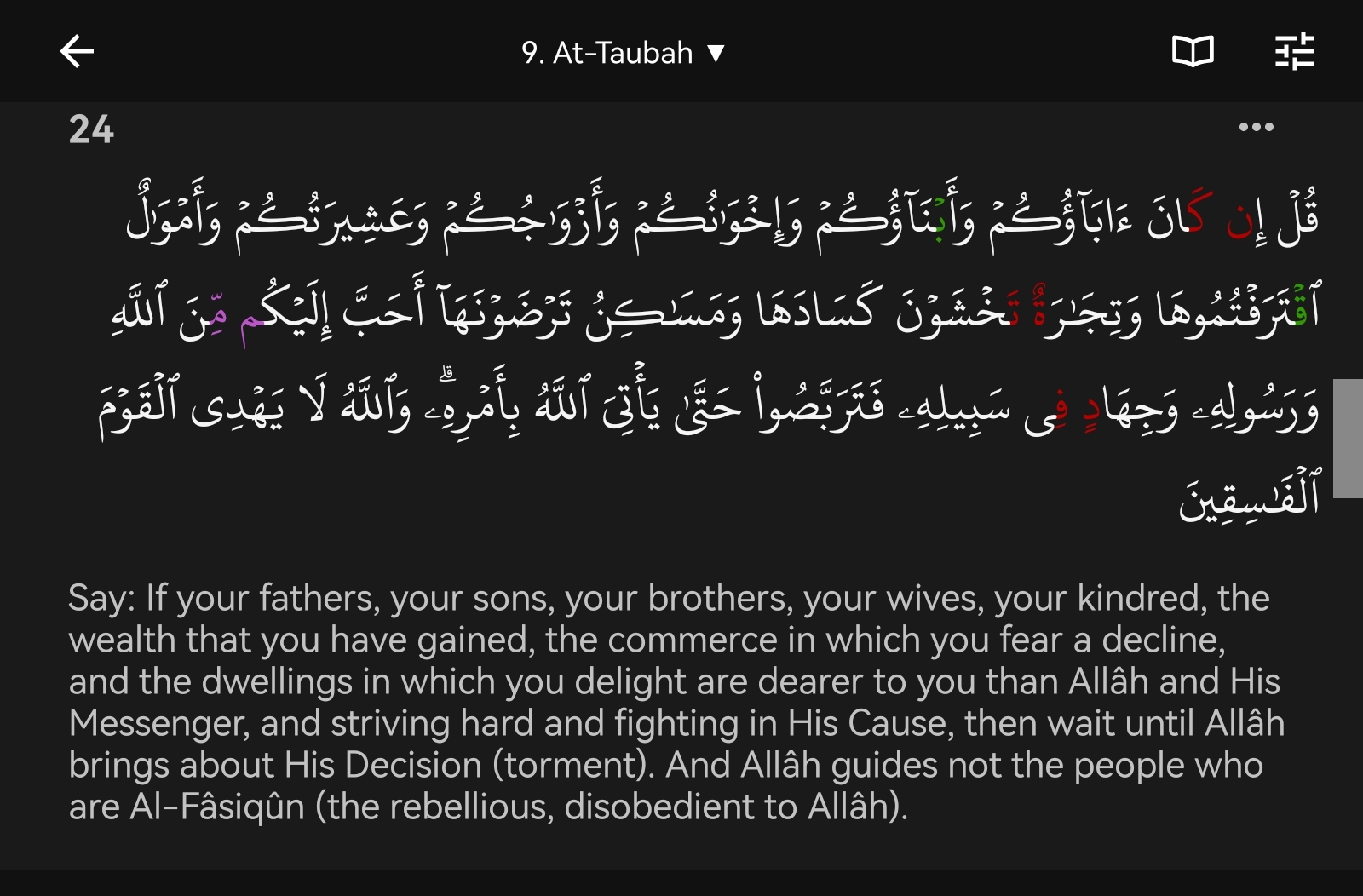
“It is not fitting for the Prophet and those who believe to ask forgiveness for the polytheists, even if they are close relatives, after it has become clear to them that they are companions of the Fire.”
(Surah At-Tawbah, 9:113)

Abu Talib passed away in either Rajab or Ramadan, ten years after the Prophet ﷺ began his mission. Although he had always protected and defended the Prophet ﷺ, he died following the faith of his forefathers.
Later, Al-‘Abbas (رضي الله عنه) — another uncle of the Prophet ﷺ — asked,
“O Messenger of Allah, how could you help Abu Talib, the one who supported you and defended you?”

________________________________________

The Passing of Khadijah (رضي الله عنها)

Just two months and three days after the death of Abu Talib, another heartbreak struck. The Prophet’s beloved wife, Khadijah bint Khuwaylid (رضي الله عنها), passed away.
She was his loyal companion, trusted advisor, and the first person to believe in his message. She was known as “Umm al-Mu’minin” (Mother of the Believers).

Prophet Muhammed ﷺ once said about her:
“When no one believed in me, she believed in me. When people accused me of lying, she affirmed my truthfulness. When people deprived me, she shared her wealth with me. Allah granted me children through her, and none through my other wives.”
Once, Khadijah (رضي الله عنها) came bringing food to the Prophet ﷺ while he was receiving revelation from Jibreel (عليه السلام). The angel said,
“O Prophet, here is Khadijah coming to you with food. Convey to her greetings from her Lord, and give her glad tidings of a palace in Paradise made of pearls, where there will be neither noise nor fatigue.”

Even long after her death, the Prophet ﷺ would often remember her, speak of her virtues, and pray for Allah’s mercy upon her soul. Whenever he slaughtered a lamb, he would send portions of the meat to her friends. Thinking of her, he would often weep out of love and longing.

________________________________________

Sorrow Upon Sorrow

With the passing of Abu Talib and Khadijah (رضي الله عنها), the Prophet ﷺ lost his two greatest supporters. The Quraysh, emboldened by their deaths, began to insult and ridicule him more openly.

Once, a man from Quraysh threw dust upon the Prophet’s blessed head. One of his daughters rushed to clean it off, weeping bitterly at her father’s suffering. The Prophet ﷺ gently comforted her, saying,
“Dear daughter, do not cry. Allah will protect your father.”
Later, the Prophet ﷺ said that only after Abu Talib’s death did the insults of the Quraysh begin to truly wound him.

________________________________________

The Marriages to Saudah and Aishah (رضي الله عنهما)

About a month after Khadijah (رضي الله عنها) passed away, Prophet Muhammed ﷺ married Saudah bint Zam‘ah (رضي الله عنها) during the month of Shawwal. She had been married to her cousin Sakran bin ‘Amr (رضي الله عنه), and together they were among the early Muslims who migrated to Abyssinia. After his death, the Prophet ﷺ married her once her mourning period ended.

A year later, again in Shawwal, the Prophet ﷺ married Aishah bint Abi Bakr (رضي الله عنها). The marriage was solemnised in Makkah when she was six, and she joined him as his wife at the age of nine.

Aishah (رضي الله عنها) was the most beloved of his wives and one of the greatest female scholars of Islam. Her deep knowledge and vivid recollections gave Muslims precious insights into the Prophet’s ﷺ private life — his tenderness, humor, and devotion. The love and trust between them, as well as the trials they endured together, reveal the depth of their remarkable relationship.

________________________________________

The Journey to Ta’if

After these sorrows, Prophet Muhammed ﷺ decided to take the message of Islam to neighboring tribes. He set out on foot to Ta’if, about thirty miles east of Makkah, accompanied by his devoted companion and former servant, Zayd bin Harithah (رضي الله عنه).

Along the way, the Prophet ﷺ invited every tribe he met to accept Islam. When he finally reached Ta’if, he met three brothers — the chieftains of the Thaqif tribe. He called them to Islam and asked for their help in spreading the message. They, however, responded with mockery and arrogance.

Still hopeful, the Prophet ﷺ continued preaching in the town for several days, but no one accepted his message. Instead, the leaders incited their servants, slaves, and even children to throw stones and chase him out. His blessed feet began to bleed, and Zayd (رضي الله عنه) tried to shield him, suffering several injuries himself.

The Prophet ﷺ and Zayd (رضي الله عنه) eventually took refuge three miles away, in an orchard belonging to ‘Utbah and Shaybah, the sons of Rabi‘ah.

There, beneath the shade of a wall covered in grapevines, the Prophet ﷺ raised his hands and made the heartfelt Du‘aa al-Mustad‘afeen (The Supplication of the Oppressed):
“O Allah, I complain to You of my weakness, my lack of means, and my humiliation before the people. You are the Most Merciful — the Lord of the weak, and You are my Lord.
To whom have You entrusted me? To an enemy who will mistreat me?

As long as You are not angry with me, I do not mind. Yet Your mercy is more than enough for me.
I seek refuge in the light of Your Face by which all darkness is dispelled and every matter is set right — lest Your anger descend upon me.
I desire only Your pleasure. There is no power and no might except through You.”
The sons of Rabi‘ah, seeing the Prophet ﷺ resting under their vines, were moved by the sight of his pain and exhaustion. They sent their servant Addas to him with a bunch of grapes.

The Prophet ﷺ said “Bismillah” before eating. Addas, surprised, remarked, “People of this land never say such words!”

The Prophet ﷺ asked him, “Where are you from, and what is your religion?”
Addas replied, “I am a Christian from Nineveh.”
The Prophet ﷺ said, “From the city of the righteous man Yunus bin Matta?”
Addas asked, “How do you know him?”

The Prophet ﷺ replied, “He is my brother — he was a prophet, and so am I.”
The Prophet ﷺ then recited verses from the Qur’an about Prophet Yunus (عليه السلام). Addas was so moved that he embraced Islam immediately.

________________________________________

The Angel of the Mountains

As the Prophet ﷺ and Zayd (رضي الله عنه) continued their journey back to Makkah, they reached Qarn al-Manazil. There, a cloud appeared above them, and from it descended Jibreel (عليه السلام) along with another angel.
Jibreel (عليه السلام) said,
“Allah has sent to you the angel of the mountains. He is at your command.”
The angel said,
“O Muhammad ﷺ, if you wish, I will crush the people of Ta’if between these two mountains.”
But Prophet Muhammed ﷺ, ever merciful and patient, replied,
“No. I hope that Allah will bring forth from their descendants people who will worship Allah alone without associating partners with Him.”
This response reflected his deep mercy and unwavering hope.

________________________________________

The Jinn Hear the Qur’an

The Prophet ﷺ then continued to Nakhlah, where he stayed for a few days. One morning, while reciting Fajr prayer, a group of jinn heard him reciting the Qur’an. They listened intently, and when he finished, they returned to their own people warning them of disbelief and calling them to faith.
The Prophet ﷺ did not know of their presence until Allah revealed the event in the Qur’an, in Surah Al-Ahqaf and Surah Al-Jinn — confirming that those jinn had accepted Islam.
________________________________________

Return to Makkah

When the Prophet ﷺ neared Makkah, he hesitated to enter without protection. He sent a messenger to Akhnas bin Shurayq, asking for refuge, but Akhnas declined, saying he was allied with Quraysh.

He then sent a message to Suhayl bin ‘Amr (رضي الله عنه), but Suhayl too refused, as his tribe opposed the Prophet ﷺ.
Finally, the Prophet ﷺ sent a request to Mut‘im bin ‘Adiy (رضي الله عنه), whose grandfather, Naufal, was the brother of Hashim ibn ‘Abd Manaf, the Prophet’s great-grandfather. Honoring their kinship, Mut‘im (رضي الله عنه)** agreed to protect him.
He and his sons armed themselves and escorted Prophet Muhammed ﷺ safely into Makkah. The Prophet ﷺ entered the Ka‘bah, performed tawaf, prayed two rak‘ahs, and then returned home under their guard.

When the Quraysh saw this, Abu Jahl said, “We shall honor the protection of Mut‘im bin ‘Adiy (رضي الله عنه).” And thus, by Allah’s will, the Prophet ﷺ reentered Makkah safely.

The Boycott

The Total Boycott

The polytheists of Quraysh would not give up easily. Determined to counter Abu Talib’s successful protection of his nephew, they held a meeting at Haneef Banu Kinana to devise a new plan. After much discussion, they decided to impose a complete social and economic boycott on the clans of Banu Hashim and Banu Al-Muttalib.

According to the agreement, no one among the Quraysh would marry their daughters, trade with them, associate with them, or accept any peace terms from them until they handed over Prophet
Muhammed ﷺ.

When the terms were finalized, Bagheed bin ‘Amir bin Hashim wrote the pact and it was hung inside the Ka‘bah. But soon after, Allah caused Bagheed’s hand — or at least some of his fingers — to become paralyzed.

The boycott proved devastating. The Muslims and all members of Banu Hashim and Banu Al-Muttalib, whether Muslim or not, were forced to withdraw from Makkah and live in the narrow valley of Shi‘b Abi Talib. Only Abu Lahab refused to join them.
Cut off from trade and supplies, they were reduced to eating leaves and roots. The cries of hungry children echoed through the valley. Only a few compassionate souls dared to secretly send food, fearing punishment if caught. Among them was Hakim bin Hizam (رضي الله عنه), who would occasionally manage to send flour to his aunt, Khadijah (رضي الله عنها).

Caravans would pass near the valley, but the exiled Muslims could only approach them during the sacred months, when fighting was forbidden. Even then, the Quraysh would offer merchants inflated prices so that the Muslims could not afford to buy anything.
Yet despite the unbearable hardship, Prophet Muhammed ﷺ never ceased calling people to Islam. During the pilgrimage season, he would go out to meet the tribes arriving from all over Arabia, inviting them to the worship of Allah alone.

________________________________________

The End of the Boycott

Three long years of starvation and isolation brought Banu Hashim and Banu Al-Muttalib to the brink of despair. But Allah was softening the hearts of some among the Quraysh. Five noblemen, known for their status and sense of honor, began to question the cruelty of the pact.

The first was Hisham bin ‘Amr bin Harith, a respected leader. Saddened by the suffering of his kinsmen, he reflected on the injustice of the situation — while families in Makkah enjoyed comfort, their own relatives were starving to death. Seeing no one willing to end the boycott, Hisham resolved to act.

He approached four other influential men — Zuhair bin Abi Umayyah Al-Makhzoomi, Mut‘im bin ‘Adiy, Abul Bukhtari bin Hisham, and Zam‘ah bin Al-Aswad — and appealed to their sense of kinship and compassion. His words moved them, and all five agreed that the cruel document hanging in the Ka‘bah must be destroyed.
The next morning, when the Quraysh gathered around the Ka‘bah, Zuhair stood before them after performing tawaf and declared loudly,
“O people of Makkah! Shall we eat and drink in peace while the people of Banu Hashim die of hunger, unable to buy or sell? By Allah, I will not rest until this unjust decree is torn to pieces!”
Abu Jahl angrily replied, “You are wrong! By Allah, it shall not be torn!”

But Zam‘ah retorted, “No, Abu Jahl — you are wrong. We were never in agreement when it was written.”
Then Abul Bukhtari spoke: “Zam‘ah is right. We do not support what is written in that document, and we want nothing to do with it.”
Mut‘im bin ‘Adiy added, “You have all spoken the truth. There is no blame in rejecting this injustice. We free ourselves before Allah from any part in it.”

Finally, Hisham expressed his agreement with them all.
Abu Jahl, suspicious of this sudden unity, shouted, “This has all been arranged beforehand! There’s a plot behind your words!”
At that moment, Abu Talib entered the scene. He had come to the Ka‘bah to tell the Quraysh about a revelation received by Prophet Muhammed ﷺ. Standing before the assembly, he announced that Allah had revealed to the Prophet ﷺ that termites had eaten the parchment inside the Ka‘bah, leaving only the words “In Your Name, O Allah” (Bismika Allahumma).

Abu Talib then challenged them:
“If my nephew’s claim is false, I will no longer protect him. But if he speaks the truth, then you must end this boycott.”
The Quraysh accepted his challenge. When Mut‘im bin ‘Adiy entered the Ka‘bah to retrieve the parchment, they saw that it had indeed been eaten away — only the words “Bismika Allahumma” remained.
It was another clear sign from Allah, but still the Quraysh refused to accept the truth of Islam. However, they were too embarrassed to continue the boycott, and so it was finally lifted. Prophet Muhammed ﷺ, his Companions (رضي الله عنهم), and their clans returned to Makkah.

________________________________________

The Quraysh Petition Abu Talib

A few months after the boycott ended, Abu Talib fell gravely ill. By then he was over eighty years old, and the Quraysh believed his death was near. While they saw this as an opportunity, they also feared that harming Prophet Muhammed ﷺ after his uncle’s death would damage their reputation among other tribes.
So, they decided to make one last attempt at negotiation. They came to Abu Talib and said:
“Ask your nephew to stop speaking against our gods, and we will stop opposing his religion.”
Wanting to ensure his nephew’s safety after his death, Abu Talib called Prophet Muhammed ﷺ to his bedside and relayed their proposal.
The Prophet ﷺ listened calmly and replied,
“O Uncle! I ask them only for one word. If they accept this one thing, all of Arabia will follow them, and the non-Arabs will pay them tribute.”

The Quraysh were intrigued. “Only one word?” they asked. “We are ready to accept ten such things. What is it?”
Prophet Muhammed ﷺ said,
“Say: La ilaha illallah — there is no deity except Allah.”
The Quraysh were astonished. “What! Has he made all our gods into one? This is something strange indeed!”
And with that, they turned away once again, rejecting the truth that had been made so clear to them.

The Quraish Attempt to Negotiate With Rasulullah ﷺ

An Offer No Ordinary Man Could Refuse

Once again, the Makkan pagans decided it was time to hold discussions about the growing influence of Islam. The conversions of Hamzah (RA) and Umar (RA) had dramatically shifted the balance of power, and the Quraysh realized that their dominance was quickly slipping away.

Utbah bin Rabi‘ah, a respected leader from the clan of Banu Abd Shams, addressed the Quraysh council:
“O people of Quraysh, shall I not speak to Muhammad ﷺ and negotiate with him? Perhaps he will accept my offer, and we will be rid of this problem.”
The group agreed, and Utbah went to meet Muhammed ﷺ, who was sitting near the Ka‘bah.

Utbah said,
“O my nephew! You hold a great position in this city. You are of noble lineage and among the best of us. But you have brought something serious—you have divided your people, mocked our gods, criticized our faith, and rejected the ways of our forefathers. Now, listen to me. I will make you a few offers; perhaps one will please you.”

The Prophet ﷺ said, “O Abu al-Waleed, go ahead, I am listening.”
Utbah continued:
“If it is wealth you seek, we will gather for you so much that you will become the richest among us.
If it is honor you desire, we will make you our leader.
If you wish to be a king, we will crown you.
If it is marriage you seek, choose any woman from among the Quraysh, and we will give you ten such women.
And if you are afflicted by a spirit, we will call the best physicians to treat you until you are cured.”
The Prophet ﷺ asked, “Is that all you have to say?”
Utbah replied, “Yes.”
Then the Prophet ﷺ said, “Now listen to me.”
He began reciting from Surah Fussilat:
“Haa-Meem. A revelation from Allah, the Most Gracious, the Most Merciful.

A Book whose verses are explained in detail — a Qur’an in Arabic for a people who understand — giving glad tidings and warnings, yet most of them turn away and do not listen…”
(Qur’an 41:1–5)
As the Prophet ﷺ continued, Utbah listened closely until the verse:
“But if they turn away, say: I have warned you of a thunderbolt like that which struck Aad and Thamood.” (41:13)

Terrified, Utbah placed his hand on the blessed mouth of Muhammed ﷺ and pleaded with him to stop reciting. When the Prophet ﷺ reached a verse requiring prostration, he bowed down in sajdah and then said, “O Abu al-Waleed, you have heard my words. Now decide what you think.”
Utbah returned to the Quraysh, who noticed his expression had completely changed.
“What happened?” they asked.
He replied,
“I have heard words the like of which I have never heard before. By Allah, it is not poetry, not magic, and not the words of a madman. O Quraysh, heed my advice—leave this man alone. If others kill him, your problem is solved. But if he prevails, his victory will be your honor and glory.”
The Quraysh accused Utbah of being bewitched by Muhammed’s words. Utbah calmly replied, “This is my opinion. Do as you wish.”

________________________________________

Bargaining and Rejection

When they saw that Muhammed ﷺ could not be tempted by worldly offers, the Quraysh proposed a compromise. They said,
“Let us worship your God for one year, and you worship our gods for one year. That way, if your religion is true, we will have a share in its blessings, and if ours is true, you will share in it.”
In response, Allah revealed Surah Al-Kafiroon (The Disbelievers):
“Say: O you who reject faith!
I do not worship what you worship,
Nor are you worshippers of what I worship.
I will never worship what you worship,
Nor will you ever worship what I worship.
To you be your religion, and to me mine.” (109:1–6)
Allah further revealed:
“Say: Is it other than Allah you order me to worship, O ignorant ones?” (39:64)
and:
“Say: I am forbidden to worship those whom you call upon besides Allah.” (6:56)
Still, the Quraysh persisted:
“Then bring a different Qur’an, or change this one.”
To this, Allah commanded Muhammed ﷺ to reply:
“It is not for me to change it of my own accord. I only follow what is revealed to me. If I were to disobey my Lord, I fear the punishment of a tremendous Day.” (10:15)
Another revelation reminded the Prophet ﷺ that his duty was only to convey the message, not to compromise:
“They were about to tempt you away from what We revealed to you, hoping you would fabricate something in Our name… Had We not strengthened you, you might have inclined to them slightly. Then We would have made you taste double punishment in life and death…” (17:73–75)

________________________________________

Testing the Prophet ﷺ

Still doubtful, the Quraysh sought advice from the Jewish rabbis in Madinah. The rabbis said, “Ask him three questions. If he answers them, he is a true prophet; if not, he is an imposter.”
1. Ask him about the young men who disappeared long ago (the People of the Cave).
2. Ask him about the great traveler who journeyed to the East and West.
3. Ask him about the nature of the soul.
When these questions were put to Muhammed ﷺ, Surah Al-Kahf (The Cave) was revealed, narrating the story of the youths who took refuge in a cave and were preserved by Allah for centuries, and also describing Dhul-Qarnayn, the righteous ruler who traveled the world.
The third question was answered in Surah Al-Isra:
“They ask you about the spirit. Say: The spirit is of the command of my Lord, and of knowledge, you have been given only a little.” (17:85)

________________________________________

Equality in Islam

Having heard the Prophet ﷺ answer all three questions correctly, the Quraysh realized he was indeed a true Prophet. Yet, they were reluctant to accept Islam alongside the poor and the slaves. They proposed that the Prophet ﷺ grant them special status within the faith.
Eager for their guidance, Muhammed ﷺ might have considered it, but Allah revealed:
“Do not turn away those who call upon their Lord morning and evening, seeking His pleasure. You are not accountable for them, nor they for you. If you drive them away, you will be among the unjust.” (6:52)
This verse abolished all notions of social class in Islam—no Muslim could claim superiority over another except through piety and good deeds.

________________________________________

The Makkans Demand Punishment

The Prophet ﷺ continued warning his people of Allah’s punishment should they persist in disbelief. But instead of fearing, they arrogantly demanded that he hasten the punishment. Allah replied:
“They ask you to hasten the punishment, but Allah will never fail in His promise. Indeed, a day with your Lord is like a thousand years of what you count.” (22:47)
“They ask you to hasten the punishment, but indeed Hell will encompass the disbelievers.” (29:54)
“Do they feel secure that Allah will not cause the earth to swallow them or that punishment will not seize them suddenly while they are unaware?” (16:45–47)
Despite these warnings, the Quraysh remained stubborn. Some demanded miracles, others plotted to kill the Prophet ﷺ.
They even pressured Abu Talib, the Prophet’s uncle, to hand Muhammed ﷺ over to them. Though outwardly calm, Abu Talib knew they were planning his nephew’s assassination. Acting quickly, he gathered the clans of Banu Hashim and Banu al-Muttalib and secured a pledge that they would protect Muhammed ﷺ at all costs.
Only Abu Lahab, another uncle and a sworn enemy of the Prophet ﷺ, refused to join and declared his loyalty to the Quraysh instead.

Hamza (RA) and Umar (RA) Enter Islam

Hamzah bin Abdul Muttalib (RA) Embraces Islam

One day, Abu Jahl passed by Prophet Muhammed ﷺ near Mount Safa. He began hurling insults at him and, according to reports, even struck the Prophet ﷺ on the head with a stone, causing him to bleed. Ever patient, Prophet Muhammed ﷺ did not respond to the abuse.

A slave woman belonging to Abdullah bin Jad’an witnessed the entire scene. Feeling satisfied with his cruelty, Abu Jahl went to the Ka‘bah and sat proudly among the Quraysh.

Soon after, Hamzah bin Abdul Muttalib (RA) returned from a hunting trip, carrying his bow. When the slave woman told him what had happened to his nephew, Hamzah’s anger flared. He strode to Abu Jahl and said,
“You arrogant man! Do you dare insult my nephew when I follow his religion myself?”
Then Hamzah (RA) struck Abu Jahl on the head with his bow, leaving a deep wound. Members of Banu Makhzum (Abu Jahl’s tribe) and Banu Hashim (Hamzah’s tribe) rose against each other, ready to fight, but Abu Jahl stopped his people, saying:
“Leave Abu Ammarah [Hamzah]. I indeed insulted his nephew unjustly.”

Hamzah’s conversion at first stemmed from his strong sense of family honor. For six years, Prophet Muhammed ﷺ had called people to the message of Allah while Hamzah had not paid much attention. But soon, the truth of Islam settled deeply in his heart. His love for the faith grew beyond his attachment to family, and his belief became unshakable.
In time, Hamzah (RA) would be known by the noble title “Asadullah” — the Lion of Allah.
________________________________________

Umar bin Al-Khattab (RA) Accepts Islam

Only three days after Hamzah’s conversion, Umar bin Al-Khattab (RA) also accepted Islam.

Umar (RA) was tall, strong, and feared for his fiery temper. He was known for his love of poetry and wine and for his staunch opposition to Islam. The story of his acceptance is one of the most remarkable moments in Islamic history.

Umar (RA) had once overheard Prophet Muhammed ﷺ reciting verses from the Qur’an near the Ka‘bah. The beauty of the words touched him, but his heart remained hardened. His hatred grew until one day, in blind rage, he took up his sword and set out to kill the Prophet ﷺ.

On his way, he met Nu’aym bin Abdullah (RA), who asked, “Where are you going, Umar?”
“I am going to kill Muhammed,” Umar (RA) replied coldly.
Nu’aym said, “How will you protect yourself from Banu Hashim and Banu Zuhrah if you do that? But before you do anything, know this — your own sister and her husband have accepted his faith!”

Furious, Umar (RA) turned back and stormed toward his sister’s house. Inside, Khabbab bin Aratt (RA) was teaching her and her husband verses from Surah Ta-Ha. Hearing Umar’s voice, Khabbab (RA) hid, and Fatimah (RA) quickly concealed the pages of the Qur’an.

“What was that noise I heard?” Umar demanded, sword in hand.
“Nothing,” they replied. “We were just talking.”
“Have you both abandoned our religion?” Umar shouted.
Her husband calmly said, “What if the truth lies outside your religion, Umar?”
Enraged, Umar (RA) struck him violently. When his sister tried to stop him, he struck her too, and blood ran down her face.

But instead of backing down, Fatimah (RA) stood firm and declared:
“Yes, Umar! We have believed. I bear witness that there is no god but Allah, and that Muhammed is the Messenger of Allah ﷺ.”
Hearing his sister’s words and seeing her bleeding face, Umar’s anger turned to shame. “Show me what you were reading,” he said.

“You are impure,” she replied. “Only the pure may touch it. Go and wash first.”
After bathing, Umar (RA) took the pages and began to read Surah Ta-Ha:
“In the Name of Allah, the Most Gracious, the Most Merciful.”
“These are beautiful names,” he said softly. Then he continued reading:
“Verily, I am Allah; there is no god but I. So worship Me, and establish prayer for My remembrance.” (Qur’an 20:14)

Overwhelmed by the majesty of the words, Umar (RA) exclaimed, “Where can I find Muhammed ﷺ?”
Hearing this, Khabbab bin Aratt (RA) emerged from hiding and said joyfully,
“O Umar! Glad tidings to you. I heard the Prophet ﷺ pray just last night:
‘O Allah, strengthen Islam through either Umar bin Al-Khattab or Abu Jahl bin Hisham.’”

________________________________________

Umar (RA) Meets the Prophet ﷺ

When Umar (RA) learned that Prophet Muhammed ﷺ was at Dar Al-Arqam, he went straight there, sword still in hand.
The Companions inside saw him coming and grew alarmed. “It’s Umar with his sword!” one said.

Hamzah (RA) replied bravely, “Let him come! If he comes with peace, we welcome him. If not — we will strike him down with his own sword.”
Prophet Muhammed ﷺ, who had just received revelation, came out to meet him. Grabbing him firmly by his cloak and sword belt, the Prophet ﷺ said,
“O Umar! When will you stop and submit before Allah sends down a punishment upon you, as He did upon Al-Waleed bin Al-Mugheerah? O Allah, this is Umar bin Al-Khattab — bring honor and strength to Islam through him!”

Overcome, Umar (RA) replied,
“I bear witness that there is no god but Allah, and you, Muhammed ﷺ, are the Messenger of Allah.”
The Companions cried out “Allahu Akbar!” so loudly that their voices echoed around the Ka‘bah.

________________________________________

The Quraysh React

Umar (RA) was known for his courage and strength. Now that he was Muslim, he refused to hide his faith. He went straight to Abu Jahl’s house and knocked on his door.
When Abu Jahl opened, Umar (RA) said, “I have accepted the religion of Allah and His Messenger, Muhammed ﷺ.”

Abu Jahl glared at him and said, “May Allah destroy you and what you have brought!”
Umar (RA) then went to Jameel bin Mu’ammar (RA), who was known for spreading news quickly. When Umar told him of his conversion, Jameel shouted to the people, “The son of Al-Khattab has abandoned his religion!”

Umar (RA) corrected him: “You lie! I have become Muslim!”
A crowd gathered and began to beat him, but he fought them off until he returned home. Soon, the Quraysh planned to kill him, gathering in large numbers outside his house.
At that moment, Aas bin Wa’il Sahmi (RA), a respected man from a clan allied with Umar’s, arrived and said to the crowd, “Where are you going?”
They said, “Umar has left our religion.”

He replied sternly, “None of these paths leads to Umar’s house.”
Understanding the implied warning, the mob dispersed.

________________________________________

Umar’s (RA) Conversion Strengthens Islam

Until then, Muslims had prayed in secret for fear of persecution. But Umar (RA) felt it was time to worship openly.
He said to Prophet Muhammed ﷺ,
“O Messenger of Allah! Are we not upon the truth, in life and in death? Then why should we hide our faith? By Allah, we will no longer conceal it.”

The Prophet ﷺ agreed, and for the first time, Muslims marched together in two proud rows toward the Ka‘bah — one led by Hamzah (RA) and the other by Umar (RA) — with the Prophet ﷺ at the front.

The Quraysh could only watch in silence as the believers prayed openly.
From that day, Umar (RA) was given the title “Al-Farooq” — the one who distinguishes truth from falsehood.
Abdullah bin Mas‘ud (RA) later said:
“When Umar accepted Islam, we gained strength and honor. Before him, we could not pray at the Ka‘bah, but after his conversion, we prayed there openly.”

Hejirah to Abyssinia (Part 2)

The Polytheists’ Outrage

The Quraysh were furious about what had happened in Abyssinia. They had been humiliated in the King’s court, mocked before others, and their tribe’s reputation had been tarnished — all because of a small group of Muslim refugees. In their anger, they swore that the Muslims would pay for this insult with their blood.

But how could they take revenge? Abu Talib remained firm in his support for his nephew, no matter what pressure or persuasion the Quraysh tried. Protected by his uncle, Prophet Muhammed ﷺ continued his mission undeterred. The Quraysh tried everything to destroy Islam — persecution, assassination attempts, bribery, debates, and even offers of compromise — yet nothing succeeded.

Increased Persecution

The Quraysh’s defeat at the Abyssinian court only deepened their hatred for Islam. They took out their anger on the Muslims who still lived in Makkah.
At one point, Utbah bin Abi Lahab, who had divorced the Prophet’s daughter Umm Kulthoom (رضي الله عنها), came to Prophet Muhammed ﷺ and mockingly quoted a verse from Surah An-Najm, declaring, “I disbelieve in the One who revealed this verse!” Although the Quraysh had once bowed down during the Prophet’s recitation of that surah, they stubbornly clung to their disbelief in the divine nature of his message.
From then on, Utbah became a constant source of irritation for Prophet Muhammed ﷺ. Once, he even tore the Prophet’s clothes and spat in his face. The Prophet ﷺ responded with calm dignity, saying, “O Allah, set one of Your dogs upon him.”

Sometime later, Utbah joined a caravan heading to Syria. When they camped at Zarqaa, a lion began circling the camp. Terrified, Utbah cried, “By God, it will kill me — just as Muhammed prayed! He is in Makkah, and I am in Syria, yet he will still destroy me!” That night, though his companions placed him at the center of their group for safety, the lion passed everyone and leapt upon Utbah, killing him instantly.
One enemy was gone — but others remained.

Plots Against the Prophet ﷺ

Uqbah bin Abi Mu’ayt, who had once placed camel intestines on the Prophet’s back during prayer, again attacked him. On another occasion, he pressed his foot on the Prophet’s neck while he was in prostration until his eyes bulged.
The Quraysh grew desperate. When nothing seemed to deter Prophet Muhammed ﷺ, they began plotting to assassinate him.

Abu Jahl declared before his peers:
“Muhammed continues to insult our gods, mock our ancestors, and call us ignorant. I swear by Allah, I will wait for him with a heavy stone. When he prostrates, I will crush his head. You may save me or leave me to face Banu ‘Abd Manaf alone!”
The Quraysh encouraged him, saying, “Do what you wish — we will never abandon you.”
The next morning, Abu Jahl took his stone and waited. Prophet Muhammed ﷺ arrived at the Ka‘bah and began to pray. As he prepared to strike, Abu Jahl suddenly froze, turned pale, dropped the stone, and fled in terror. When questioned, he said, “As I approached, I saw a huge camel with an enormous head and terrible teeth. It was about to devour me!”
The Prophet ﷺ later explained that what Abu Jahl had seen was the angel Jibreel (عليه السلام).

Renewed Insults and the Prophet’s ﷺ Courage

Despite Abu Jahl’s experience, others continued to mock the Prophet ﷺ. One day, as he circled the Ka‘bah, they hurled insults at him repeatedly. When he finally turned toward them, he said firmly:
“O people of Quraysh! Hear me well. By the One in Whose Hand is my soul, I have come to you with a great slaughter.”

The next day, the same men gathered again. When Prophet Muhammed ﷺ appeared, they surrounded him angrily and demanded, “Are you the one who commands us to abandon the gods of our forefathers?”
“Yes, I am,” the Prophet ﷺ replied.

They attacked him, shoving and striking him. Uqbah bin Abi Mu’ayt grabbed the Prophet’s cloak and began choking him. Hearing the commotion, Abu Bakr (رضي الله عنه) rushed forward, pulled Uqbah away, and cried out:
“Woe to you! Would you kill a man just because he says, ‘My Lord is Allah’?”
The mob turned on Abu Bakr and beat him so severely that his face was swollen beyond recognition. His tribe, Banu Taym, carried him home, believing he would not survive the night.

But Abu Bakr (رضي الله عنه) recovered. The first thing he asked upon regaining consciousness was about the safety of Prophet Muhammed ﷺ. Refusing food or drink until he saw the Prophet himself, he was finally taken secretly to Dar Al-Arqam, where he met him — only then did he eat and drink.

Abu Bakr’s Devotion and Exile

As persecution grew unbearable, Abu Bakr (رضي الله عنه) decided to migrate to Abyssinia. On the way, he met Malik bin Dughunna, the leader of the tribes of Qara and Ahabish. When Malik learned of his intention, he said,
“A man like you should never be expelled. You help the needy, maintain family ties, support the weak, host guests generously, and stand for the truth. I will protect you — return with me.”
Abu Bakr agreed, and Malik publicly declared his protection for him. The Quraysh accepted this on the condition that Abu Bakr worship quietly so that others wouldn’t be influenced.
At first, Abu Bakr complied, but later he built a small prayer area in his courtyard and began praying and reciting the Qur’an openly. His voice was soft yet full of emotion — when he recited, he would weep, and women and children would gather, moved by his sincerity.

This stirred the Quraysh again, and they pressured Malik to withdraw his protection. Abu Bakr (رضي الله عنه) told him,
“I release you from your pledge — I am content with the protection of my Lord.”
A Turning Point
Even as the Quraysh intensified their cruelty, the truth of Islam began to touch the hearts of some of their strongest men. Among them were Hamzah ibn ‘Abdul-Muttalib (رضي الله عنه), the Prophet’s uncle, and Umar ibn Al-Khattab (رضي الله عنه). Their acceptance of Islam marked a decisive turning point in the early history of the Muslim community.

Hejirah to Abyssinia

Migration to Abyssinia

The next step taken by the Prophet ﷺ was aimed at protecting the small Muslim community from the growing hostility in Makkah. He had heard much about the King of Abyssinia (modern-day Ethiopia), who was known as a fair and just Christian ruler—one who would not permit oppression within his realm. The Prophet ﷺ, therefore, directed some of his followers to migrate to Abyssinia, where they could find safety and peace.
In the month of Rajab, five years after Muhammed ﷺ was granted prophethood, the first group of Muslims set out across the Red Sea. This group consisted of twelve men and four women, led by Uthman bin Affan (RA), who was accompanied by his wife, Ruqayyah (RA)—one of the daughters of the Prophet ﷺ. Their journey marked the first migration for the sake of faith since the time of Prophets Ibrahim (AS) and Lut (AS).

Late at night, the small group quietly slipped out of Makkah and made their way to the port of Sha’iba, near Jeddah. By Allah’s grace, two merchant ships were docked there. The migrants boarded one and safely sailed to Abyssinia, where they found the refuge and security they sought.

When the Quraysh learned that some Muslims had escaped, their anger flared. They quickly dispatched men to bring them back, intending to punish them severely so that others would abandon Islam. However, by the time their pursuers reached the coast, the ships had already set sail. Disappointed, the Quraysh returned to Makkah, furious and humiliated.

_______________________________________

The Quraysh Prostrate Along with the Muslims

About two months after the migration to Abyssinia, Muhammed ﷺ went to the Kaʿbah. Many of the Quraysh nobles and chiefs were gathered there. The Surah An-Najm (The Star) had recently been revealed to him.
Suddenly, the Prophet ﷺ stood and began reciting the verses aloud before the Quraysh. His words were unlike anything they had ever heard—majestic, eloquent, and full of divine power. The entire assembly was struck silent; none could interrupt or mock him.
When the Prophet ﷺ reached the final verse—
“So prostrate to Allah and worship Him.” (Surah An-Najm 53:62)
—he fell in prostration before his Lord. In a moment of awe, every person present, even the disbelievers, involuntarily prostrated with him. Ibn Mas’ud (RA) later recalled that one of the Quraysh, Umayyah bin Khalaf, had merely rubbed dust on his forehead, saying, “This is enough for me.” Ironically, Ibn Mas’ud (RA) would later witness Umayyah’s death in the Battle of Badr.

________________________________________

Return of the Immigrants

News soon reached the Muslims in Abyssinia that the Quraysh had prostrated upon hearing the Qur’an. A rumor spread that the Quraysh had embraced Islam. Overjoyed, the exiles decided to return home.
However, as they neared Makkah, they discovered that the rumor was false—the Quraysh had not accepted Islam, and the persecution was as fierce as ever. Saddened, some of the returnees went back to Abyssinia, while others remained in Makkah under the protection of sympathetic non-Muslims.

________________________________________

The Second Migration to Abyssinia

The Quraysh were embarrassed by the incident of their collective prostration, which had made them appear weak. To reassert their authority, they increased their persecution of the Muslims.
At the same time, they grew resentful of the kindness shown by the King of Abyssinia to the Muslim refugees. Their envy led them to plan further retaliation.
Seeing the worsening situation, the Prophet ﷺ advised another group of Muslims to migrate to Abyssinia. This second group consisted of eighty-two (or eighty-three) men and eighteen women. Despite the vigilance of the Quraysh, they managed to leave Makkah quietly and make their way to safety.

________________________________________

The Quraysh Attempt to Extradite the Muslims

Unable to bear the thought that the Muslims were living freely under the protection of a foreign king, the Quraysh devised a plan to bring them back. They sent two clever and persuasive men, Amr bin Al-‘Aas and Abdullah bin Abi Rabi’ah, to Abyssinia, carrying rich gifts for the King and his bishops.

Upon arrival, the envoys first visited the bishops, bribing them with the gifts to gain influence. Then they presented themselves before the King, saying:
“O King! Some foolish young men from our people have abandoned the faith of their forefathers and invented a new religion, unlike yours or ours. Their families have sent us to return them home, for they have caused great discord in our community.”
The bishops supported the envoys’ request, urging the King to hand the Muslims over. But the King, known for his justice, said:
“No. I shall not surrender them without hearing their side of the story. Let them be summoned.”

________________________________________

Ja’far bin Abi Talib’s Speech

When the Muslims were brought before the King, he asked them why they had abandoned their people’s faith. Ja’far bin Abi Talib (RA), the Prophet’s cousin, stood and eloquently replied:
“O King, we were once a people steeped in ignorance. We worshipped idols, ate carrion, and committed shameful deeds. We neglected family ties and oppressed our neighbors. The strong among us devoured the weak. We lived thus until Allah sent to us a Messenger from among ourselves—whose truthfulness, trustworthiness, and noble lineage we all knew.

He called us to worship Allah alone and to abandon the idols our forefathers had worshipped. He commanded us to speak the truth, honor our trusts, show kindness to relatives and neighbors, and refrain from bloodshed and sin. He forbade us from falsehood, injustice, consuming the property of orphans, and slandering chaste women.
He taught us to worship Allah alone, to pray, to give charity, and to fast. We believed in him and followed what he brought. But our people opposed us, tortured us, and sought to force us back into disbelief. When they oppressed us and prevented us from practicing our religion, we fled to your land, seeking your protection. We trust that we shall not be wronged here.”

The King listened attentively and then asked Ja’far (RA) if he could recite something revealed to Muhammed ﷺ. Ja’far recited verses from Surah Maryam, recounting the story of Maryam (Mary) and the birth of Isa (Jesus, AS).
The King and his bishops were deeply moved. Tears streamed down their faces, soaking their beards. The King said:
“Indeed, what you have recited and what Jesus brought come from the same divine light.”
He then turned to the Quraysh envoys and declared:
“Go back. By Allah, I shall never surrender them to you, nor shall they be harmed while they live under my protection.”

________________________________________

The Quraysh Envoys Fail

The following day, the Quraysh envoys returned, hoping to stir the King’s anger by claiming:
“O King, they say a terrible thing about Jesus, the son of Mary!”
The King again summoned the Muslims and asked what they said about Jesus (AS).
Ja’far (RA) replied:
“We say about him what our Prophet ﷺ taught us: that he is the servant of Allah, His Messenger, His Spirit, and His Word which He bestowed upon the blessed virgin Maryam.”
The King then picked up a small stick and said:
“By Allah, Jesus, the son of Mary, is no more than what you have said—no greater than this stick’s length.”
He turned to the Muslims and said:
“Go forth and live in peace within my land. Whoever harms you shall be punished. Not for a mountain of gold would I harm you.”
He then ordered that all the gifts brought by the Quraysh be returned to them. Defeated and humiliated, the envoys departed for Makkah empty-handed.

Persecution of the Muslims begins (Part 2)

Talks Between Abu Talib and the Quraysh

After much deliberation on how to deal with the situation, a group of Quraysh nobles approached Abu Talib and said,
“Your nephew speaks against our gods, mocks our religion, calls us ignorant, and denounces our forefathers as misguided. Either restrain him or disown him so that we may deal with him ourselves.”
Abu Talib responded to them with calm words and allowed them to leave without conflict. However, Muhammed ﷺ continued to proclaim the message of Islam, inviting people to worship Allah alone.

________________________________________

The Quraysh Challenge Abu Talib

When the Quraysh realized that Abu Talib would not stop his nephew, they gathered once again to take a more aggressive stance. They said to him sternly,
“O Abu Talib! You are old and respected among us. We asked you to stop your nephew, but you did nothing. We cannot bear this any longer — our gods are insulted, our forefathers are cursed, and our religion is ridiculed. Either you silence him, or we will fight both of you until one side perishes.”

Their words deeply troubled Abu Talib. Concerned for his nephew’s safety and his own position among the tribes, he sent for Muhammed ﷺ and said,
“My dear nephew, have mercy on me and yourself. Do not burden me with more than I can bear.”
Hearing this, Muhammed ﷺ replied firmly,
“O my uncle! I swear by Allah, if they were to place the sun in my right hand and the moon in my left, and ask me to abandon this mission, I would not turn away from it until Allah makes it victorious or I perish in its cause.”
Seeing his nephew’s unwavering resolve, Abu Talib said with conviction,
“Go, my nephew! Say whatever you wish. By Allah, I will never abandon you, no matter what happens.”

________________________________________

The Quraysh Make a Strange Proposal

When the Quraysh saw that neither threats nor persuasion worked, and that Abu Talib was determined to protect Muhammed ﷺ, they devised a peculiar plan. They brought a young man, Ammarah bin Waleed, known for his good looks, and said to Abu Talib:
“O Abu Talib! Take this youth as your own son. Care for him and give him your support. In exchange, give us your nephew — the man who opposes our religion and divides our people. We will then put him to death. It is, after all, one man for another.”
Abu Talib replied sarcastically,
“By Allah, what a terrible exchange! You give me your son to feed and raise, and you ask for my son so that you may kill him? By Allah, that will never happen.”

________________________________________

Persecution of the Prophet Muhammed ﷺ

When their negotiations failed, the Quraysh turned to open persecution. While they intensified their torture of the weak believers, only those of high rank dared to directly harass Muhammed ﷺ because of his noble status and family protection.

His neighbors — Abu Lahab, Hakam bin Abi Al-As, Uqbah bin Abi Mu‘ayt, Aidy bin Hamra, and Ibn Al-Asda Hadhab — often threw filth at his door. Once, while Muhammed ﷺ was in prostration, someone placed the entrails of a camel on his back. He continued his prayer calmly, and afterward removed the filth with a stick, saying,
“O Banu Abdu Manaf! What kind of neighborhood is this?”
Umayya bin Khalaf mocked him publicly, while Ubayy bin Khalaf, Umayya’s brother, once crumbled a decayed bone and threw it at the face of Muhammed ﷺ, saying, “Do you claim that Allah will revive this after it has turned to dust?” He also boasted, “I am preparing my horse, Ud, to kill you!”
Muhammed ﷺ replied,
“No, it is I who will kill you.”
And indeed, his words came true years later at the Battle of Uhud, when Ubayy bin Khalaf was slain by the Prophet ﷺ himself.
On another occasion, Uqbah bin Abi Mu‘ayt was pressured by his friend Ubayy to prove his loyalty to the tribe by spitting in the face of Muhammed ﷺ—a vile act that he committed out of cowardice.

________________________________________

The Enmity of Abu Lahab and His Family

Among the Prophet’s fiercest enemies was his own uncle, Abu Lahab. Although he had once celebrated the birth of his nephew, he turned against him the moment Muhammed ﷺ began calling people to Islam on Mount Safa.
Abu Lahab’s sons, Utbah and Utaibah, had been married to the Prophet’s daughters, Ruqayyah and Umm Kulthoom (may Allah be pleased with them). At their father’s command — and urged by their mother, Umm Jameel bint Harb — both men divorced their wives.

Umm Jameel herself actively harassed Muhammed ﷺ, scattering thorny twigs on his path to harm him. When the short chapter Surah Al-Masad (Abu Lahab) was revealed condemning her and her husband, she furiously sought Muhammed ﷺ with a rock in her hand.
Finding Abu Bakr (may Allah be pleased with him) sitting near the Ka‘bah with the Prophet ﷺ, she said,
“Where is your companion? I hear he mocks me! If I see him, I will smash this stone upon him!”
She then recited mocking verses before leaving. Abu Bakr, astonished, asked, “O Messenger of Allah, did she not see you sitting here?” The Prophet ﷺ replied,
“No, Allah veiled her sight from me.”
The Quraysh also began mocking the Prophet ﷺ by twisting his name. Instead of calling him Muhammad — “the Praised One” — they called him Mudhammam — “the Blamed One.” But Allah protected His Messenger’s honor, as the Prophet ﷺ told his Companions,
“Do you not see how they insult Mudhammam, while I am Muhammad?”

________________________________________

Abu Jahl – The Arrogant Opponent

Abu Jahl, whose real name was Amr ibn Hisham, was originally nicknamed Abu Hakam (the Father of Wisdom). But due to his arrogance and hostility, the believers called him Abu Jahl (the Father of Ignorance).

He harassed Muhammed ﷺ repeatedly, even trying to stop him from praying near the Ka‘bah. Once, when he threatened the Prophet ﷺ during prayer, the Prophet seized his cloak and recited:
“Woe to you! Woe to you! Again, woe to you! Woe to you!” (Surah Al-Qiyamah, 75:34–35)
Abu Jahl retorted arrogantly, “Do you threaten me, O Muhammad? Neither you nor your Lord can harm me. I am the strongest man in this valley.”
Later, he vowed, “If I see Muhammad put his face to the ground in prayer, I will trample his neck.” When he attempted to do so, witnesses saw him suddenly stop and retreat, waving his arms in panic. When asked what happened, he said, “A trench of fire and dreadful beings stood between me and him.”
The Prophet ﷺ then told his Companions,
“Had he come near me, the angels would have torn him apart limb by limb.”

________________________________________

Uqbah’s Crime and Allah’s Retribution

Another wretched enemy, Uqbah bin Abi Mu‘ayt, once placed the entrails of a slaughtered camel on the back of Muhammed ﷺ while he was in prostration. The Prophet ﷺ remained in sujood until his daughter Fatimah (may Allah be pleased with her) arrived and removed the filth. He then raised his head and supplicated:
“O Allah! Seize the Quraysh!”
The Prophet ﷺ named his persecutors one by one — and during the Battle of Badr, every single one of them perished exactly as he had prayed.

________________________________________

Divine Retribution Against the Mockers

Among those who used to ridicule Muhammed ﷺ were:
• Waleed bin Mughirah
• Aswad bin Abd Yaghuth
• Aswad bin Abdul Muttalib
• Harith bin Qays
• As bin Wa’il
Each met a humiliating end. Waleed died from an infected wound caused by a mere scratch. Aswad bin Abd Yaghuth was struck by Jibreel (peace be upon him) and died from painful boils or swelling. Aswad bin Abdul Muttalib was blinded and lost his son after the Prophet ﷺ prayed against him. Harith bin Qays died as his stomach burst and fluid poured from his nose.
Despite all this, Muhammed ﷺ never took revenge. He endured with patience and dignity, trusting Allah’s promise that He Himself would deal with His enemies.

________________________________________

Dar al-Arqam – The Secret Centre

To protect the believers, Muhammed ﷺ took two wise steps. The first was establishing Dar al-Arqam, the house of Arqam bin Abi Arqam, as a secret center for prayer, learning, and instruction. Located near Mount Safa, it allowed Muslims to gather discreetly, memorize the Qur’an, and strengthen their faith away from persecution.
Meanwhile, Muhammed ﷺ continued to pray openly at the Ka‘bah and call people to Islam, enduring insults and hardships with steadfast faith. By his tireless efforts, the message of Islam reached every heart — leaving no soul on the Day of Judgment able to claim that no messenger had come to guide them to the Straight Path.

Persecution of the Muslims begins

Persecution Begins

The persecution of the early Muslims marked one of the most painful periods in the history of Islam. The Quraysh subjected believers to relentless torture, humiliation, and even death. The early Muslim community carried deep memories of these injustices, and in any biography of the Prophet Muhammed ﷺ, it is fitting to remember the lives and sacrifices of those who recognized the truth of his message and remained steadfast in their faith in Allah and His Messenger ﷺ.

Bilal bin Rabah (may Allah be pleased with him) was the slave of Umayya bin Khalaf. Furious that his slave dared to proclaim spiritual independence, Umayya would tie a rope around Bilal’s neck and hand him over to street boys, who dragged him through the streets as Bilal repeated, “One! One!”—affirming the Oneness of Allah. Umayya would also throw Bilal on the scorching sands at noon, place a heavy rock on his chest, and say, “You will lie here until you die or deny Muhammed ﷺ and worship Lat and Uzza.” Yet Bilal’s resolve never faltered; he continued to proclaim, “One! One!”

At last, Abu Bakr (may Allah be pleased with him) saw Bilal in this state, and using his wealth to seek Allah’s pleasure, he purchased and freed him.
Amir bin Fuhayrah (may Allah be pleased with him) was another early believer who was beaten so brutally that he lost consciousness and could not speak coherently.
Aflah (Abu Faqih) (may Allah be pleased with him), a slave of Banu Abdul Dar, was also tortured under the burning sun. His tormentors would place a heavy stone on his chest, leaving him unconscious. Once, they dragged him by a rope tied around his neck until he nearly died. Abu Bakr (may Allah be pleased with him), unable to bear the sight, bought and freed him. Later, Aflah migrated to Abyssinia.

Khabbab ibn Al-Aratt (may Allah be pleased with him), a skilled blacksmith owned by a woman of Banu Khuzaa named Umm Anmar, was also severely tortured. She would burn his back with his own tools to force him to renounce his faith in Muhammed ﷺ. Others joined in—twisting his neck, pulling his hair, and throwing him onto burning coals while pinning him down with a rock. Yet, his faith only grew stronger.

Zinnira (may Allah have mercy on her), a Roman slave girl, accepted Islam and was tortured until she lost her sight. The Quraysh mocked her, claiming that Lat and Uzza had blinded her. She replied that it was Allah’s will—and that He could restore her vision if He wished. The next morning, her eyesight was fully restored, but her oppressors dismissed it as “Muhammed’s sorcery.”

Umm Abis (may Allah have mercy on her), a slave of Banu Zahra, suffered under her master Malik Aswad bin Abd Yaghuth, a sworn enemy of Muhammed ﷺ who constantly ridiculed the Prophet.

A slave girl of Amr bin Mu’mil from Banu Adiy also embraced Islam. She was tortured by Umar ibn Khattab—before he accepted Islam—who would beat her until he grew tired. When he paused, she told him, “You stop not out of mercy, but because of fatigue. Your Lord will treat you accordingly.”

Nahdiya and her daughter (may Allah have mercy on them), slaves of a woman from Banu Abdul Dar, were also punished for their faith until Abu Bakr (may Allah be pleased with him) freed them. When his father, Abu Quhafa, rebuked him for freeing the weak instead of the strong, Abu Bakr replied, “I seek only the pleasure of Allah.” Allah revealed verses affirming his sincerity:
“I warn you of a Fire blazing fiercely. None shall enter it except the most wretched—those who deny and turn away.

But the righteous will be kept away from it, those who spend their wealth to purify themselves, not seeking reward from anyone,
but only the countenance of their Lord, the Most High.
They will surely be pleased.”
(Surah Al-Layl, 92:14–21)

Not all slaves who embraced Islam were rescued. Some died under torture, while others were forced to renounce Islam publicly though they kept faith in their hearts.
Ammar ibn Yasir and his parents, from the Banu Makhzoom tribe, were tormented under the leadership of Abu Jahl. The Prophet Muhammed ﷺ saw their suffering and said, “Patience, O family of Yasir! Your destination is Paradise.” Yasir eventually died under torture, and his wife Sumayyah bint Khayyat (may Allah have mercy on her), became the first martyr in Islam when Abu Jahl stabbed her with a spear.

Ammar himself was tortured until he was forced to utter words of disbelief, though his heart remained full of faith. Feeling deep remorse, he was comforted by the revelation:
“Whoever disbelieves in Allah after believing—except for one who is compelled while his heart is secure in faith—will face Allah’s wrath and a severe punishment.”
(Surah An-Nahl, 16:106)

Even some families turned against their own. Mus’ab bin Umayr (may Allah be pleased with him), once known for his luxury, was disowned and starved by his mother when he embraced Islam. Tortured mercilessly, his skin peeled like that of a snake.
Suhayb bin Sinan (may Allah be pleased with him) was also tortured until he lost control over his speech.

The Quraysh viewed enslaved Muslims as rebels deserving death, but even wealth and status could not always protect converts. Uthman bin Affan (may Allah be pleased with him), a nobleman, was once wrapped tightly in a mat and suffocated with burning incense.

Abu Bakr and Talha bin Ubaydullah (may Allah be pleased with them) were also tied together by Naufal bin Khuwaylid—or, according to some reports, Uthman bin Ubaydullah—so they could not pray. When they were later found praying freely, people said the rope had miraculously come undone, earning them the title “Qarayn” (the paired ones).

Abu Jahl, infamous for his arrogance and hatred of Islam, made it his mission to harm the believers. When a person of low status embraced Islam, he beat them viciously. When someone of high rank converted, he resorted to threats and humiliation instead.
The Quraysh Refrain from Physically Harming the Prophet Muhammed ﷺ
Despite their hatred, the Quraysh did not physically attack the Prophet Muhammed ﷺ. His noble lineage and the protection of his respected uncle Abu Talib, the chief of Banu Abd Manaf, safeguarded him. The people of Makkah revered Abu Talib and would not dare dishonor him by harming his nephew.

Unable to act directly, the Quraysh instead approached Abu Talib with veiled threats, hoping he would convince Muhammed ﷺ to abandon his call to Islam.

The beginning of the open call to Islam (part 3)

Propaganda

When the pagans failed to extinguish Islam through mockery of the Prophet Muhammad ﷺ or by diverting people’s attention from his message, they resorted to attempts at discrediting him.
First, they alleged that the Qur’an was nothing more than a collection of confused dreams which Muhammad ﷺ experienced at night and recited during the day. At other times, they claimed he had invented the Qur’an line by line himself, or that a certain man composed it for him, which Muhammad ﷺ then memorised and repeated. They even accused him of fabricating lies with the help of others, or said that the Qur’an was nothing but ancient tales and folklore recited morning and evening. Some went as far as to assert that a jinn or demon was teaching him these verses.
In response to these baseless claims, Allah revealed:
“Shall I inform you upon whom the devils descend? They descend upon every sinful liar.” (Qur’an 26:221–222)

The pagans also spread the rumour that the Prophet Muhammad ﷺ suffered from seizures, claiming that these fits were the source of his so-called poetic inspiration. Allah refuted this slander, saying:
“As for poets, only those who are astray follow them. Do you not see that they wander distracted in every valley, and say what they do not do?” (Qur’an 26:224–225)

Allah thus refuted the false notion that Muhammad ﷺ was a poet, explaining that true poets’ followers are misguided, they speak aimlessly, and they boast of deeds they never perform. In contrast, the Prophet ﷺ and his followers were upright and sincere. His teachings focused on calling people to worship Allah alone, and he embodied and lived the very principles he taught.

________________________________________
Argument and Quibbling

The pagans particularly opposed three core teachings of the Prophet ﷺ — the resurrection after death, the humanity of the Messenger, and the concept of the Oneness of Allah (Tawheed). These principles were, in their eyes, incomprehensible and absurd.
They mocked the belief in resurrection, asking, “How can we be brought back to life after becoming dust and bones? How can our ancestors return?” They ridiculed the Prophet ﷺ among themselves, saying, “Come and see this man who claims you will be raised after being torn apart! Is he inventing lies about God or is he mad?”
But Allah, through the Qur’an, appealed to human reason and justice — explaining that resurrection is both logical and necessary. The Qur’an asks us to consider: what about the oppressor who dies unpunished, or the innocent victim who dies in suffering? What about the righteous person who never receives a reward, and the wrongdoer who escapes accountability? If death were the end, injustice would prevail — and that cannot be the design of Allah, the Most Just.

Allah says:
“Shall We treat those who believe like those who spread corruption? What is the matter with you, how do you judge?” (Qur’an 68:35–36)
“Do those who commit evil think that We will make them equal to those who believe and do good, both in this life and the next? Evil indeed is their judgment.” (Qur’an 45:21)
He reminds humanity that reviving the dead is far easier than creating the heavens and the earth:
“Do they not realise that Allah, Who created the heavens and the earth, is able to bring the dead back to life? Yes indeed, He has power over all things.” (Qur’an 46:33)
“Just as We began the first creation, We shall repeat it. This is a promise We have made, and We shall surely fulfil it.” (Qur’an 21:104)

________________________________________
The Humanity of the Prophet ﷺ

Although the Quraysh regarded Muhammad ﷺ as truthful and trustworthy, they struggled to accept him as a Prophet and Messenger of Allah. They said mockingly:
“What sort of Messenger is this who eats food and walks in the markets?” (Qur’an 25:7)
Allah addressed their confusion, saying:
“They marvel that a warner has come from among themselves.” (Qur’an 50:2)
Throughout history, every Prophet sent by Allah was human:
“You are only a man like us.” (Qur’an 14:10)
“Indeed, we are but men like you, but Allah bestows His grace upon whom He wills.” (Qur’an 14:11)
Had Allah sent angels as messengers, humans would have argued that they could not follow supernatural beings. Thus, Allah sent human messengers to model divine guidance in real life.
“If We had sent an angel, We would have made him appear as a man, and We would have confused them in what they already doubt.” (Qur’an 6:9)
Still, the Quraysh objected that Muhammad ﷺ was once an orphan without wealth or status, asking:
“Why was not this Qur’an sent down upon a great man from one of the two towns (Makkah or Ta’if)?” (Qur’an 43:31)
Allah replied:
“Do they distribute the mercy of your Lord?” (Qur’an 43:32)
and
“Allah knows best where to place His Message.” (Qur’an 6:124)

________________________________________
Worldly Expectations

The polytheists argued that if Muhammad ﷺ were truly sent by Allah, he would live like a king — with riches, palaces, and servants. They said:
“Why has not an angel been sent down to accompany him, or a treasure granted to him, or a garden from which he may eat?” (Qur’an 25:7–8)
But the Prophet ﷺ viewed his mission differently. He was sent to guide all people — rich and poor, powerful and weak. Living humbly allowed him to reach every heart and show that faith was compatible with ordinary life. His true honour lay not in material grandeur, but in being the Messenger of Allah.

________________________________________
The Core Conflict: Tawheed

What angered the Quraysh most was not social or political reform — it was the message of pure monotheism. While they acknowledged Allah as the Creator and Sustainer, they also believed that certain saints and beings possessed special powers to intercede on their behalf. They built shrines over their graves, made offerings, and sought blessings through them. They prayed to these figures, saying, “O father, fulfil my need and remove my hardship.”
They assumed these “holy men” could hear and answer prayers or intercede with Allah. Allah refuted their beliefs, declaring that those they invoked were powerless:
“Those you call upon besides Allah are servants like you. Call upon them, then let them answer you, if you are truthful.” (Qur’an 7:194)
“Those whom you invoke besides Allah cannot create even a fly; and if a fly were to snatch something away from them, they could not recover it. How weak are the seekers and the sought!” (Qur’an 22:73)
The pagans defended their idolatry by saying they were following their ancestors’ religion. Allah exposed their ignorance:
“We found our fathers following a certain path, and we are following in their footsteps.” (Qur’an 43:23)
“They found their fathers astray, and they hastened to follow in their footsteps.” (Qur’an 37:69–70)
They even threatened the Prophet ﷺ, claiming, “Our gods have afflicted you with madness.” (Qur’an 11:54)
Allah responded, revealing the utter helplessness of their idols:
“Do they have feet to walk with? Hands to grasp with? Eyes to see with? Ears to hear with?” (Qur’an 7:195)

________________________________________
Escalation and Persecution

When the arguments of the Quraysh failed, they turned to persecution. The tribal leaders demanded that Abu Talib restrain his nephew, the Prophet Muhammad ﷺ, from preaching. The believers faced torture, exile, and economic hardship — yet they remained steadfast.
The Quraysh offered worldly suffering, but Allah and His Messenger ﷺ promised eternal Paradise. Despite the trials, the early Muslims chose the Hereafter over the fleeting comforts of this world — firm in faith, certain in Allah’s justice, and devoted to His Oneness.

The beginning of the open call to Islam (part2)

The Quraysh Warn the Pilgrims

As the number of Muslims grew, the Quraysh became increasingly anxious. With the season of Hajj approaching and pilgrims from across the Arabian Peninsula expected to arrive in Makkah, the Quraysh feared that Muhammed ﷺ and his followers would influence these visitors. They also worried about losing their prestige if a new faith were to spread in the very center of their idol worship.

A delegation of Quraysh met with Waleed bin Mugheera, one of their elders and a man of influence. Waleed said,
“O people of Quraysh! The time of Hajj is near. People from all corners will soon gather here, and they have all heard about Muhammed ﷺ. Agree upon what you will say about him so you do not contradict one another.”

The people replied, “You decide and we will follow your lead.”
But Waleed insisted, “No, you speak first and I will listen.”
They began to suggest ideas:
• “We will say he is a soothsayer.”
“He is not a soothsayer,” Waleed objected. “He neither speaks nor chants like them.”
• “Then we will say he is mad.”
“He is not mad,” Waleed replied. “We know the signs of madness. His behavior is calm and his speech is coherent.”
• “We will call him a poet.”
“He is not a poet,” Waleed said. “We know the different forms of poetry, and his words do not match any of them.”
• “Then he is a sorcerer,” another suggested.
“He does not practice sorcery,” Waleed said. “We have seen sorcerers and their tricks; he does neither exorcisms nor knot-tying.”
The people asked, “Then what should we say?”

After thinking for a moment, Waleed said,
“By God, his words are sweet, fresh, and captivating. They have strong roots and fruitful branches. Whatever you claim about him will be rejected by the people. But the most convincing thing you can say is that he is a sorcerer — that his words divide father from son, brother from brother, and husband from wife. Under his influence, families break apart.”

The Quraysh agreed on this plan and formed groups to spread this propaganda. They stationed themselves along the roads leading to Makkah, warning every pilgrim about Muhammed ﷺ. As a result, almost everyone formed an opinion about him before even seeing or hearing him.

When Hajj began, Muhammed ﷺ would approach the pilgrims at their gatherings and visit them in their camps, inviting them to Islam. He would say:
“O people! Say La ilaha illallah (There is no god but Allah) and you will succeed.”
But Abu Lahab would follow closely behind Muhammed ﷺ, discrediting him. By the end of Hajj, all of Arabia had heard of Muhammed ﷺ and his message — either through his own invitation or through the efforts of his opponents.
________________________________________
The Quraysh Devise Strategies Against Islam

When the pilgrims returned home, they had to confront the new reality of Islam. For many Arabs who had lived in idolatry for generations, Islam seemed like a new and threatening religion, rather than a return to the pure monotheism of their forefathers Ibrahim (Abraham) and Isma’eel. The Quraysh and other pagans devised plans to stop its spread, using ridicule, slander, debate, and even open harassment of Muhammed ﷺ and his followers.
________________________________________
Ridicule, Contempt, and Mockery

The disbelievers tried to humiliate Muhammed ﷺ by spreading false accusations. They said:
“He is a poet, a madman, a soothsayer … a sorcerer taught by Satan … a liar.”
When they saw him, they would glare and mock:
“This is the man who insults our gods!”
They also taunted the Muslims:
“Look at these people! These are the ones who think they will rule the earth?”
They would scoff at the weak and poor who had embraced Islam, mocking the idea that Allah had chosen them as the followers of His Messenger.
This mockery deeply grieved Muhammed ﷺ. Allah comforted him with the verse:
“We know that your heart is distressed by what they say. So glorify the praises of your Lord, and be among those who prostrate.” (Qur’an 15:97-98)
Allah reassured Muhammed ﷺ that He would deal with the wrongdoers and that they would soon face the consequences of their actions. Muhammed ﷺ reminded his companions:
“The messengers before me were also ridiculed, but those who mocked them were soon overwhelmed by what they used to ridicule.”
________________________________________
Diversions and Distractions

The Quraysh also attempted to prevent others from listening to Muhammed ﷺ. Whenever he tried to speak to a group, they would scatter the gathering before he could deliver his message.
In the fifth year of Muhammed’s ﷺ mission, during Ramadan, he recited Surah An-Najm publicly for the first time to a large crowd. This only made the Quraysh more determined to distract people from listening to him.
Whenever Muhammed ﷺ recited the Qur’an at night in prayer, the disbelievers mocked both the message and the Messenger. Allah then instructed Muhammed ﷺ:
“Do not recite your prayers too loudly nor too softly, but follow a middle course.” (Qur’an 17:110)
One of the staunch opponents, Nadr bin Harith, traveled to Hira and Syria, returning with tales of ancient kings like Darius, Alexander, and Isfandiyar. Whenever Muhammed ﷺ addressed an audience, Nadr would quickly gather a crowd and begin telling these stories, asking them if Muhammed’s ﷺ words could possibly be better than his.
Allah revealed in response:
“Among mankind are those who purchase idle tales to mislead others from the path of Allah without knowledge, and they take it as mockery. For them is a humiliating punishment.” (Qur’an 31:6)

The beginning of the open call to Islam

Open Propagation of Islam

In the initial years of Muhammed’s ﷺ mission, the focus was on delivering the message of Islam privately to individuals. A select few among the Quraysh and other tribes accepted Islam, but their numbers remained small. Then Allah commanded Muhammed ﷺ to warn his closest relatives against idolatry. He was instructed to maintain ties with the believers and distance himself from those who rejected his message.

Following this command, Muhammed ﷺ gathered his closest kin – the tribe of Banu Hashim, along with some members of Banu Muttalib. After praising and glorifying Allah and bearing witness to His Oneness, Muhammed ﷺ said:
“I am the Messenger of Allah, sent to you in particular and to all mankind in general. By Allah, you will die just as you sleep at night, and you will be resurrected just as you rise from sleep in the morning. After that, you will be held accountable for your deeds, and your good will be rewarded with good, and your bad with bad.”

The audience listened to Muhammed ﷺ silently. His uncle Abu Lahab was the only one to speak out, warning, “Stop him before all of Arabia unites against him. If you hand him over, you will be disgraced. If you try to protect him, you will be killed.”

However, his other uncle, Abu Talib, firmly said, “By Allah, we will protect him as long as we live.” Turning to Muhammed ﷺ, he added, “Carry out what you have been commanded to do. By Allah, I will always defend you, though I prefer not to abandon the religion of Abdul Muttalib.”
________________________________________
The Warning on Mount Safa

Around this time, Allah revealed the command: “Proclaim openly what you have been ordered, and turn away from the idolaters.”
Obeying this command, Muhammed ﷺ climbed Mount Safa – a small rocky hill near the Ka‘bah – and called out from its peak, crying: “Ya Sabahah!” (a cry used to alert people of a great calamity or imminent attack).
After capturing everyone’s attention, Muhammed ﷺ called out to each tribe by name:
“O sons of Fihr! O sons of Adiy! O sons of Abdu Munaf! O sons of Abdul Muttalib!…”
Those who heard their names rushed to Mount Safa. Those who could not come sent someone on their behalf. Once they had all gathered, Muhammed ﷺ said:
“If I told you that enemy horsemen were advancing from the valley to attack you, would you believe me?”

They replied, “Yes, we have always found you truthful.”
Muhammed ﷺ then said, “I am here to warn you of a severe punishment before it comes to you. I see the danger approaching, and I wish to protect you before it strikes. Save yourselves by declaring that Allah is One and that I am His Messenger – La ilaha illallah, Muhammedur Rasoolullah. This testimony is your only salvation in this world and the Hereafter.”

He warned them that holding onto idolatry would lead to Allah’s punishment and that even his status as Allah’s Messenger could not save them.
Muhammed ﷺ continued:
“O people of Quraysh, save yourselves from the Fire of Hell, for I have no power over your fate before Allah. O Banu Ka‘b bin Lu‘ayy, O Banu Qusayy, O Banu Abdu Munaf, O Banu Hashim, O Banu Abdul Muttalib – save yourselves from Hellfire, for I cannot protect you from Allah’s decree.
O Abbas bin Abdul Muttalib! O my aunt Safiyyah bint Abdul Muttalib! O Fatimah, daughter of Muhammed ﷺ – ask me whatever you wish of my wealth, but I cannot save you from Allah. You must save yourselves.”
After hearing this warning, the crowd dispersed. There was no record of immediate support or rejection. However, Abu Lahab angrily exclaimed, “May you be ruined! Is this why you gathered us here?”

The Quraysh were astonished at Muhammed’s ﷺ message, but when they returned home, their pride and arrogance took over, and they rejected his warning. They began mocking him, saying:
“Is this the one Allah has chosen as His Messenger? Is this the son of Abu Kabshah who claims to be spoken to from the heavens?”
(Abu Kabshah was an ancestor of Muhammed ﷺ who had rejected Quraysh paganism and accepted Christianity. The Quraysh used this connection to belittle Muhammed ﷺ.)
Despite their mockery and growing hostility, Muhammed ﷺ remained steadfast in his mission. He continued to call people to Islam, reciting the verses revealed to him and reminding them of the message of previous prophets:
“O my people! Worship Allah alone without partners, for none is worthy of worship except Him.”

He also began praying publicly, performing Salah in the courtyard of the Ka‘bah. Slowly, more people accepted Islam. However, this also caused divisions within households, as some family members became Muslim while others remained staunch disbelievers. The Quraysh found it intolerable that Islam was now being preferred over their ancestral religion and traditions, which only deepened their hostility.

Revelation and the First Phase of Prophethood (part2)

The First Believers

Khadijah (may Allah be pleased with her) was the very first person to believe that her husband had been chosen as Allah’s Prophet and Messenger. As his wife, she knew better than anyone that Muhammad ﷺ was no ordinary man — his noble character and flawless morality set him apart from those around him. Khadijah had also heard about the coming of the final prophet and had witnessed some of the extraordinary events that had taken place in connection with Muhammad ﷺ. She also heard Waraqa affirm that the angel who appeared in the Cave of Hira was Jibreel, bringing revelation from Allah. She was even present at the moment Surah Al-Muddaththir was revealed.
It was only natural, then, that Khadijah (RA) was the first to embrace Islam and to believe in Muhammad ﷺ as the final Messenger of Allah.

Among the earliest believers was Abu Bakr (RA), a well-known and respected merchant of Makkah. When the verses of Surah Al-Muddaththir were revealed, the Prophet ﷺ went to Abu Bakr and told him what had happened. Being two years younger than the Prophet ﷺ, Abu Bakr knew him well and trusted his character and truthfulness completely. Without hesitation, Abu Bakr declared his faith, becoming one of the very first Muslims.

Ali ibn Abi Talib (RA) was also among the first to believe. A child at the time — some sources mention he was just ten years old — he had been living under the care of Muhammad ﷺ, who served as his guardian since Abu Talib could not support all his children. Ali (RA) accepted Islam without hesitation, convinced that his guardian was indeed a Prophet bringing the truth.

Another early believer was Zayd ibn Harithah (RA), the Prophet’s freedman and adopted son. After the Qur’an prohibited naming adopted children after their foster parents, Zayd was no longer called “Zayd ibn Muhammad,” but his love for the Prophet ﷺ remained deep and unwavering.

These four — Khadijah (RA), Abu Bakr (RA), Ali (RA), and Zayd (RA) — accepted Islam on the same day the first verses of Surah Al-Muddaththir were revealed. Some reports say they accepted Islam in this very order.

After embracing Islam, Abu Bakr (RA) began inviting others to leave idol worship and follow the message of the Prophet ﷺ. Being a respected figure, known for his generosity, knowledge, and insight into Arab genealogy, many people trusted him and were drawn to his words. When he saw someone sincere in seeking truth, he would speak to them about Islam and take them to Muhammad ﷺ.

Through Abu Bakr’s efforts, several notable Companions entered Islam, including:
• Uthman ibn Affan (RA)
• Zubayr ibn al-Awwam (RA)
• Abdur-Rahman ibn Awf (RA)
• Sa’d ibn Abi Waqqas (RA)
• Talhah ibn Ubaydullah (RA)

Over time, more Quraysh and others from different tribes embraced Islam, such as:
Abu Ubaydah ibn al-Jarrah, Abu Salamah and Umm Salamah, Al-Arqam ibn Abi Al-Arqam, Uthman ibn Madh’un and his brothers Qudamah and Abdullah, Ubaydah ibn al-Harith, Sa’eed ibn Zayd and his wife Fatimah bint al-Khattab (the sister of Umar), Khabbab ibn al-Aratt, Ja’far ibn Abi Talib and Asma bint Umays, Khalid ibn Sa’eed and his wife Amina bint Khalaf, Amr ibn Sa’eed, Hatib ibn Harith and his family, Muttalib ibn Azhar and his wife Ramla, and Na’im ibn Abdullah.

Many others followed from outside Quraysh, including Abdullah ibn Mas’ud (RA), Mas’ud ibn Rabi’a, Abdullah ibn Jahsh and his brother, Suhayb ar-Rumi, Ammar ibn Yasir (RA) and his parents Yasir and Sumayyah — the first martyrs of Islam — and Amir ibn Fuhayrah (RA).

Women were also among the earliest believers, including Umm Ayman (RA) — Barakah, who had cared for Muhammad ﷺ in childhood, Umm al-Fadl (RA), and Asma bint Abi Bakr (RA).

Altogether, scholars estimate the number of the earliest believers to be around 130, though the exact timing of each person’s conversion is uncertain. This group includes those who accepted Islam before the Prophet ﷺ began preaching openly.

________________________________________
Worship and the Training of the Believers

After the pause following the first revelation, new revelations began to come in quick succession. Surah Al-Fatiha was among the earliest revelations after Surah Al-Muddaththir.

The message of Surah Al-Muddaththir was not directed to the Prophet ﷺ alone — it was meant for all believers. Its verses gave them a framework for life, a code of conduct still binding upon Muslims today. It reminded them that every person will face the consequences of their deeds and will be recompensed in the Hereafter.
When the foundation of faith in Allah and His Messenger was firmly established, believers were instructed to strengthen their faith through worship. The first act of worship made obligatory was Salah (prayer). Jibreel taught Muhammad ﷺ how to perform ablution (wudu) and how to pray, instructing him to offer two rak‘ahs (units of prayer) in the morning and evening.

Since wudu was required before prayer, purification became a distinct mark of a believer. Salah, based on Surah Al-Fatiha and praises to Allah, became the central act of worship — the mainstay of faith.

The believers performed Salah secretly in valleys and mountain passes, away from the idolatrous practices of Makkah. The early revelations focused on Tawheed (the Oneness of Allah), the articles of faith, moral purification, and descriptions of Paradise and Hell.
The Prophet ﷺ not only taught his followers the meanings of these verses but also demonstrated how to live by them, guiding them step by step from disbelief to faith, from darkness to light. Though the Prophet ﷺ had not yet begun openly preaching, the Quraysh gradually became aware of his activities. Some believers began practicing openly, but for the most part, the Quraysh did not yet react strongly, and the Prophet ﷺ did not confront them about their idols.
________________________________________

Revelation and the First Phase of Prophethood

The Beginning of Revelation

Late one Monday night, just before dawn on the 21st of Ramadan (August 10, 610 CE), an event occurred that forever changed the life of the man chosen to deliver Allah’s message, and would eventually transform the lives of countless generations yet to come.
At that time, Muhammad ﷺ was forty years, six months, and twelve days old according to the lunar calendar—or thirty-nine years, three months, and twenty-two days old according to the solar calendar. He was alone in the cave of Hira, worshipping Allah as he had done during the previous two Ramadans.
Aishah (may Allah be pleased with her), who narrated many of the Prophet’s words and actions, describes how Muhammad’s ﷺ transition from an ordinary man to the Prophet began. First, he started seeing true dreams that came to pass exactly as he saw them. Then, he began seeking solitude. He would retreat to the cave of Hira and meditate there for days and nights at a time, taking provisions with him. When his supplies ran out, he would return to Khadeejah (may Allah be pleased with her), gather more, and go back to the cave.

This continued until one night, the “Truth” was revealed to him. While he was in the cave, an angel appeared and commanded him, “Read!”
“I cannot read,” Muhammad ﷺ replied.
The angel then embraced him tightly until he could no longer bear it and released him, repeating, “Read!”
Again , Muhammad ﷺ replied, “I cannot read.”
The angel embraced him a second time, then released him, and said once more, “Read!”
For a third time, Muhammad ﷺ answered, “I cannot read.”
Finally, the angel recited:
“Read in the name of your Lord who created – created man from a clot. Read! And your Lord is the Most Generous.”
Terrified, with his heart pounding, Muhammad ﷺ rushed back home to Khadeejah and said, “Cover me! Cover me!” She comforted him until he calmed down, then he told her what had happened in the cave and expressed his fear: “I fear something has happened to me.”
Khadeejah reassured him, saying:
“Never! By Allah, He will never disgrace you. You maintain good relations with your family, you help the weak and destitute, you are generous to your guests, and you assist those in need.”
She then took him to her elderly cousin, Waraqa ibn Nawfal, who was well-versed in the Scriptures, having left paganism for Christianity and studied the Gospels.
“O my cousin,” Khadeejah said, “listen to your nephew.”
Waraqa asked, “What have you seen, my nephew?”
Muhammad ﷺ told him what had happened in the cave. Waraqa said:
“This is the same angel that Allah sent to Musa (Moses). I wish I were young again so I could support you when your people drive you out of this city.”
“Will they drive me out?” Muhammad ﷺ asked in surprise.
“Yes,” Waraqa replied. “No man has ever brought what you have brought without facing hostility. If I live to see that day, I will support you with all my strength.”
Soon after, Waraqa passed away, and there was a long pause before Muhammad ﷺ received another revelation.

________________________________________
The Pause in Revelation

After this first encounter with Jibreel (Gabriel), revelation ceased for some time. The Prophet ﷺ, deeply troubled, feared that Allah had abandoned him. In moments of despair, he sometimes wished to throw himself from the mountain, but each time he felt Jibreel’s reassuring presence and would calm down.
This period of silence was one of reflection and preparation for what was to come. One day, Muhammad ﷺ returned to the cave of Hira as usual. Upon leaving the cave and descending the mountain, another extraordinary event occurred.
The Prophet ﷺ described it as follows:
“When I descended into the valley, I heard a voice saying, ‘Muhammad! You are the Messenger of Allah, and I am Jibreel!’ When I raised my head, I saw the angel who had come to me in Hira, filling the horizon. I was overwhelmed with awe and bowed to the ground.”
Terrified, he rushed home to Khadeejah once again, asking her to cover him. She wrapped him in a blanket and sprinkled water on him to calm him.
It was then that the second revelation came — the opening verses of Surah Al-Muddaththir:
“O you who is wrapped up! Arise and warn! Magnify your Lord, purify your garments, shun all idols, do not expect worldly gain for your efforts, and be patient for the sake of your Lord.”
This marked the resumption of revelation. Muhammad ﷺ had already been appointed as a Prophet with the first revelation. Now, with this one, he was commissioned as a Messenger — tasked with two duties:
1. “Arise and warn.” He was to teach his people about Allah, warn them of the consequences of sin, and call them to monotheism.
2. Live as an example. He was to follow Allah’s commands and become a model for others.
Muslim scholars explain that the instructions in these verses outlined the fundamental practices of Islam: worshipping Allah alone, purifying one’s conduct, abandoning pagan practices, not seeking worldly reward for righteous deeds, and showing patience.

________________________________________
The Mission Begins

Muhammad ﷺ accepted his mission with full obedience. He first called the members of his household to worship Allah and submit to His will, thus becoming Muslims — those who surrender to Allah.
But the people of Makkah were harsh and stubborn, clinging to idol worship inherited from their ancestors, long removed from the pure monotheism of Ibrahim and Isma’eel. Knowing their hostility, Muhammad ﷺ began quietly inviting those closest to him, choosing people whose hearts he sensed would be open to the truth.
________________________________________

Rasulullah (SAW) as a Young Adult Until Prophethood (Part 2)

Dispute over the Black Stone
The Ka’bah was severely destroyed by a flood when Muhammad ﷺ was 35 years old. A fire had previously undermined the Ka’bah’s walls, and the deluge created further fissures. The Quraysh-respected building was in danger of collapsing. The Quraysh decided to reconstruct the Ka’bah after seeing that their temple of worship was in danger of being destroyed. They decided not to use funds obtained from thievery, prostitution, or usury to taint the initiative.
The Quraysh were afraid that Allah would punish anybody who lifted his hand against the Sacred House since the Ka’bah’s walls had to be demolished before they could be rebuilt. The first person to reach the Ka’bah was Waleed bin Mugheera. “Allah will not destroy reformers,” he said as he started to tear down the Ka’bah’s walls. Others joined in the effort after realising that he had done so without incurring the wrath of God. They destroyed the Ka’bah all the way down to the ancient Ibraheem (Abraham) foundation.
After that, each tribe was assigned specific tasks to complete while construction began. The aristocrats among them carried stones and stacked them in one spot. Among those with stones were Muhammad ﷺ and his uncle Abbas. The walls were rebuilt by a Roman mason named Baqoom. But because the tribes couldn’t raise enough money to restore the Ka’bah entirely, a little wall was constructed to mark the limits of the original foundation that Ibraheem had erected. Hijr Isma’eel is the name of this little wall that surrounded an area on the northern side of the Ka’bah that was around six cubits in size. A disagreement emerged after the wall was finished up to the location of the Black Stone (Al-Hajr Al-Aswad).
The honour of placing the Black Stone was claimed by each chieftain. Bloodshed was imminent as the situation lasted for four or five days. The oldest of them, Abu Umayya, came up with a solution at that time. He proposed giving the power to resolve the conflict to the next person to enter the Ka’bah’s entrance. This recommendation was accepted by everybody, and Muhammad was the next individual to enter the gate by Allah’s permission. As soon as they spotted him approaching, they said, “It’s Muhammad.” “We all agree to follow his decision because he is trustworthy.” Muhammad ﷺ requested that they bring him a sheet after learning the specifics of the disagreement. After that, he placed the Black Stone on the sheet and instructed each clan to grab one edge and hoist it together. Muhammad ﷺ used his own hands to put the Black Stone into position after the tribal chieftains raised it. Muhammadﷺ’s choice pleased everyone and prevented a major confrontation.
The Ka’bah door is roughly half a meter above the Black Stone, which is about 1.5 meters above the ground. The Quraysh did not lower the entrance because they did not want anybody to enter the Ka’bah without their consent. In addition, they erected a roof that is fifteen cubits high, increased the height of the walls from nine to eighteen cubits, and supported the Ka’bah with six pillars arranged in two rows.

Muhammadﷺ’s character before Prophethood
Muhammad ﷺ was revered for his honesty, bravery, justice, piety, patience, humility, loyalty, and hospitality. He was highly intellectual and chaste from an early age. Abu Talib said, “He is fair and handsome,” in reference to his adored nephew. Mercy pours down like rain from his face. He serves as a refuge for widows and orphans. Muhammad remained close to his family, took on the cares of others, and helped the poor become self-sufficient.
Muhammadﷺ’s natural animosity against the dominant paganism of his day was consistent with his destiny as Allah’s Messenger, who was to forbid all forms of idolatry and polytheism. As a result, Muhammad ﷺ never went to any of the significant festivals and fairs that centred on idolatry and drinking, despite being an essential member of his community. In addition, he was cautious not to touch or even approach idols, nor consume the flesh of any animal killed in the name of anybody other than Allah.
He particularly disliked hearing oaths taken against Lat and Uzza, the two most well-known idols of the heathen. Muhammadﷺ’s personality before becoming a prophet was revered for his honesty, bravery, justice, piety, patience, humility, loyalty, and hospitality. He was highly intellectual and chaste from an early age. Abu Talib said, “He is fair and handsome,” in reference to his adored nephew. Mercy pours down like rain from his face. He serves as a refuge for widows and orphans. Muhammad ﷺ remained close to his family, took on the cares of others, and helped the poor become self-sufficient.
Muhammadﷺ’s natural animosity against the dominant paganism of his day was consistent with his destiny as Allah’s Messenger, who was to forbid all forms of idolatry and polytheism. As a result, Muhammad ﷺ never went to any of the significant festivals and fairs that centred on idolatry and drinking, despite being an essential member of his community. In addition, he was cautious not to touch or even approach idols, nor consume the flesh of any animal killed in the name of anybody other than Allah. He particularly disliked hearing oaths taken against Lat and Uzza, the two most well-known idols of the heathen.

Portents of Prophethood
Muhammadﷺ’s distaste for some of Makkan society’s strongest social bonds meant that he would eventually drift away from his fellow Makkans and their twisted lifestyle, which included female infanticide and public intoxication. He started to yearn to be by himself, away from the bustling marketplaces and cacophonous celebrations. At the same time, he felt compelled to protect his people from the impending devastation. As his dissatisfaction increased, he started to take sanctuary in the Hira cave.
He would spend a lot of time by himself here, worshipping Allah, the one real God, rather than idols or other imaginary deities. He spent the month of Ramadan in the cave every year for three years in a row, following his forefather Ibraheem’s monotheistic tradition. After that, he would go back to Makkah, go around the Ka’bah, and then return home. Muhammad ﷺ started to get what may be referred to be portents of prophethood when he was forty years old. He would experience dreams and visions, and everything he saw in them would come to pass.

Rasulullah (SAW) as a Young Adult Until Prophethood

The Battle of Fajar
In the month of Dhul Qa’dah, Muhammad ﷺ was twenty years old when a conflict broke out at the Fair of ‘Okaz. On one side of the conflict were the Quraysh and Kinana, while on the other side were the Qays Ghilan. Numerous people were murdered on both sides in the intense combat. They finally agreed to a peace deal with the stipulation that the side with the greatest number of deaths would get blood money, which is compensation for illegal killing. In a string of skirmishes that had broken out in each of the preceding years, this conflict was the fourth and deadliest. Because it occurred during a holy month when combat was forbidden and defiled the purity of a holy month with slaughter, it became known as the Battle of Fajar (Arabic meaning immorality). Muhammad ﷺ participated in the conflict as a Quraysh member. It was his responsibility to gather the enemy’s arrows and deliver them to his uncles.

Hilf Al-Fudool
Later that month, following the Battle of Fajar, the five Qurayshite tribes agreed to a covenant. Banu Hashim, Banu Abdul Muttalib, Banu Asad, Banu Zahra, and Banu Taym were the signatories to the document, which was known as Hilf Al-Fudool. After a stranger was shamefully denied justice, the covenant was created. A guy travelled from Zabid to Makkah to sell his goods. The stranger’s belongings were all taken by a local named Aas ibn Wayel, who declined to pay for them. The defenceless traveler went to Banu Abdul Dar, Banu Makhzoom, Banu Jamah, Banu Sham, and Banu Adiy, but they all disregarded his plea for justice. Desperate, he ascended Jabal Abu Qays, a hill, and told everyone that all of his belongings had been taken. He then pleaded with his audience to step forward and assist him. Zubayr bin Abdul Muttalib responded to his appeal by offering to assist the poor stranger. Zubayr invited delegates from every tribe to gather at Abdullah bin Jad’an of Banu Taym’s home. The tribe chiefs decided at this meeting to defend everyone who had been wronged, regardless of tribal identity, going forward. After that, they had Aas bin Wayel give back the goods he had stolen. Muhammad ﷺ, who saw the covenant as a noble agreement, was also present with his uncles when it was established. “I was present when a covenant was agreed upon in the house of Abdullah bin Jad’an, and I would not accept even a red camel in lieu of it,” he was to say long after Allah had appointed him a Prophet. Even during the Islamic era, I would have complied if I had been ordered to support it.

Choosing a Profession
Muhammad ﷺ, who was under the care of his uncle Abu Talib, grew up with essentially no inheritance after losing both his parents and his grandfather. He initially attempted to earn a livelihood by caring for Banu Sa’d’s goats, but after returning to Makkah, he took on goats for the Quraysh in exchange for a little fee. The occupation choice was important. Muhammad ﷺ said, “There has been no prophet who has not tended sheep,” after he became a prophet. Known for his honesty, piety, and dependability, he earned the nickname “Al-Ameen” (the Trustworthy).

The journey to Syria on business for Khadeejah
Mohammadﷺ’s reputation was so good that Khadeejah bint Khuwaylid trusted him to sell her goods in Syria. She was a wealthy Qurayshite businesswoman from an aristocratic family, and she would employ men to do business for her. So it came to so that the young Muhammad ﷺ travelled to Syria with Maysarah, her slave. Following the trip’s great popularity and financial success, Muhammad ﷺ awarded Khadeejah her profit when he returned to Makkah.

Marriage to Khadeejah
Khadeejah was twice widowed, first to Abu Hala and later to Ateeq bin Ayed. She had a son while she was married to Abu Hala. She rejected every proposition she got from different Quraysh leaders after the death of her second husband. However, Maysarah brought up the subject of marriage to Muhammad ﷺ through her companion Nafeesah after being pleased by her portrayal of Muhammad ﷺ’s character.

He discussed the concept with his uncles, who forwarded it to Khadeejah’s uncle Amr bin Asad, since he was receptive to it. Muhammad ﷺ provided twenty camels as a dowry (other stories say he gave her six camels), and Amr accepted on his niece’s behalf. In front of the Banu Hashim and the Quraysh leaders, they were married. Abu Talib performed the wedding sermon and formally sealed the union while praising and worshipping Allah.
Muhammad ﷺ and Khadeejah were married within two months and a few days of Muhammadﷺ’s return from Syria. She was either twenty-eight or forty years old, and he was twenty-five. Muhammad ﷺ’s first wife was named Khadeejah. During her lifetime, he married no one other. Except for Ibraheem, who was born to Maria Qibtiya (Mary the Copt), she bore all of his children. Scholars vary on the precise number and sequence of births, but they were called Qasim, Zaynab, Ruqayyah, Umm Kulthoom, Fatimah, Abdullah, and Ibraheem (in order of birth).
While all of their father’s boys died as children, all of their girls survived to see their father’s transformation as a prophet. Every daughter converted to Islam and moved to Madinah; all but Fatimah passed away during the Prophet’s lifetime, a few months after her father’s passing.

Early life of Rasulullah (saw) (Part 3)

Muhammad ﷺ’s mother-child time Muhammad ﷺ was taken back to Makkah after this paranormal incident, where he was raised by his mother for the following two years. Muhammad ﷺ travelled with his mother, grandpa, and Umm Ayman to Yathrib, where his mother’s family resided, when he was six years old. His father was also buried there. Amina became unwell while travelling back to Makkah after spending a month in Yathrib. She passed away and was buried at Abwa.
Muhammad ﷺ ended up as an orphan. Muhammad was transported back to Makkah by his grandfather, Abdul Muttalib, who was ageing himself. He could not stand to watch his little grandson suffer, and his heart was heavy. His heart was instantly filled with a compassion he had never experienced before, not even for his own boys.

Muhammad ﷺ sat on a mat next Abdul Muttalib while he was seated with his pals, a spot that no one else was permitted to occupy. He would caress his back and watch his every motion. Abdul Muttalib was confident that Muhammad ﷺ will achieve exceptional distinction in the future. Abdul Muttalib sadly did not have much time with his grandson because he passed away when Muhammad ﷺ was eight years, two months, and ten days old.
In his uncle’s custody was just Muhammad ﷺ was placed under the care of Abu Talib, the son of Abdul Muttalib, upon his death. The Prophet’s father, Abdullah, was born to the same mother as his brother, Abu Talib. Muhammad ﷺ carried Allah’s blessings with him, and Abu Talib, who was not a wealthy man, discovered that he could easily sustain his family with a tiny amount of money. Bahira’s caution Abu Talib intended to travel to Syria with a trading caravan when Muhammad ﷺ was twelve years old (other accounts state that he was twelve years, two months, and ten days old). Abu Talib chose to bring Muhammad along because he and Muhammad both dreaded the protracted separation.

The passengers took a little break when the caravan arrived in Basra, which is on Syria’s border. This city was home to a Christian monk named Bahira, who came to greet the caravan. He approached the young Muhammad ﷺ after passing all of the other passengers. “This is the world’s chief and the Lord’s Messenger,” he added, holding Muhammad ﷺ’s hand. He was sent by God as a favour to all people. The people asked him, “Why do you say this?” “Trees and stones bowed in prostration as he came this side of the pass,” Bahira stated. The only person they bow down to is a prophet.
In addition, I knew him by the Seal of Prophethood, which rests on the delicate bone behind his shoulders like an apple. It is referenced in our Bible. The caravan was then honoured with a feast at Bahira. Later, he pulled Abu Talib aside and begged him to stop pursuing Muhammad ﷺ. He asked him to return the kid. He believed that Muhammad ﷺ’s life would be in jeopardy if the Jews and Romans recognised him as the Promised Messenger. Abu Tablib sent Muhammad ﷺ back to Makkah after paying attention to the monk’s advice and being worried about his nephew’s safety.

One of the foundations and manners of seeking knowledge of Islam

مَن تَعَلَّمَ عِلْمًا مِمَّا يُبْتَغَى بِهِ وَجْهُ اللَّهِ، لَا يَتَعَلَّمُهُ إِلَّا لِيُصِيبَ بِهِ عَرَضًا مِنَ الدُّنْيَا، لَمْ يَجِدْ عَرْفَ الْجَنَّةِ يَوْمَ الْقِيَامَةِ، يَعْنِي رِيحَهَا.
Whoever learns knowledge that is [normally] sought for the sake of Allah’s Face, but he learns it only to attain some worldly gain, will not smell the fragrance of Paradise on the Day of Resurrection.

This ḥadīth is authentic (ṣaḥīḥ). It was narrated by Abū Dāwūd (3664), Ibn Mājah (252), and Aḥmad (8457). Scholars such as al-Albānī and al-Dhahabī have graded it as ṣaḥīḥ.
الراوي : أبو هريرة | المحدث : الألباني | المصدر : صحيح الترغيب | الصفحة أو الرقم : 105
| التخريج : أخرجه أبو داود (3664)، وابن ماجه (252)، وأحمد (8457)

Commentary of the hadith:
الأصْلُ في جَميعِ العِباداتِ أنْ تكونَ جميعُها خالِصَةً للهِ تَعالى، فهذا شَرطٌ في جَميعِ الأعمالِ الصَّالحةِ؛ فمَنِ ابتَغى بالعَمَلِ وَجْهَ النَّاسِ كان شَرًّا ووَبالًا عليه في الآخِرَةِ.
وفي هذا الحَديثِ يقولُ النَّبيُّ صلَّى اللهُ عليه وسلَّمَ: مَن تعلَّمَ عِلمًا، أي: من العِلمِ النَّافِعِ الذي يَنتفِعُ به الخَلْقُ سَواءٌ كانتْ عُلومًا شَرعيَّةً أو غيرَ ذلك؛ ممَّا فيه مَنفَعةٌ للخَلْقِ يُبتغى –يعني: به- وَجهُ اللهِ، أي: هذا العِلمُ الذي تعلَّمَه كان من المُفتَرَضِ أنْ يَطلُبَه للهِ، “لا يتعلَّمُه إلَّا لِيُصيبَ به عَرَضًا من الدُّنيا، أي: أنَّه تعلَّمَ العِلمَ لِيُصيبَ به مَتاعَ الدُّنيا وعَرَضَها وزينتَها، أو سُمعةً أو رِياءً أو ظُهورًا أو لمَنصِبٍ أو مَنزِلَةٍ أو مالٍ، فإنْ كان حالُه ذلك، لم يَجِدْ عَرفَ الجَنَّةِ يَومَ القِيامَةِ -يعني: رِيحَها- وقيل: العَرْفُ: الطِّيبُ من كُلِّ شَيءٍ، وهو كِنايةٌ عن عَدَمِ دُخولِه الجَنَّةَ، والمُرادُ: أنَّه لن يَنفَعَه عِلمُه يَومَ القِيامَةِ بل يُحبِطُه اللهُ، وفي حديثِ ابنِ عُمَرَ عندَ التِّرمذِيِّ: مَن تعلَّمَ عِلمًا لغَيرِ اللهِ، أو أرادَ به غَيرَ اللهِ، فلْيَتبوَّأْ مَقعَدَه من النَّارِ.
وفي الحديثِ: الحثُّ على طَلَبِ العِلمِ لوَجْهِ اللهِ.
وفيه: أنَّ مَدارَ الجَزاءِ على الأعمالِ يكونُ على النِّيَّةِ

The foundational principle concerning all acts of worship is that they must all be performed sincerely for the sake of Allah, the Exalted. This is a condition for all righteous deeds.
Whoever seeks through their deeds the approval of people, it will be a source of evil and destruction for them in the Hereafter.

In this ḥadīth, the Prophet ﷺ says:
“Whoever learns knowledge…” — that is, of the beneficial knowledge by which the creation benefits, whether it be Islamic sciences or other types of knowledge that contain benefit for the creation —
“…seeking thereby the Face of Allah” — meaning: it was required of him to seek this knowledge solely for Allah,
“…but he only learns it to attain some worldly gain” — that is, he sought knowledge to acquire some portion of worldly possessions, or its adornments, or for fame, reputation, showing off, a position, status, or wealth —
“…then he will not smell the fragrance of Paradise on the Day of Judgment.”

Meaning: he will not even perceive its scent. It has been said that ‘ʿarf’ refers to a pleasant fragrance from anything, and this is a metaphor indicating that he will not enter Paradise.
What is intended is that his knowledge will not benefit him on the Day of Judgment, but rather, Allah will nullify it.

And in the ḥadīth of Ibn ʿUmar, recorded by al-Tirmidhī:
“Whoever learns knowledge not for the sake of Allah, or desires through it other than Allah, let him take his seat in the Fire.”

This ḥadīth also contains:
– An encouragement to seek knowledge for the sake of Allah’s Face,
– And a reminder that the basis of reward for actions lies upon intention.

Early life of Rasulullah (saw) (Part 2)

Muhammad ﷺ was born She’eb Banu Hashim in Makkah. It was the ninth day of Rabi’ Al Awwal on a Monday morning in the spring, fifty to fifty-five days after the Abraha’s unsuccessful assault on the Ka’bah (others say the twelfth). As “Feel” is the Arabic word for an elephant, the year was dubbed “Amm Al-Feel,” or “the year of the elephant.” According to the Gregorian calendar, the date is April 22, 571 C.E. Throughout her pregnancy, Amina dreamed that Syria’s several places were illuminated by a light coming from her lower body. When she went into childbirth, the midwife was Shifa bint Amr, the mother of Abdul Rahman bin Auf.

Abdul Muttalib was ecstatic to hear about the birth of his granddaughter. After bringing the baby to the Ka’bah, he prayed for Allah’s blessings and expressed gratitude. Muhammad means “he who is praised,” and Abdul Muttalib gave his grandson this name because he believed he would get a lot of praise in the future. In keeping with Arab tradition, he shaved the baby’s head and circumcised him on the seventh day. For his fellow Makkans, he then prepared a feast. Muhammad ﷺ was first nursed by his mother, then Umm Ayman, his father’s slave. After converting to Islam and relocating to Madinah, Barakah, an Abyssinian, died six months after the Prophet.

The kid was also nursed by Thuwaybah, a slave owned by Muhammad ﷺ’s uncle Abu Lahab. Thuwaybah was simultaneously caring for Abu Salamah bin Abdul Asad Makhzoomi, Hamzah bin Abdul Muttalib, and Masrooh, her own child. These three men became foster brothers because they shared a breast. Residents of Makkah frequently entrusted their children to Bedouin women, who would raise them in the desert for a few years, under Haleemah Sa’diya’s care. The Makkans believed that the pristine, stony desert environment would make their offspring strong and hardy. Furthermore, a Bedouin upbringing ensured that the children would learn the most genuine dialect of Arabic spoken in Arabia.

Abdul Muttalib was searching for a Bedouin lady who could take his grandson to the desert and act as a wet nurse. To provide their services to local households, a few ladies from the Banu Sa’d bin Bakr bin Hawazen traveled to Makkah. When they learned that Muhammad ﷺ’s father had passed away, Abdul Muttalib begged each of them to accept his grandson, but they all turned him down. They believed that a fatherless child’s family would not be able to provide them with a substantial prize. On that day, Haleemah bint Abu Dhuwayb had also visited Makkah. She was not as lucky as the other Bedouin women, who had all found youngsters to breastfeed.

She felt sorry for the kid who had been shunned by the other mothers when she saw Abdul Muttalib holding a baby. She returned to the desert with her husband and the baby Muhammad. Haleemah was relieved that she had not come back empty-handed. Both Haleemah and her spouse, Harith bin Abdul Uzzah, were members of Sa’d bin Bakr bin Hawazen’s clan. Their kids ended up becoming foster siblings to the Prophet. Anisa, Abdullah, and Judhama—better known as Shayma—were their names. The Prophet was also breastfed by Judhama. Unexpectedly, Haleemah’s home is blessed. When Haleemah and her husband brought Muhammad ﷺ home, their lives were forever altered.

A weak she-ass that could hardly keep up with their caravan had carried them to Makkah. However, the same horse went so quickly that it left the caravan behind on the way back, as Haleemah rode with the baby in her arms. The house was filled with blessings when Muhammad ﷺ was staying with Haleemah’s family. According to Haleemah’s own account, she invited Muhammad ﷺ to her house during a dry spell. Her she-camel refused to drink any milk. Haleemah’s infant would weep all night long from starvation. Haleemah and Harith had trouble sleeping at night since the child was so upset. But when Haleemah took Muhammad ﷺ home and held him in her lap, everything was different.

She had so much milk in her breasts that Muhammad ﷺ and her own kid drank it all and fell asleep. Harith was astounded by what he saw when he visited the she-camel. The milk in the she-camel’s udders was ready to spill over. Haleemah’s family was able to sleep that night with full tummies since it produced so much milk. It suddenly seemed as though Haleemah’s family was unaffected by the area’s drought. When the family’s goats returned after grazing, their udders were overflowing with milk and their tummies were full with grass. While other goats did not receive a single drop of milk, a husband and wife would frequently milk theirs. Following two years of continual blessings for her family, Haleemah weaned Muhammad ﷺ. Despite growing up during a period of severe drought, he had matured into a robust and healthy youngster.

Haleemah requests more time with Muhammad ﷺ. Haleemah would bring Muhammad ﷺ back to Makkah every six months so he could spend time with his mother and other relatives. After that, she would accompany him back to Dayar Banu Sa’d. It was time for Muhammad ﷺ to permanently return to his family once he was weaned. She pleaded with Amina to allow her to keep the kid longer because he had given her good fortune when Haleemah returned him to his mother. Far from Makkah’s periodic epidemics, she begged him to grow stronger and healthier in the desert.

Haleemah returned home with Muhammad ﷺ after Amina gave her approval, delighted at her newfound luck. But two years later, Haleemah and her husband were so alarmed by an odd incident that they decided to send Muhammad ﷺ back to his family in Makkah.

Muhammad ﷺ opens his chest. According to Anas bin Malik (RA), Muhammad was playing with other kids outside Haleemah’s house one day when Jibreel, the angel Gabriel, showed up and forced Muhammad ﷺ to lie down. “This is the portion of Satan in you,” he said, opening the boy’s chest, removing his heart, and removing a lump of flesh. He then cleaned and reinserted Muhammad ﷺ’s heart into his chest after placing it in a golden plate filled with Zamzam water. The other kids cried out in fear that Muhammad had been slain and fled to Haleemah. Muhammad ﷺ was still alive when they arrived, his face white with astonishment. Anas later said that he saw the scar on the Prophet’s chest where it had been sewn back together.

The existence of Allah – (Matters of Aqeedah #1)

واعلم أن الوجود نوعان:
الأول: وجود ذاتي، بحيث يوصف الشيء بأنه موجود، ولم يوجده أحد، وهذا هو الوجود الذي يوصف الله تعالى به، ولا يكون لأحد سواه.

والنوع الثاني: وجود بغيره، أي أن الشيء موجود، ولكن أوجده غيره، وهذا هو الوجود الذي يوصف به جميع المخلوقات، فالله تعالى هو الخالق وحده، وكل ما سواه مخلوق، وهو الواجد وحده، وكل ما سواه موجود بهذا المعنى.

قال ابن القيم رحمه الله:

“تفرد الحق تعالى بالوجود أزلا وأبداً، وأنه الأول الذي ليس قبله شيء، والآخر الذي ليس بعده شيء، ووجود كل ما سواه قائم به، وأثر صنعه، فوجوده هو الوجود الواجب الحق الثابت لنفسه أزلا وأبدا….. فوجوده تعالى وجود ذاتي…. ليس مع الله موجود بذاته سواه، وكل ما سواه فموجود بإيجاده سبحانه” انتهى بتصرف من “مدارج السالكين” (3/34)

Understand that existence is of two types:

1. Intrinsic existence: This refers to something being described as existing without having been brought into existence by another. This is the type of existence attributed to Allah, the Most High, and it applies to no one else.

2. Contingent existence: This refers to something existing because it was brought into existence by another. This type of existence is attributed to all created beings. Allah, the Most High, is the sole Creator, and everything else is a creation of His. He alone is the Self-Existent (Al-Wājid), while everything else is “existent” in this second sense.

Ibn al-Qayyim (may Allah have mercy on him) said:

“The Truth, the Most High, is unique in His eternal existence, both pre-eternally and everlastingly. He is the First, before whom there is nothing, and the Last, after whom there is nothing. The existence of everything else depends on Him and is an effect of His creative act. Thus, His existence is the necessary, true, and intrinsic existence, eternal and perpetual. … His existence is intrinsic, while nothing besides Him exists intrinsically. Everything else exists only through His will and power.”
(- “Madarij al-Salikin,” 3/34.)

Allah, the Most High, is the First, before whom there was nothing, and He is above His Throne, distinct from His creation. As the Prophet (peace and blessings be upon him) said:

“O Allah, You are the First, and there is nothing before You. You are the Last, and there is nothing after You. You are the Most High, and there is nothing above You. You are the Most Near, and there is nothing beyond You. Settle our debts for us and enrich us from poverty” (Sahih Muslim, 2713).

The next time some atheist says god cant exist and if he does he has to have a creator or to be preceded by something… Tell him this. The fact that Allah is a true diety separates him from humane abilities and powers. What makes him unique in everything and incomparable is a testament to that, hence, since this is true, its also true that he existed always, unlike humans or any other creations. His existence is a necessary one where all other creations rely on Him, and He relies on none, His existence doesn’t have to be proven by another creator, that nullifies the definition and trait of a true Diety and let’s assume everything has a creator including a God audhubillah, then that would be absurd, that would mean there are several Gods which is absurd as true god can’t be multiple there cant be multiple leaders of a ship, secondly if every god keeps having a creator then where does it begin, where did it all begin? Its absurd hence its a logical flaw which cant be accepted… there wont be an end if creators keep preceding creation.. And this makes no sense… There has to be an absolute power and existence of True diety that created everything, that is the sole reason for all the events that’s occured so far. A starting point has to be there with no contingent existence.
و الله اعلم

Early life of Rasulullah (saw) (Part 1)

Given the importance of ancestry in Arab society, the Prophet Muhammad ﷺ’s family tree was extensively documented. He was born into a family that, via Ismaeel, could trace its lineage back to the Prophet Ibraheem (Abraham). Abu Muttalib bin Hashim bin Abdu Munaf bin Kilab bin Murrah bin Ka’b bin Luayy bin Ghalib bin Fihr bin Malik bin Nadir bin Kinana bin Khuzaymah bin Mudrika bin Ilyas bin Mudhr bin Nizar bin Ma’d bin Adnan is the lineage of the Prophet. Although all academics concur that Adnan was descended from Isma’eel (asl), there is considerable disagreement regarding how many generations separated the two and the names of each descendant.

Amina, the daughter of Wahb bin Abdu Munaf bin Zuhra bin Kilab, was the mother of the Prophet . Kilab also shows up as the Prophet’s paternal ancestor. His true name was either Urwa or Hakim, but due of his love of dog hunting, he was known as Kilab (‘Kilab’ in Arabic).

The tribe of the Prophet The Prophet was a member of the most revered tribe in Arabia, the Quraysh. In reality, Fihr bin Malik or Nadir bin Kinana went by “Quraysh'” as their last name. His descendants were thereafter referred to as Quraysh. On the peninsula, the Quraysh were held in high regard. Qusayy, one of the tribe’s members, was particularly important in building the tribe’s grandeur. His mother settled among the Azra tribe near Syria after his father passed away, and his real name was Zayd.

That’s where Qusayy was mentioned. When he was young, he went back to Makkah and took over as the Kabab’s trustee. He was free to open the Kabab’s door for whoever he wanted, anytime he wanted, due to his esteemed position. He instituted the practice of entertaining pilgrims who traveled to Makkah by cooking them a lot of food and providing them with drinks prepared with honey, dates, or raisins. Additionally, Qusayy constructed a home north of the Kabab that he called Dar Al-Nadwah. Many of the tribe’s formal events were conducted there. Marriages were held on the grounds of Dar Al-Nadwah, which also served as the location of the tribal parliament. The Quraysh’s banner and bow were given to Qusayy.

The battle standard could only be fastened by him. He was a smart and generous man, and his tribesmen obeyed him without question. Under his direction, they settled in Makkah and developed into a cohesive community from a dispersed group of individuals.

Family tree In honor of his great-grandfather, Hashim, the Prophet’s family is known as Hashmi. Hashim took up the role of host to the pilgrims, a responsibility that was later passed on to his brother Muttalib. This power was regained by Hashim’s descendants after Muttalib’s passing and continued until the arrival of Islam.

Hashim gained the title of Sayyed Bathaa (chief of Bathaa) and was highly regarded. Because he would mash bread pieces in meat and soup and serve them to others, he was known as Hashim, which means “one who mashes something.”

Hashim organized commercial trips for the Quraysh, who were merchants by trade, to Syria every summer and Yemen every winter. The government in both of these countries granted him security for them. Allâh reminds the Quraysh of their obligation to Him for these significant trading excursions in Surab Quraysh (a “chapter” of the Qurân is termed a “Surah”).

On his way to Syria, Hashim once stopped in Yathrib (later known as Madinah), where he wed Salma bint Amr, a woman from the Banu Adiy bin Najjar tribe. After making a brief stop there, he departed for Syria. He died in Gaza, a well-known Palestinian city. Salma was expecting a child when he left. Her son was born with white streaks in his hair. For this reason, she gave him the name Shayba, which translates to “one with gray hair.” Shayba’s birth was unknown to Hashim’s family in Makkah. But when Muttalib learned of his deceased brother’s son eight years later, he made the decision to take Shayba to Makkah.

When he brought Shayba into Makkah, the people mistakenly believed that the small boy was Muttalib’s slave and called Shayba Abdul Muttalib, which translates to “Muttalib’s slave?” Shayba so adopted the name Abdul Muttalib.
As the Quraysh’s chief and the leader of their trading caravans, Abdul Muttalib was a highly attractive young man who rose to prominence in the clan. He was known as “the Generous” because of his charity. He distributed his leftovers to the poor, as well as to birds and animals. He was referred to be the “feeder of men on earth and of beasts and birds on the mountaintops” because of this.

Abdul Muttalib also had the distinction of rediscovering Zamzam’s holy well. When Ismaeel was kicking at the dry sand and his mother, Hajar (Hagar), was looking for water, this well had poured forth. Since the Jurhum tribe had covered the well during their exile from Makkah, its location had been forgotten. Abdul Muttalib once dreamed that he was shown the location of the well. The water of Zamzam started to flow again as he dug beside the Ka’bab.

The Kabah was also assaulted by the Abyssinian conqueror Abraha and his troops during Abdul Muttalib’s reign; these are known in the Qurân as the “Companions of the Elephant.” In order to redirect Arab pilgrims to his church in Yemen, Abraham moved forward with an army of 60,000 soldiers with the goal of demolishing the Kabab.

Abraha arrived at the Muhassir Valley, which is situated between Mina and Muzdalifah, prepared to attack Makkah. The elephant that had frightened Makkah as a whole abruptly stopped moving as he proceeded with it. Regarding the sixty thousand warriors, Allâh sent flocks of birds to stone the invaders in order to protect His Sacred House of worship. Astonished, the troops slumped to the ground, their bodies looking like ‘mashed corn.’ In addition to Allah’s supernatural intervention in support of the Ka bab, this Makkan historical event demonstrated Abdul Muttalib’s moral fortitude. Unwavering in his belief that Allâh would defend His holy home, the Ka ‘bah, he defied Abraha’s might to defend his own property.

The Prophet’s father, Abdullah, was a dashing young man who was the son of Abdul Muttalib. Because of the rediscovery of Zamzam, he was referred to as Dhabib’ (the sacrificial). The Quraysh looked on passively while Abdul Muttalib dug next to the Kabab in an attempt to find the ancient well. As soon as he started to come to damp soil, they demanded to be included in his discovery and created a lot of noise. Abdul Muttalib promised Allah that if he were permitted to reveal the well, he would offer one of his ten sons as a sacrifice. Abdul Muttalib eventually found the ancient well by carrying on with his excavation.

He then selected Abdullah by drawing lots to decide which son he would sacrifice. The Quraysh, especially Abdullah’s siblings and maternal uncles, rejected the sacrifice, even though Abdul Muttalib had brought Abdullah to the Ka’bah and was ready to offer him as a sacrifice. The Prophet 3 is referred to as the descendent of the “two sacrificed ones” (Isma’eel and his own father, Abdullah) since it was ultimately decided that one hundred camels should be sacrificed in his stead. In a similar vein, he is called the descendant of the “two elders held for ransom,” as his father was ransomed for a hundred camels and Isma’eel 2 for a ram.

Wahb’s daughter Amina was Abdullah’s wife. Wahb was a Banu Zahra chief. Amina became pregnant shortly after the marriage, but before she could give birth, Abdullah’s father sent him on a business trip to Syria or Yathrib. On the way back, he tragically died in Yathrib and was buried in Nabgha Dhabyani’s home.

Niyyaah in the matters of fasting – Part 2

Q1. What is the ruling of An-Niyyah with respect to fasting?

Niyah is an essential and basic prerequisite for all acts of worship. As-Si’dee raḥimahullāh said in his ‘Mandhūmah Al-Qawā’id Al-Fiqhiyyah’:
النية شرط لسائر العمل * بها الصلاح والفساد للعمل
An-Niyyah is a condition for all acts * by way of it (the Niyyah) actions are either sound or corrupt

Thus, the Niyyah is a requirement for every fast, whether the fast is obligatory or a voluntary one. The Prophet ﷺ said: “Actions are judged according to intentions, and everyone will be rewarded according to what he intended.” [Bukhāri & Muslim].

Benefit:
1. Niyyah is what differentiates acts of worship from customary acts; for example, two people fastes today; one fasted seeking to draw closer to Allāh and the other fasted because they didn’t have an appetite. From the outside they are the same, but in reality the they are miles apart due to the difference in Niyyah.
2. Niyyah differentiates between acts of worship; such as obligatory acts (waajibaat) from voluntary acts (nawaafil); for example: the two units offered before Fajr is voluntary, whereas the two units of Fajr itself is compulsory. The difference between the two is in the Niyyah.

Q2. When is a person required to form the Niyyah?

Based on the previous ḥadīth, most of the scholars have said that the intention must be formed the night before if it is an obligatory fast.

Another evidence they use is the ḥadīth of Ḥafṣah raḍhiyallāhu ’anhā, that the Messenger of Allāh ﷺ said: “There is no fast for the one who did not intend to fast from the night before.” [Abū Dāwūd]

However, many of the scholars of ḥadīth; such as Bukhāri, An-Nasā’ee, Tirmidhi and others, have said that this report is Mawqūf (i.e. the statement of Ḥafṣah, rather than the Prophet ﷺ).

Nonetheless, scholars are agreed that the Niyyah precedes the action, so on this basis it has to be formed before dawn, which is when fasting begins; and perhaps this is what Ḥafṣah was meant by her statement. Therefore, the Niyyah must be formed the night before.

Q3. What about voluntary fasts?

With voluntary fasts, it’s not a condition to form the intention the night before. Rather it’s allowed to form the intention during the day. This is proven by the ḥadīth of ’Ā’ishah raḍhiyallāhu ’anhā, who said: “The Messenger of Allāh ﷺ entered upon me one day and said, ‘Do you have anything [to eat]?’ We said, ‘No.’ He said, ‘In that case I am fasting.’” [Muslim]

Note: initiating the Niyyah partway through the day is allowed ONLY IF a person has not already invalidated their fast by eating, drinking, engaging in sexual intercourse, etc. If they have eaten already, they cannot fast.

Note: if someone initiates the intention partway through the day, they will only be rewarded for the portion that was accompanied by the Niyyah, i.e. the point the Niyyah was formed onwards, because the Prophet ﷺ said: “Everyone will be rewarded according to what he intended.” So how can one be rewarded for something they did not intend!?

Benefit: There are two types of voluntary fasts:

(1) confined voluntary fasts (Muqayyad); days of fasting that have a specific virtue proven in the Sunnah, such as the 6 days of Shawwāl, ’Arafah, ’Āshūrah, etc.

(2) unconfined voluntary fasts (Muṭlaq); days of fasting that have no specific virtue, such as Wednesday.

With respect to confined voluntary fasts (Muqayyad), in order for a person to attain the virtues for fasting these days, they should form the intention from the night before – not partway through the day.

Q4. When forming the Niyyah does one have to specify the type of fast?

With regards to obligatory fasts, majority of scholars have said that it’s necessary to specify what type of obligatory fast it is; whether that is Ramaḍhān, Kaffārah (expiatory fast) or Nadhr (fasting in fulfilment of a vow).

In the case of voluntary fasting, one does not have to specify unless it is a confined voluntary fast (Muqayyad), such as ‘Arafah, ‘Āshūrā’ etc. They have to specify if they want to attain the specific virtues of fasting these days.

Q5: How is the Niyyah actually formed?

This is an important question, especially for those who suffer from Wiswās.

Sheikhul Islām Ibn Taymiyyah raḥimahullāh said “Once a person knows what he is doing, he has instinctively made the intention to do that act, because it’s not possible for anyone to know what he wants to do, without having already formed an intention.” [Majmū’ Fatāwa (22/217)]

Similarly, Ibnul Qayyim raḥimahullāh said: “Anyone with a firm resolve to carry out an act has instinctively made the intention for that particular act; it’s not possible to separate between the two… So whoever sits in order to perform wuḍhū’ has made the intention for wuḍhū’. In the same way, the one who stands to pray has made the intention for prayer…Intentions are an inseparably part of all acts that a person seeks to carry out…if a person wanted to carry out an act without any intention, he would not be able to do so.” [Ighāthat Al-lahfān (1/157)]

Q6: How does one form the Niyyah for Ramaḍhān?

Sheikhul Islām Ibn Taymiyyah raḥimahullāh said: “Anyone who knows that tomorrow is one of the days of Ramaḍhān and wants to fast, then he has already formed his intention.” [Majmū’ Al-Fatāwa (25/215)]

Note: The scholars differed with regards to making an individual Niyyah for each day of Ramaḍhān; those who consider the days of Ramaḍhān to be distinct acts of worship say it’s necessary to make a separate Niyyah for each day, whereas those who consider the whole month to be one act of worship say it’s sufficient to make one continued intention at the start of Ramaḍhān for the whole month; this way, one does not need to repeat the intention every night of Ramaḍhān as long as this intention remains uninterrupted. However, the safest option is to make a separate intention for each day.

Final note:
The Niyyah must remain intact throughout the fast. If the Niyyah is invalidated the act of worship is also invalidated; for example, if someone who is fasting makes a firm, determined decision to break their fast, their fast is automatically broken – even if they don’t eat or drink.

Understanding the matter of Niyyaah – Part 1

Summarised benefits from Sheikh Uthaymeen’s explanation of Riyadh As-saliheen

BENEFIT 1
The Niyyah (intention) is located in the heart. There is no need to utter the intention out loud because Allah knows what is in our hearts. What’s more, uttering the intention out loud is an innovation in the Deen (Bid’ah), because the Prophet ﷺ NEVER used to utter the intention out loud.

Example:
نويت أن أصلي الظهر أربع ركعات لله تعالى

Uttering this above arabic statement out loud before commencing the prayer is an innovation!

Summarised benefits from Sheikh Uthaymeen’s explanation of Riyadh As-saliheen

BENEFIT 2
The most complete Niyyah (intention) consists of three matters:

1. Intending for it to be an act of worship

2. Intending to perform it sincerely for Allah alone

3. Intending to perform it out of obedience to Allah’s command

Example (this example is from myself, Sheikh Uthaymeen gives the example of Salah):

Someone has a wet dream and needs to perform ghusl. Thus:

1. They take a shower intending it to be an act of worship, i.e. They shower in order to uplift major spiritual impurity.

* If someone takes a shower without the intention of uplifting Janābah, the shower will be like any regular shower; meaning, they remain in a state of Janābah even if they come out of the shower spotless.

2. The shower/ghusl is done for Allah’s sake, not for any other sake (it’s hard to imagine someone doing ghusl for other than Allah’s sake).

3. They take the shower intending to enact Allah’s command:
{وَإِن كُنتُمۡ جُنُبࣰا فَٱطَّهَّرُوا۟}
“And if you are in a state of impurity (Janābah), then take a full bath.” [Surah Al-Māʾidah: 6]

Q1. What is An-Niyyah?

Ibn Qudāmah raḥimahullāh said: “It is the heart’s firm, unhesitant resolve to carry out an action.” [Al-Mughni (6/46)].

Q2. Where is the Niyyah located?

Sheikhul Islām Ibn Taymiyyah raḥimahullāh said: “The scholars of Al-Islām are agreed that An-Niyyah resides within the heart and not on the tongue; and this applies to all acts of worship.” [Majmū’ Al-Fatāwa (22/217)]

Similarly, Sheikh Ibn Bāz raḥimahullāh said: “Uttering the intention is an act of innovation, and doing so out loud is even more sinful. Rather the Sunnah is to form the intention within the heart, since Allāh knows what is secret and what is hidden, for He the Exalted has said (translated meaning): “Say: Will you inform Allāh of your religion while Allāh knows all that is in the heavens and all that is in the earth?” [Sūrah Al-Ḥujurāt 16]. Furthermore, it has not been established from the Prophet ﷺ, nor his Companions, nor any of the great scholars, that they ever uttered the intention out loud; this proves that it is not prescribed, but rather it is an act of innovation which has been newly introduced into the religion.” [Fatāwa Islāmiyyah (2/315)]

The Birth of the Prophet and his Nursing mother

There was a happy mother in a house in Makkah. She was the sweetest and the happiest mother in the world. Her name was Amina. She was the mother of the expected baby. She was glowing from excitement, smiling from ear to ear. He was to be the greatest of all prophets. Everyone in the room gathered around him. All of them were saying the same thing, “What a beautiful baby!”.

The name of the baby’s father was Abdullah. Unfortunately, he died before ever seeing his baby. But his, grandfather was alive. He was strong, lovable, and generous. He was Abdul Muttalib, the chief of Makkah. The neighbors went directly to Abdul Muttalib, “Good news! You have a beautiful grandson! “No baby like him has ever come to this world,” they said. Abdul Muttalib immediately came. back to his home and hugged the baby. He was full of joy. His face was also glowing. He said, “Let his name be Muhammad”. Let my grandson be liked everywhere and praised everywhere! That is why I have given him this name. Take care of him well; the whole world will know him”.

Muhammad’s grandfather sacrificed an animal for him. He invited many people to come and share his joy. It was a huge celebration. Even the poor took part in the festivities. A sweet happiness had spread everywhere. The city of Makkah was brighter than usual because baby Muhammad was there.

Makkah was a crowded city. The babies could not stand the weather there. It was a tradition of the Makkans to give their newborn babies to another mother, known as a nursing mother. The nursing mother would feed and nurse the baby for several months and take care of him in a place with cleaner air Amina and Abdul Muttalib searched for such a nursing mother to hire, so that she could take care of baby Muhammad far away from Makkah. Around that time, some nursing mothers had come to Makkah from the plain of Badiya. The dry, clean air of the desert plain was the best place for the health of a baby. These women were looking for a baby to take care of. They found some babies and returned to their homes in the desert, but Abdul Muttalib could not find any nursing mother. Most of them did not want to take Muhammad because he was without a father; whereas, if they saw him, they would have wanted to take him. It would be impossible for them to go without him.

There was a very young woman who came on the back of her donkey from Badiya. She was wandering on the streets of Makkah with her husband and her camel. Her own baby that she was carrying in her arms was crying. There was not a drop of milk in her breasts because she was hungry and tired. During the trip to Makkah, they had a lot of trouble. Her donkey did not want to walk. The old camel did not give a drop of milk. They had come to Makkah with great difficulty. Now, on the streets of Makkah, she was looking for a baby to nurse. Then the poor nursing mother and the grandfather of a baby without a nursing mother met. Halima smiled. What a wonderful and good-hearted man he was! The old man said, “I have a grandson. Nobody wants to take him because he is fatherless Would you be his nursing mother?” Halima was pleasantly surprised. She did not want to go home empty-handed. She talked to her husband and then accepted the offer. The grandfather took the nursing mother to the baby. Her heart was warm and full of joy and happiness. While the nursing mother, Halima, was staring at baby Muhammad with great admiration, he smiled. Halima took him into her arms and nursed him. What a surprise! How was it possible? Her milk was more than enough for both of the babies. Because of the difficulties she had faced on her way to Makkah before seeing baby Muhammad, she had no milk at all. Amina kissed her baby and smiled upon him. She was happy because she had finally found a nursing mother for him. Now, he was going to grow up well. So, she prepared him for the journey. She gave nice costly gifts to Halima, and then entrusted her baby to her. She knew that Allah, the Almighty, was going to protect her baby. They sent baby Muhammad off with prayers.

Beautiful baby Muhammad was leaving Makkah. The nursing mother and her husband wrapped up the baby and headed toward their home. They were wondering how their journey would be. The distance was long, the donkey was weak, and the camel was without milk. With all of this in mind, they headed out. After a short while, they took a break. In order for infants not to become sick, they had to drink plenty of milk. For this reason, mother Halima had to feed herself properly, but during the trip how could they find milk and other nutrition? Halima would be so happy if the old camel gave some milk. Halima’s husband Harith reached for the udders of the camel. He was going to milk her. He would be pleased even if she gave very little milk. He could not believe his eyes. Milk was dripping from the camel’s udders. He immediately started milking.

The container in his hand was filled to the top and started to overflow. He shouted to his wife with great excitement, “Halima! Halima! This baby you took is a wonderful baby! Look at the milk! It’s unbelievable! This child is bringing us great fortune. He must be blessed!” Halima looked at baby Muhammad with great hope and said, “This is my wish, too.” They drank the camel’s milk until they were full. They strapped C the baby’s back on to the camel and with great hope and joy, they continued on their journey. Once they were on the road, they saw another surprising thing. The same donkey, which had been walking with great difficulty while coming to Makkah, now, as if it were not the same donkey, was strong and was trotting quite fast. He was trying to carry the guest on his back as quickly as possible to the place where they were heading How wonderful it was! In a moment, SO many things had changed. Suddenly, Halima’s milk increased, the old camel began giving milk, and the weak donkey became strong. What did this all mean? Of course, this was all because of the baby Muhammad, who was to become a prophet, although no one knew yet. Halima and her husband arrived at their home without any trouble. Now, baby Muhammad was at Badiya.

Lately, the rain-filled clouds had never come to the plain of Badiya. For a long time, L it had not rained. Because rain meant life, everyone’s eyes were always on the sky, expecting rain. The life of all animals depended on the water. Without rain, they were left hungry, weak and without milk. People also needed the rain in order to eat meat and to drink milk. These were all they had, and without rain, none of it would exist. Children were becoming hungry and their faces were pale like flour. How wonderful life would be if rain came. When everyone had water, everyone would be happy again. The days passed in this hope and expectation, there was just one home that seemed to be different, as if it was from Paradise. It was the new home of baby Muhammad. It was Halima’s home. In this home, as in no other, there was great joy and plenty. While other animals were hungry and could not give a drop of milk, Halima’s animals were full of milk and able to supply it. Her children were different from the others too. While the other children were hungry and pale, hers were well-fed and strong. She knew very well the reason for all of these sudden changes. This baby had brought them blessing and joy.

The other mothers who had chosen not to nurse Muhammad were all puzzled. When they saw Halima’s fat animals, they yelled at their shepherds, “Go and see how Halima’s shepherd fed their animals,” The animals are so full of milk that when they walk, they are unsteady, and milk just drips and drips from them. Even the shepherds were puzzled. Their own animals were eating at the same places but were not well-fed. They went to Halima and asked how this could be possible. In response to hearing this question over and over again, she replied, “I swear that this is not a matter of grazing of the animals. This is simply God’s secret gift. Everything started during our return from Makkah.” They could not make sense out of Halima’s explanation. They left with the same puzzled faces with which they had come.

🥛The sunnah of rinsing your mouth with water after drinking milk🥛

🥛The sunnah of rinsing your mouth with water after drinking milk🥛

Ibn `Abbas (may Allah be pleased with him) narrated that the Prophet (blessings and peace of Allah be upon him) drank some milk, then he called for water and rinsed out his mouth and said: “It is somewhat greasy.” 
(Muslim, 358)

An-Nawawi (may Allah have mercy on him) said:
“This indicates that it is recommended to rinse out the mouth after drinking milk. The scholars said: This also applies to other kinds of food and drink; it is recommended to rinse the mouth lest any traces of it be left that might be swallowed whilst praying.”
(Sharh Muslim by An-Nawawi)

Al-Tirmidhi said:
“Some of the scholars held the opinion that the mouth should be rinsed after drinking milk and according to us it is recommended. Some of them held the opinion that one does not need to rinse the mouth after drinking milk.”
(Sunan al-Tirmidhī 89)

🥛🥛🥛🥛

This is a recommended action. Let us revive this simple sunnah, insha’Allah.

Subhanallah, all Glory is to Allah. How perfect is He?

Read more: https://islamqa.info/en/answers/148981/is-washing-the-mouth-after-eating-required-before-praying

✨The 2 Sunnah rakats of Fajr✨

✨The 2 Sunnah rakats of Fajr✨

‘A’isha (may Allah be pleased with her) reported Allah’s Messenger (ﷺ) as saying:
The two (nafl) rak’ahs at dawn are better than this world and what it contains.
Sahih Muslim, 725 a

‘A’isha (may Allah be pleased with her) reported that the Messenger of Allah (ﷺ) said about the two (nafl) rak’ahs of the dawn: They are dearer to me than the whole world.
Sahih Muslim, 725 b
 
Narrated `Aisha (may Allah be pleased with her):
The Prophet (ﷺ) was never more regular and particular in offering any Nawafil than the two rak`at (Sunna) of the Fajr prayer.
Sahih al-Bukhari, 1163

🌅🌅🌅🌅🌅

The above narrations refer to the 2 supererogatory rakats before the Fajr prayer (i.e., the sunnah prayer between the adhaan and iqaamah of Fajr)

I hope these ahadith motivates us to pray the 2 rewarding nafl rakats before praying Fajr.

Alhamdulillahi Rabbil Aalameen (All praises and thanks is to Allah, the Lord of the worlds).

The Mental Health Benefits Hidden in Surah Al-Fatihah: A Psychological Perspective

Surah Al-Fatihah, the opening chapter of the Quran, holds profound spiritual significance for Muslims around the world. During every Salah we start with reciting Al-Fatihah. However, beyond its religious importance, Surah Al-Fatihah also offers remarkable insights into mental well-being from a psychological perspective. By exploring the verses of this Surah, we can uncover a wealth of mental health benefits that align with contemporary psychological principles.

  1. Mindfulness and Focus

The very act of reciting Surah Al-Fatihah encourages mindfulness, a key practice in modern psychology for enhancing mental health. The Surah’s aayah’s require focused attention and contemplation, fostering a state of present-moment awareness. Mindfulness has been shown to reduce stress, anxiety, and depression while improving overall emotional regulation.

  1. Gratitude and Positive Affirmation

“All praise and thanks is for Allah, Master of all the worlds.” (Aayah 1)

This aayah emphasizes gratitude and acknowledgment of a higher power’s blessings. Psychology research highlights the importance of gratitude in enhancing mental health. Regularly expressing gratitude can increase happiness, reduce stress, and foster a positive outlook on life. By acknowledging and praising the Creator, individuals cultivate a sense of thankfulness that can significantly boost their mental well-being.

  1. Hope and Optimism

“The Most Gracious, the Most Merciful.” (Aayah 2)

These attributes of Allah instill a sense of hope and optimism. Believing in a compassionate and merciful higher power can provide comfort during challenging times. Psychological studies show that hope and optimism are linked to better mental health outcomes, including reduced anxiety and improved resilience in the face of adversity.

  1. Sense of Purpose and Direction

“Master of the Day of Judgment.” (Aayah 3)

Acknowledging a purpose beyond the material world can give individuals a sense of direction and meaning in life. Psychology recognizes the importance of having a purpose, which is associated with higher levels of well-being and life satisfaction. This aayah reminds individuals of a greater purpose, encouraging them to live meaningful and fulfilling lives.

  1. Seeking Guidance and Support

“You alone we worship, and You alone we ask for help.” (Aayah 4)

Seeking guidance and support is crucial for mental health. This aayah emphasizes reliance on a higher power for assistance and direction. In psychology, seeking support from others, whether through therapy, counseling, or social networks, is a vital aspect of mental health maintenance. This aayah underscores the importance of not facing life’s challenges alone.

  1. Resilience and Coping Strategies

“Guide us on the Straight Path.” (Aayah 5)

Seeking guidance on the right path reflects a proactive approach to life’s challenges. It encourages individuals to seek solutions and adopt coping strategies when faced with difficulties. Psychology emphasizes the importance of resilience and effective coping mechanisms in maintaining mental health. This aayah reinforces the idea of seeking guidance to navigate through life’s complexities.

  1. Community and Belonging

“The path of those who have received Your grace.” (Aayah 6)

This part of the aayah highlights the importance of following a path that is blessed and guided by divine grace. It underscores the value of being part of a community that shares common values and beliefs, providing a sense of belonging and support. Psychology acknowledges that strong social connections and a sense of community are crucial for mental health, offering emotional support, acceptance, and a shared identity.

  1. Avoiding Negative Influences

“Not the path of those who have brought down wrath upon themselves, nor of those who have gone astray.” (Aayah 7)

This part of the aayah serves as a warning against following paths that lead to negative outcomes. It emphasizes the importance of making wise choices and aligning oneself with a supportive and positive community. In psychological terms, being part of a healthy community can act as a protective factor against mental health issues, helping individuals avoid detrimental behaviors and environments.

Conclusion

Surah Al-Fatihah, while primarily a spiritual and religious text, offers profound psychological benefits that align with contemporary mental health practices. Through mindfulness, gratitude, hope, purpose, seeking guidance, resilience, and a sense of community, the aayah’s of Surah Al-Fatihah provide a comprehensive framework for enhancing mental well-being. By incorporating these principles into daily life, individuals can foster a positive mental state, promoting overall psychological health and resilience.

Virtues of Yawmul ‘Ashura

Alhamdulillah we have reached the month of Muharram, which is one of the four sacred months. We are very close to the day of ‘Ashura. Let’s all educate ourselves about the virtues of this blessed day.

عَاشُورَاء is derived from the Arabic word عشرة (‘Asharah’ – Number 10). 

Ibn Abbas (Radiyallahu Anhuma) reported:

The Messenger of Allah, peace and blessings be upon him, ordered fasting on the day of ‘Ashura, the tenth of al-Muharram.

Al-Tirmidhi said, “It is reported from Ibn Abbas that he said to fast on the ninth and tenth of the month and to do so differently from the Jews, and this tradition is the same as was said by Al-Shafi’i, Ahmad, and Ishaq.”

Source: Sunan al-Tirmidhī 755

Grade: Sahih (authentic) according to Al-Tirmidhi

What makes the day of ‘Ashura very special?

‘Ashura is the day when Musa Alayhissalam and his people were saved from the army of fir’awn. There came a situation where Musa Alayhissalam and his people reached near the Red Sea and behind them were full of the army of fir’awn, the people of Musa Alayhissalam lost hope. But Musa Alayhissalam had a firm convinction in Allah.


كَلَّا إِنَّ مَعِيَ رَبِّي سَيَهْدِينكَلَّا إِنَّ مَعِيَ رَبِّي سَيَهْدِين

“Absolutely not! My Lord is certainly with me – He will guide me.” (Qur’an 26:62)

Allah parted the Red Sea and saved Musa Alayhissalam and his people and drowned Fir’awn and his army.

ʿAbdullāh b. ʿAbbās (radiy Allāhū ʿanhumā) narrated that when the Messenger of Allah ﷺ came to Madīnah, he found the Jews fasting on the day of ‘Āshūrā’. The Messenger of Allah ﷺ asked them, “What is the (significance) of this day that you fast on it?” They replied, “This is a glorious day in which Allah saved Mūsā (ʿalayhis-salām) and his people, and He drowned Pharaoh and his people. Musa Alayhissalam fasted on this day out of gratitude, so we also fast on it.” The Messenger of Allah ﷺ said, “I am closer to him (Mūsā) than you.” And so, the Messenger of Allah ﷺ fasted on this day and ordered the Muslims to fast. (Bukhārī 2004). Another narration in Musnad Aḥmad mentions that on this day, the Ark of Nūḥ (ʿalayhis-salām) settled on Mount Judi, so Nuḥ (ʿalayhis-salām) fasted out of gratitude. The Heightened emotion on the day of ‘Ashura is Gratitude.
Ibn Abbas (Radiyallahu Anhuma) reported:

“I have never seen Rasulullah so eager to fast like he is for Ashura and prioritising it, besides Ramadan.” (Sahih Al-Bukhari)

Abdullah ibn Abbas reported:

The Messenger of Allah, peace and blessings be upon him, said, “If I live until next year, I will certainly fast the ninth day of al-Muharram.”

Source: Ṣaḥīḥ Muslim 1134

Grade: Sahih (authentic) according to Muslim

Rasulullah intended to fast the 9th of Muharram on the upcoming year, to differentiate Muslims from the Jews. But He passed away on the upcoming year.

Ibn Hajar said, “The fast of Ashura has three levels: the lowest is to fast one day, the next is to fast the ninth day along with it, and the next is to fast the ninth, tenth, and eleventh days. Allah knows best.”

Source: Fatḥ al-Bārī 1896

Appreciate and thank Allah always even during the days of hardship.

Surah Ibrahim verse 7:

وَإِذْ تَأَذَّنَ رَبُّكُمْ لَئِن شَكَرْتُمْ لَأَزِيدَنَّكُمْ ۖ وَلَئِن كَفَرْتُمْ إِنَّ عَذَابِى لَشَدِيدٌۭ ٧

And ˹remember˺ when your Lord proclaimed, ‘If you are grateful, I will certainly give you more. But if you are ungrateful, surely My punishment is severe.’”

Virtues of fasting on ‘Ashura:

All minor sins of the previous years will the forgiven. If one doesn’t have any minor or major sins, their rank will be raised.The temptation to commit major sins will be lessened.

Source: Sahih Muslim 1162

The reward of fasting during normal days:

Abu Sa’id al-Khudri reported:

The Messenger of Allah, peace and blessings be upon him, said, “Whoever fasts a day in the way of Allah, Allah will move his face away from the Hellfire by a distance of seventy years.”

Source: Ṣaḥīḥ al-Bukhārī 2840, Ṣaḥīḥ Muslim 1153

أَفْضَلُ الصِّيامِ، بَعْدَ رَمَضانَ، شَهْرُ اللهِ المُحَرَّمُ

“The best of fasts after the month of Ramadan is in the Month of Allah, which you call Muharram” (Sahih Muslim)

Muharram is known as “The month of Allah.”Don’t waste these days. Make the most out of this blessed day. Dedicate ourselves into the acts of worship and remembrance of Allah. Increase in Dua as much as possible. Dua is also an act of worship. Educate ourselves about our Deen. Allah rewards us for our intentions. The menstruating women should involve in all kinds of ‘Ibaadah except praying and fasting. The travelers should also try as much as possible to fast on ‘Ashura and reap the double reward. The People during the time of Rasulullah also made their children to fast on ‘Ashura.

The Prophet () sent a messenger to the village of the Ansar in the morning of the day of ‘Ashura’ (10th of Muharram) to announce: ‘Whoever has eaten something should not eat but complete the fast, and whoever is observing the fast should complete it.’ “She further said, “Since then we used to fast on that day regularly and also make our boys fast. We used to make toys of wool for the boys and if any one of them cried for, he was given those toys till it was the time of the breaking of the fast.” (Sahih Bukhari 1960)

Khalid b. Dhakwan reported:

I asked Rubayyi’ daugther of Mu’awwidh about fasting on the day of ‘Ashura. Thereupon she said: The Messenger of Allah (may peace he upon him) sent his messenger to the villages of the Ansar, and the rest of the hadith is the same (but with this variation that one of the Companions) said:” We used to make toys out of wool and took (them to the mosque) along with us. When they (the children) asked us for food, we gave them these toys to play with, and these made them forgetful till they completed their fast.” (Sahih Muslim 1136)

The significance of the day of ‘Ashura came to be known during the time of Jahiliyyah. It was a time in which the people of Makkah were under the oppression of the Quraysh and they were also not able to preach about Islam openly. While Madinah was free from oppression but the People who believed in the message of Islam were few in number.

When the order came from Rasulullah to fast on the day of ‘Ashura, all the people of Makkah and Madinah fasted as a sign of gratitude and they were also firm in hoping for the victory from Allah with firm Yaqeen (certainty).

Do not get involved in Bid’ah (Innovation)!

Other historical events also took place on this day like Hussain (The grandson of Rasulullah ) was martyred on the day of ‘Ashura. Shia Muslims hurt themselves on this day due to this incident, which is a forbidden practice.

Always follow the path of Rasulullah and not that of the ancestors. Today, most of the people follow unislamic bid’ah practices claiming that the ancestors did this.

Jabir reported God’s messenger as saying, “To proceed:

The best discourse is God’s Book, the best guidance is that given by Muhammad, and the worst things are those which are novelties. Every innovation is error.”

https://sunnah.com/mishkat:141

The man said, “O Abu Muḥammad, is Allāh going to punish me for praying?” Sa’īd said, “No, but He will punish you for contradicting the Sunnah.”

Al-Bayhaqī, As-Sunan Al-Kubraa 2:466.

Reflections

We are fasting on the day of ‘Ashura as a “sense of gratitude”, on account of the victory Allah bestowed upon Musa Alayhissalam and his people over the army of fir’awn. The people all over the world who are under oppression and also the people who might be in a state of losing hope out of devastation should have trust in Allah with firm Yaqeen like Musa Alayhissalam. Everyone of us should reflect upon this incident of how Allah made the impossible to be possible and granted victory. Victory is only from Allah. Although we might think of a situation to be impossible, Allah can make it possible. Nothing is impossible for Allah. Always have a firm conviction and Trust in Allah.

Surah Al- Inshirah Verse 5:

فَإِنَّ مَعَ ٱلْعُسْرِ يُسْرًا

So, surely with hardship comes ease.

“There will be a day of ease and also a day of hardship.

There will also be a day of victory and also a day of defeat.

There will also be a day of Badr and also a day of Uhud.”

The Women Companions of Prophet Muhammad ‎ﷺ PART-2

Political achievements:

Equal rights are given to women in all sectors. Umar bin Khattab (May Allah be pleased with him) valued the excellent political skills of Shifa’ bint ‘Abdullah (May Allah be pleased with her), such that he often consulted her to gain insights and also entrusted her with the responsibility to run the affairs of the state encompassing trade and commerce.

Before the Hijrah to Madinah, it was due to Ruqayyah bint Saifee’s (May Allah be pleased with her) warning that Prophet Muhammad ﷺ left Madinah discreetly by leaving ‘Ali (May Allah be pleased with him) in his place asleep when the disbelievers plotted a plan to lay siege to his ﷺ house.

A women is also given the right to shelter an enemy if she wishes to do so. The law of Islam is such that the Imaam or a leader has to stand by the guarantee offered by the women. For instance, the sister of ‘Ali (May Allah be pleased with him), Umm Hani (May Allah be pleased with her) granted refuge to an enemy disbeliever and the prophet ﷺ said,

If you have granted sanctuary and safety to a person, then we stand by you. ~Abu Dawood

Knowledge and fine arts:

Many of the women companions were experts in the fields of Shari’ah, Fiqh, the study of Hadith, Quran memorization and other aspects of Islamic studies. ‘Aaishah, Hafsah, Umm Salmah, and Umm Waraqah (May Allah be pleased with all of them) had memorized the Qur’an, and some other women companions knew portions of the Qur’an. The latter used to regularly give lectures on the Qur’an. Saudah (May Allah be pleased with her) recited the Qur’an with accurate tajweed, which was amongst the difficult skills and was highly encouraged. ‘Aaishah (May Allah be pleased with her) also had extensive knowledge in the law of inheritance, such that many of the renowned and respected companions consulted her opinions on the finer points of law. Although the era prior to the advent of prophet Muhammad ﷺ was known as a period of illiteracy’, many of these worthy women were highly educated and displayed exceptional skills in the arts of penmanship and calligraphy.

The women companions had various exceptional skills in various other areas as well. Like Asma’ bint Yazid bin Sakan (May Allah be pleased with her) was an expert in delivering speech, while Asma’ bint Umais (May Allah be pleased with her) was renowned for her interpretation of dreams. Several other women companions like Umm Salim, Hamnah bint Jahash (May Allah be pleased with both of them), and so on were noted for their excellent skills in the field of medicine and surgery. Some of the most noted poetesses were Sa’adi, Safiyyah, ‘Atikah, Bint Zaid, Hind (May Allah be pleased with all of them) and many others. According to a hadith narrated by Fri’ah bint Ma’auth (May Allah be pleased with her), the women who recited their poems in the presence of the prophet ﷺ were appreciated for their literary skills.

Economical achievements:

The Musnad of Imam Ahamed entails agriculture, business, trade, commerce, writing, editing, cottage industries like weaving, manufacture, and so on. Khadija, ‘the mother of the believers’ (May Allah be pleased with her), was a brave and an outstanding business woman during the early period. Asma (May Allah be pleased with her) who was among the immigrants, practiced farming. Shifa’ bint Abdullah (May Allah be pleased with her) was among the women who was recognized for her ability to read and write even during the dark ages. Khawlah, Makeelah, Thaqafiyah, and Bint Fakhariyah (May Allah be pleased with all of them) carried out trade in the oriental oil-based perfume called ‘Itar’. Saudah (May Allah be pleased with her) operated a leather tanning firm.

Conclusion

The women are highly valued in Islam and “not oppressed.” They actively took part in various roles ranging from taking part in wars, displaying their skills in numerous firms to their involvement in the propagation of Islam. On concluding, there were no spheres that were not beneficial from their intellect, wisdom, devotion, and gentle yet firm strength of character.

The Women Companions of Prophet Muhammad ‎ﷺ PART-1

The concept of women is a highly controversial topic, as other societies portray or consider women as “oppressed” in Islam. To rebuke these false ideologies, we shall delve deeper  into some of the women companions of prophet Muhammad who achieved immensely in various fields. We shall also delve into how these women companions played an equally crucial role as the male companions.

The achievements of the women companions in Islam:

The women companions of Prophet Muhammad achieved immensely not only in the religious sector, but also in various other fields like medicine, nursing, court laws, politics, educations, fine arts, trade, commerce and many more. They were very pure, virtuous, courageous in taking part in war (Jihad), and devoted themselves in the peaceful propagation of Islam.

Women in the wars:

During the Battle of Uhud, when all the disbelievers attacked the prophet , Umm ‘Ammarah (May Allah be pleased with her) courageously shielded him () with her body, and averted the enemies with her sword, bow and arrows. She additional bore the brunt attacks, when Qaniah approached the prophet within a striking distance. Umm ‘Ammarah continued to attack the enemy with her sword, in spite of having got deep bruises in her shoulder. She got dozens of wounds and even lost an arm in an attempt of a courageous attack against Mussailamah Kaththab.

During the Battle of Ahzab (The battle of Trench), the women companion, Safiyyah (May Allah be pleased with her) handled the Jewish attack with her excellent military strategy and slewed one of the jews.
In the Battle of Hunain, Umm Salim (May Allah be pleased with her) courageously attacked the enemies with her sword. In the Battle of Yarmook, brilliant valour were displayed by Juwairiyah (May Allah be pleased with her), the ‘Mother of believers’, and among the women companions including Asma’ bint Abu Bakr, Umm Abban, Umm Hakeem, khawlah, Hind (May Allah be pleased with all of them). Asma bint Yazid courageously fought and killed about nine of the enemy soldiers. During the attack on Cyprus in the 28th year after Hijrah, Umm Haram (May Allah be pleased with her) bravely took part. Umm ‘Atiyyah (May Allah be pleased with her) took part in seven battles and also fought during the caliphate of ‘Umar Farooq (May Allah be pleased with him).

The women companions of prophet Muhammad usually took part in the battles equally competent as men both on land and at sea. They also accompanied him during the military expeditions. Besides courageously taking an active part in wars, the women companions also engaged in other services like providing medical aids to the soldiers, nursing the wounded, providing food and water for the wounded warriors, giving the soldiers arrows during the war, and would generally maintain the morale of the army. They also helped to transport the martyred and the wounded back to Madinah. The women and also the children assisted to burry the dead.

Propagation of Islam:

The women companions of prophet Muhammad actively involved in spreading the teachings of Islam and through their Dawah, many of the disbelievers reverted to Islam. Umar bin Khattab (May Allah be pleased with him), who was to become one of the bravest and faithful companions of prophet Muhammad , reverted to Islam through the dawah of his sister, Fatimah bint Khattab (May Allah be pleased with her). Umar bin Khattab (May Allah be pleased with him) was later known as, “the Commander of the Faithful (Al-Farooq).

Abu Talhah (May Allah be pleased with him) was influenced by the teachings of Umm Salim (May Allah be pleased with her), and it was Umm Hakim (May Allah be pleased with her), who had convinced her husband, Ikrimah to accept Islam. Umm Shareek Dosiah (May Allah be pleased with her) worked among the women of the Quraysh discreetly and prudently to spread the teachings of Islam.

Another crucial role of missionary work played by ‘Aaishah, the Mother of the Believers (May Allah be pleased with her), was to preserve the message of Islam in its original form without any deviation, modifications, impurities, innovations, and fabrications due to the chances of them being corrupted eventually by the cultural or traditional practices that were already prevalent in the society. ‘Aaishah and Umm Salmah (May Allah be pleased with them) were exceptional masters of the interpretation and commentary of Hadith due to their close association with the prophet . ‘Aaishah (May Allah be pleased with her) narrated 2210 hadeeths and also brought unity among the Muslims when there were confusions and chaos, while Umm Salmah (May Allah be pleased with her) had narrated 378 hadiths.

Although women are not allowed to lead men in prayers, they can lead prayers in the congregation of women. Many of the women contemporaries of prophet Muhammad like ‘Aaishah, Umm Salim, Umm Waraqah, and Sa’dah bint Qamamah (May Allah be pleased with all of them) led prayers among women. Umm Waraqah (May Allah be pleased with her) had in fact made her house into a place of prayer for the women, in which the Adhaan was given by a lady mu’adhdhin and Umm Waraqah (May Allah be pleased with her) played the role of Imaam and led prayers.

Is Everything Haram?

Today, living in a modern world has caused most people to think that “everything is Haram.” In this blog, we will delve into some of the factors contributing to this kind of stereotype of Islam being a strict religion, especially among the youth.

Youth is the most crucial and energetic phase in our lives that enables one to strive the most in the path of Allah. Allah only wishes ease for His servants, but it’s the people who view it as difficult due to their negligence. Let one utilize this phase wisely, as we will be questioned about how we spent our youth.

“Youth is like a diamond for those who use it and like a stone for those who waste it.” ~ Ali ibn Abi Talib (May Allah be pleased with him.)

Un-Islamic Environment:

Lack of an Islamic environment is one of the main causes of this kind of stereotyping prevailing among the youth. Muslims living in a western culture are often exposed to un-Islamic practices, thus leading to their normalization. Thus, the introduction of Islamic monotheistic beliefs in an un-Islamic, corrupt environment causes the youth to think that “everything is haram.” Interest (riba) is one of the haram practices that Muslims usually neglect.

Parents:

Parents play an important role in the physical, emotional, and spiritual upbringing of their children. The child’s first role model would obviously be their parents, as children learn more by observing and imitating rather than by mere instruction.

Character develops at home.

Abu Musa reported: The Prophet, peace and blessings be upon him, said, “The parable of one who remembers his Lord and one who does not remember is that of the living and the dead.”
Source: Ṣaḥīḥ al-Bukhārī 6407, Ṣaḥīḥ Muslim 779

If parents don’t expose Islamic practices to their kids at an early age, then as they grow and get to know about Islam, they will obviously find it hard. It depends on their parents’ code of conduct to either instill the love of Islam in their children or make the child feel that Islam is strict.

Peers:

After their parents, the second role model one chooses will be their peers. The youth are often exposed to negative peer pressure due to their need to be accepted among their groups. A teenager who sees her friend without a hijab or improper dressing style would love to dress the same way. But since Islam encourages people to dress modestly and wear hijab, Islam seems like a burden. Children and youth tend to spend more time with their peers than with their parents during school. Peers who are involved in haram activities like alcohol, smoking, immodest wear, or even cheating influence the Muslim youth to normalise these practices and create a false image of Islam, claiming that “it is okay to do this since everyone else is doing the same.” This is one of the dangers associated with the lack of Islamic teachings.

Imitation of the disbelievers:

Most Muslims often compare their lives with other religions and generalize Islam as a burden. Some of the contributing factors to this comparison between religions are the lack of imaan and taqwa. As Islam prohibits some of the haram practices that are normalised in other religions, this creates a sense of burden among the youth. As a result, Muslims tend to avoid practicing Islam or even think of leaving Islam completely.

The Prophet sallallaahu ‘alayhi wa sallam said: “Whoever imitates a people is one of them.” (Ahmad & Abu Dawood), and he, sallallaahu ‘alayhi wa sallam, did indeed warn us: “O Muslims! You will imitate the nations before you very closely to the extent that if they went into a lizard’s hole, you would enter it as well.” His companions, may Allah be pleased with them, inquired, “(Do you mean) the Jews and Christians, O Messenger of Allah?” He sallallaahu ‘alayhi wa sallam replied, “Who else?” (Bukhari and Muslim). The Prophet sallallaahu ‘alayhi wa sallamalso said: “The Day of Judgement will not come until my nation closely imitates the nations before them.” It was asked: “Like the Persians and Romans (those who hold power), Messenger of Allah?” He sallallaahu ‘alayhi wa sallam replied, “Who are the nations (I could mean) except those?” (Bukhari).

Islam is an easy religion.

Islam is such a beautiful religion of peace, and Allah made our religion easy for us. Islam is not at all strict. True Muslims are those who submit to the will of Allah. Muslims should view the rulings and limits of Islam as expressions of fulfilling our real purpose in life with gratitude rather than as burdens.

Narrated by Abu Huraira:
The Prophet (ﷺ) said, “Religion is very easy, and whoever overburdens himself in his religion will not be able to continue in that way. So you should not be extremists, but try to be near perfection and receive the good tidings that you will be rewarded; and gain strength by worshipping in the mornings, the afternoons, and during the last hours of the nights.” (See Fath-ul-Bari, Page 102, Vol. 1)
Source: Sahih al-Bukhari 39

For those who claim that Islam is not at all fun, it is important to understand that this world is not meant to be entertainment; instead, this Dunya is a test and a means to achieve Jannah.

Abu Huraira reported: The Messenger of Allah, peace and blessings be upon him, said, “The world is a prison for the believer and a paradise for the unbeliever.”

Source: Ṣaḥīḥ Muslim 295

Imagine how merciful Allah is, such that He created hell as a mercy to the humanity.

If the concept of hell is absent, then what will be the justice for the oppressed?

Islam encourages us to be kind to others, enjoin good, and forbid evil. It is crucial for every one of us to understand that Allah only prohibited certain things for the well-being of the individual, as all prohibited practices are harmful in their essence. For instance, alcohol and smoking cause numerous hazardous health issues, like cancer, thus leading to death.

It is necessary to practice delayed gratification, which means delaying immediate pleasures, to achieve the greatest reward. If one gives up worldly pleasures for the sake of Allah, He will admit us into Jannah, which is the ultimate goal for all believers.

On concluding, just because evil and corrupted practices prevail everywhere nowadays, one should not claim that everything is haram.” It is crucial to shift one’s mindset from viewing Islam as a strict religion to viewing it as a mercy to the humanity and submitting to the will of Allah.

Death(موت) & The value of words in Islam

موت

“Death is not the end of life, but the beginning of the eternal life.”

Surah Ambiyah 21:35

كُلُّ نَفْسٍۢ ذَآئِقَةُ ٱلْمَوْتِ ۗ وَنَبْلُوكُم بِٱلشَّرِّ وَٱلْخَيْرِ فِتْنَةًۭ ۖ وَإِلَيْنَا تُرْجَعُونَ

Every soul will taste death. And We test you ˹O humanity˺ with good and evil as a trial, then to Us you will ˹all˺ be returned.

Why did Allah specifically use the word “taste”, instead of experience or any other word?

When Allah causes death to a believer, Allah sweetens” the death, which means Allah would make the believer to involve in righteous deeds before his death.

Allah loves to meet the believer in the same way the believer loves to meet Allah and if a disbeliever hates to meet Allah, then even Allah hates to meet them. All attributes of Allah are totally incomparable and imagine how severe would the hate of Allah seem to be.

Once ‘Aaishah radhiyallahu anha asked Rasulullah , every one of us would be scared of encountering death, does that mean we hate to meet Allah?

It’s not like that, a believer will be pleased and eager to meet Allah and see the rewards that they are going to receive from Allah while the disbelievers would fear the hereafter and how their punishment would be for having lived a life by displeasing Allah.

What are some of the signs of good end in Islam?

-Uttering Shahadah

-Drowning in water

-Death of a Pregnant women

-Sujood

-Bright face after death

-Dying with sweat on forehead

-Jihad i.e. Dying while defending for his religion, wealth or for Allah’s cause

-Dying on a Friday

-Dying with a Stomach disease- Tuberculosis etc.,

-Burning on the fire

-During Wars – Shaheedh (Martys)

But let’s also keep in mind the following Hadith,

It has been narrated on the authority of Sulaiman b. Yasar who said:

People dispersed from around Abu Huraira, and Natil, who was from the Syrians. said to him: O Shaikh, relate (to us) a tradition you have heard from the Messenger of Allah (). He said: Yes. I heard the Messenger of Allah () say: The first of men (whose case) will be decided on the Day of Judgment will be a man who died as a martyr. He shall be brought (before the Judgment Seat). Allah will make him recount His blessings (i. e. the blessings which He had bestowed upon him) and he will recount them (and admit having enjoyed them in his life). (Then) will Allah say: What did you do (to requite these blessings)? He will say: I fought for Thee until I died as a martyr. Allah will say: You have told a lie. You fought that you might be called a” brave warrior”. And you were called so. (Then) orders will be passed against him and he will be dragged with his face downward and cast into Hell. Then will be brought forward a man who acquired knowledge and imparted it (to others) and recited the Qur’an. He will be brought And Allah will make him recount His blessings and he will recount them (and admit having enjoyed them in his lifetime). Then will Allah ask: What did you do (to requite these blessings)? He will say: I acquired knowledge and disseminated it and recited the Qur’an seeking Thy pleasure. Allah will say: You have told a lie. You acquired knowledge so that you might be called” a scholar,” and you recited the Qur’an so that it might be said:” He is a Qari” and such has been said. Then orders will be passed against him and he shall be dragged with his face downward and cast into the Fire. Then will be brought a man whom Allah had made abundantly rich and had granted every kind of wealth. He will be brought and Allah will make him recount His blessings and he will recount them and (admit having enjoyed them in his lifetime). Allah will (then) ask: What have you done (to requite these blessings)? He will say: I spent money in every cause in which Thou wished that it should be spent. Allah will say: You are lying. You did (so) that it might be said about (You):” He is a generous fellow” and so it was said. Then will Allah pass orders and he will be dragged with his face downward and thrown into Hell. ~(Sahih Muslim 1905 a)

الْاَعْمَالُ بِالنِّیَّةِ

“Our Actions are judged but by our intentions.” (Hadith 33, 40 Hadith Shah Waliullah)

Ibn Abi Ad-Dunya relates the following from Ka’b:
“Ibrahim peace be upon him, saw a man in his house and asked, ‘Who are you?’ He replied, ‘I am the Angel of Death.’ Ibrahim said, ‘If you really are him, then show me a sign by which I can be sure that you are the Angel of Death.’ The Angel of Death said, ‘Turn your face,’ so [Ibrahim] did so, and when he turned back around, he saw the form [of the Angel] when he takes the souls of the believers. He saw from the light and the splendour the like of something only truly Allaah Most High knows. Then [Ibrahim] was told, ‘Turn your face again,’ so he did so. Then he turned around and saw the form [of the Angel] when he takes the souls of the disbelievers and the sinners, upon which Ibrahim was absolutely terrified, with his whole body trembling [out of fear] and collapsing on the ground as though his life was taken out of him.” [As-Suyuti, Al-Haba’ik fi Akhbar Al-Mala’ik, p.17.

Sweetness of death

The soul of the believers will be taken by the angel in the form of a young handsome man with bright face with good fragrance.

Ibrahim Alayhissalam replied that seeing such an appearance is like a compliment or a compensation for all the struggles one faced in this life.

Bitterness of death

The soul of the disbelievers will be taken by the angel with the appearance of a very hilarious black, strange, huge giant like being with bad odor, hairy with fire from the mouth, nose, and so on which is totally frightening and displeasing which caused Ibrahim Alayhissalam to faint on seeing this angel. He replied that taking the soul by such a frightful angel serves as a compensation for all kinds of mischief and corruption the person caused in this life.

The angel of death will bang with a weapon which would be very painful causing the disbeliever to faint, then the angel awakens him up and again bangs with weapon and takes the soul.

May Allah give us a good end.

Rules and regulations to be done on a dead person :

The sunnah of Prophet Muhammad is to;

-Inform relatives about the death news

-Make Dua for the deceased

-Close eyes if it is open

-Ghusl (minimum people is recommended while cleansing)

-Conceal any deformity of the dead person

-Pay the debts for the deceased person

Rasulullah   saw Abu salamah who died with his eyes open looking up and so did  Rasulullah closed his eyes and informed everyone that he has died.
Our eyes gets fixed on following the Rooh which is taken by the angel of death.


Dying in foreign country:

It’s a burden for the soul if the body is transported to the home country.

It was narrated on the authority of ‘Abdullah ibn ‘Amr radiyallahu anhu that a man who was born in Madeenah died there, and the Messenger of Allah offered the funeral prayer for him, and then said: “Would that he had died somewhere other than his birthplace.” People asked: “Why is that, O Messenger of Allah?” He said: “If a man dies somewhere other than the place where he was born, a space will be measured for him in Paradise (as big as the distance) from the place where he was born to the place where he died.” [Ahmad, An-Nasaa’i, Ibn Maajah, and Ibn Hibbaan; Al-Albaani: Hasan (sound), Ahmad Shaakir: Saheeh (authentic)]

Allah does not punish a person for the weeping of the eye or tongue but punishes for the words that we utter like what “if” this happened. (“if” is the word of Shaitan)

We should always be cautious with the words we utter even when we are sad. The Best example is our prophet who faced many griefs, loss of his loved ones and struggles throughout his lifetime beginning from his childhood. But he didn’t ever utter any ill words but rather supplicated to Allah.

We are advised to frequently remember the temporary nature of this life and make preparations for the Aakhirah. Anything can happen within a blink of an eye.

“Our conscious reminders of death during prayers or during any other time should only be a motivation to prepare ourselves for the hereafter, rather than preoccupying our daily lives causing anxiety / fear of death, that will negatively interfere with our physical, emotional and spiritual well-being.”

But we should not ever wish for death as it is Allah’s due right to decide when to take the soul of the person and not in our hands.

Imaam Al-Ghazali’s way of preparing for death:

He would make the heart empty without any distraction and think of the final destination.

How prepared are we for death?

Remember the life of big legends to poor people who died. Every one are on the same ground~ “Barzakh.”

We are all equal in the sight of Allah except with good deeds.
Surah Ar-Rahman, verse 26-27

كُلُّ مَنْ عَلَيْهَا فَانٍۢ

Every being on earth is bound to perish.

وَيَبْقَىٰ وَجْهُ رَبِّكَ ذُو ٱلْجَلَـٰلِ وَٱلْإِكْرَامِ

Only your Lord Himself, full of Majesty and Honour, will remain ˹forever˺.

Everything is temporary in this world, except Allah’s bounty, Noor, and Majesty. Let’s always live a life that is pleasing to Allah and make dua for a beautiful death.

The Value of words / The impact of words in Islam.

This topic is important for our day to day lives, as the value of words have a great impact in our lives. We should always be cautious of the words we use in our daily interactions.

Allah records each and every good words that we utter knowingly or unknowingly and the same applies to the bad words we speak intentionally or unintentionally. It depends on us to either make our words a means of earning rewards or means of earning the wrath of Allah.

Abu Huraira radhiyallahu anhu reported:

The Prophet, peace and blessings be upon him, said, “Verily, a servant may speak a word pleasing to Allah, thinking nothing of it, yet by it Allah raises his status by a degree. Verily, a servant may speak a word displeasing to Allah, thinking nothing of it, yet by it he plummets into Hell.”

Source: Ṣaḥīḥ al-Bukhārī 6478

Surah Al-Balad, verse 8-10

أَلَمْ نَجْعَل لَّهُۥ عَيْنَيْنِ

“Have We not given them two eyes,”

وَلِسَانًۭا وَشَفَتَيْنِ

a tongue, and two lips;

وَهَدَيْنَـٰهُ ٱلنَّجْدَيْنِ

and shown them the two ways ˹of right and wrong˺?

Our tongue is the most powerful tool. Our body parts including the tongue will bear witness for each and every words we spoke in this life . Do not spread gossips.

Surah Mu’minoon, verse 1-3

قَدْ أَفْلَحَ ٱلْمُؤْمِنُونَ

Successful indeed are the believers:

ٱلَّذِينَ هُمْ فِى صَلَاتِهِمْ خَـٰشِعُونَ

those who humble themselves in prayer;

وَٱلَّذِينَ هُمْ عَنِ ٱللَّغْوِ مُعْرِضُونَ

those who avoid idle talk;

“Turning away from evil  speech is sign of a good believer.”

The hidden aspects of gossips:

We all might think that nothing will happen if we gossip, as we are just gossiping for time pass. But that’s not true. we should reflect on

what’s the point of gossiping about others?

Why are we so concerned about others?

Why do we have to know about others?

How would the person react to hearing our gossips? Or

How would we feel on hearing gossips about us?

All these little gossip talks could eventually impact our spiritual being. These are all useless talks that make us earn the wrath and punishment of Allah.

Research indicates that,Any deeds that require our physical and mental energy has an impact on our spiritual health.”

Allah admonishes us to never backbite.

Muadh ibn Jabal asked Rasulullah about any deeds that will admit us into Jannah and protect us from hell fire, and Rasulullah replied, “Guard your tongues.”

Will we be questioned even for the little gossips?

Men are thrown into hell because of their tongues. We should always think of the negative consequences of our words before we utter any word and either speak good or remain silent. We should also think of the ways of preventing our tongues from committing evil against our souls.

Our prophet Muhammad used to repeat his words thrice to ensure the person intakes the correct information.

We can eliminate the feelings of jealousy by giving complement to others. Never have ego and pride. Let’s renew our intention that we are doing every deeds solely for the sake of Allah.

Narrated Abu Hurayrah:

The Prophet () said: He who does not thank the people is not thankful to Allah. ~(Sunan Abi Dawud 4811)

Always ask forgiveness from the people we have wronged, as Allah will not forgive our sins unless the people whom we have wrong forgives us. It is possible to know the character of a believer by just conversing with them as, “Our character is determined by our speech.” Our way of speech can represent our religion to others. Instead of using our tongue uselessly by spreading gossips, it’s better to guard our tongues by doing Dhikr like;

سُبْحَانَ اللَّهِ وَبِحَمْدِهِ، سُبْحَانَ اللَّهِ العَظِيم

Subhanallahi wabihamdhihi subhanallahil adhweem~ Has a great reward i.e. light in the tongue yet greater in the scale.

Speech is a great ability that Allah bestowed upon us. Let’s not waste this blessing by spreading gossips, backbiting or hurting others, but rather use our words cautiously that’ll enable us to earn great rewards to enter Jannah.

May Allah grant us the ability to emulate the character of our prophet and use our words wisely.

The Ten Best Days of the Year!

🌅The 10 Best Days of the Year🌅

It was narrated from Ibn ‘Abbas that the Messenger of Allah (ﷺ) said: “There are no days during which righteous deeds are more beloved to Allah than these days,” meaning the (first) ten days of Dhul- Hijjah. They said: “O Messenger of Allah! Not even Jihad in the cause of Allah?” He said: “Not even Jihad in the cause of Allah, unless a man goes out with himself and his wealth and does not bring anything back.”

Sunan ibn Majah 1727

❄️❄️❄️❄️❄️❄️❄️

Quoted text:

Ibn ‘Abbas (may Allah be pleased with him and his father) reported that the Prophet (peace and blessings of Allah be upon him) said: “There are no days in which righteous deeds are more beloved to Allah than these ten days.” The people asked, “Not even jihad for the sake of Allah?” He (ﷺ) said, “Not even jihad for the sake of Allah, except in the case of a man who went out to fight giving himself and his wealth up for the cause, and came back with nothing.” (Reported by al-Bukhari, 2/457)

Ibn ‘Abbas (may Allah be pleased with him and his father) also reported that the Prophet (peace and blessings of Allah be upon him) said: “There is no deed more precious in the sight of Allah, nor greater in reward, than a good deed done during the ten days of Sacrifice.” He (ﷺ) was asked, “Not even jihad for the sake of Allah?” He (ﷺ) said, “Not even jihad for the sake of Allah, except in the case of a man who went out to fight giving himself and his wealth up for the cause, and came back with nothing.” (Reported by al-Darimi, 1/357; its isnad is hasan as stated in al-Irwa, 3/398).

These texts and others indicate that these ten days are better than all the other days of the year, with no exceptions, not even the last ten days of Ramadan. But the last ten nights of Ramadan are better, because they include Laylat al-Qadr (“the Night of Decree”), which is better than a thousand months. Thus the various reports may be reconciled. (See Tafsir Ibn Kathir, 5/412).

End Quote: As taken from https://islamqa.info/en/answers/1699/virtues-of-the-ten-days-of-dhul-hijjah

🌹🌹🌹🌹🌹🌹🌹

This is a great blessing from Allah to His slave. Let’s make use of this opportunity Allah gives us insha’Allah, to maximise our good deeds and strive hard in the worship of Allah. All types of good deeds, small and big, is more beloved to Allah in these 10 days than in any other day.

Let’s not waste this season of worship!

🌴🌴🌴Let’s prepare for it!🌴🌴🌴

Dhul-Hijjah is still a few days away insha’Allah. It will be beneficial for us insha’Allah, if we start preparing ourselves for the upcoming blessed days by seeking knowledge about it so that we can appreciate it better, purify our intentions, and really make use of this opportunity insha’Allah.

I highly encourage all of us to seek more knowledge about these 10 days of Dhul Hijjah. All in a comfortable pace. There’s still a few days left for Dhul Hijjah to start, so let’s take the time to learn and prepare Insha’Allah.

Us seeking knowledge for the sake of Allah is in itself a reward-able good deed. And insha’Allah, we’ll also reap the benefits in the 10 days as we’ll be better prepared to please Him.

May Allah help us purify our intentions, forgive the faults in our good deeds, and accept our deeds by His Mercy.

🪴🪴🪴🪴🌺🌺🌺🌺

Tip: If we are able to, we can take a few days off of school/work during the 10 days of Dhul-Hijjah, with the intention to devote time to worshipping Allah during those blessed days.

If not possible, there’s still opportunities alhamdulillah. Alhamdulillah, we can still do so much good deeds throughout our day at school/work and on the way (e.g., Dhikr, Dua, removing a thorn from the path etc.). And we still have time after we return home too. We can help our family members, get gifts for our loved ones for Eid, read and study Quran, make a more focused effort to wake up for Tahajjud, help our siblings with whatever they need help with etc. Highly encourage everyone to fast some of these days too!! Especially the Day of Arafah. Let’s diversify our good deeds during the upcoming 10 days, and intend to make them a habit beyond too, insha’Allah.

Here’s a reading that may benefit us insha’Allah. “Recommended Deeds for the 10 Best Days of the year”: https://islamqa.info/en/articles/81/recommended-deeds-for-the-ten-best-days-of-the-year


All kinds of good deeds guys, whatever deed is encouraged in Islam that you can think of and are able to do, strive to do them! Hasten to do good. Remember, as mentioned in the hadith above, “There is no deed more precious in the sight of Allah, nor greater in reward, than a good deed done during the ten days of Sacrifice (except in the case of a man who went out to fight giving himself and his wealth up for the cause, and came back with nothing).”

🍨🍨🍨🍨🍨🍨🍨🍨

May Allah make it easy for us. May He forgive us and have mercy on us.

Subhanallah. Alhamdulillah. Allahu Akbar.

The Story Before the Prophet Muhammed Arrived

The Story Before the Prophet Muhammed Arrived


  1. He is Coming to Our World


The soil was teeming with bright flowers, little birds, tiny bugs, and a variety of fruits and vegetables. The children were running about excitedly. Rivers were overflowing with delight. Though each corner of the globe was lovely in its own way, it was still an unpleasant place. Strange happenings were going occurring all over it. People had forgotten Allah, who had supplied all these wonderful things. They did not worship Him, but rather many other things. Some people worshiped fire. Some worshiped the sun. Others venerated even the livestock they ate. They used to seek assistance from the toy-like figurines they had sculpted out of wood and stone. These items were referred to as idols. But in truth, Allah created the stones, fire, and wood.

He created both cattle and the sun. Allah deserved to be worshipped. The affluent oppressed the poor. The female children were undesirable. Poor people were looked down on. The aged were forgotten. The ill went untreated. In short, there was no regard for humanity. Nobody wanted to observe Allah’s commands. There was complete anarchy. It was tough for the earth to be home to such hateful and uneducated individuals. Allah has sent several messengers since Adam. The prophets urged their people to worship only Allah, to follow the straight path, to do good actions, and to always be honest.

However, each time, the people were tricked by Satan and quickly forgot the messengers’ dos and don’ts. Five hundred years had gone since the arrival of Isa (Jesus). The world was now ready for another prophet to bring an end to the injustices, tyranny, and cruelty that were taking place everywhere. He would emerge and deliver global peace, justice, and wealth.


      2.  The Kabah, the Diamond of the World


It was almost time for our prophet to emerge. Abdul Muttalib was the monarch of Makkah, a descendant of Ibrahim (Abraham) who would soon become our prophet’s grandpa. He adored the Kabah and went to great lengths to safeguard it. He was an excellent host for people who enjoyed returning to the Kabah multiple times. It startled many individuals. Allah had asked the Prophet Ibrahim and his son, Isma’il (Ismael), to construct the Kabah. He explained that this sacred area was both a place of gathering and worship. He instructed them to organize a pilgrimage to the Kabah.

As a result, the pilgrimage evolved into a particular religious journey to honor the Prophet Ibrahim. Since then, people have revered the Kabah, but they have forgotten Ibrahim’s faith and have begun to worship idols. Still, they honored the Kabah itself. Large people go from far distances to see the Kabah in Makkah. However, the widespread curiosity in the Kabah worried certain bad individuals. Abrahah, Yemen’s monarch, led the charge against the Kabah. Abrahah intended to prevent people from entering the Kabah, so he built a large temple and coated it with gold. Then he welcomed everyone to his temple.

He desired that this temple, rather than the Kabah, serve as the focal shrine. The shrines were special sites associated with certain holy persons but not with prophets. A long period passed, yet few people visited his temple. So, Abrahah grew enraged and vowed to demolish the Kabah. He soon began making arrangements.


     3.   The Owner of the Kabah


To defeat the Kabah, Abrahah assembled a massive army. He and his troops left toward Makkah one morning. Abrahah’s army included huge elephants that he had ordered from remote locations and that Makkans had never seen before. Abrahah dressed them with beautiful cloths. The strongest among them was a massive elephant he named Mahmud. Mahmud was leading the remainder of the army, shaking the ground as they went. Abrahah was certain that Mahmud would demolish the Kabah in a single effort. When the army neared Makkah, soldiers grabbed the Makkans’ property.

Abrahah’s men looted two hundred camels belonging to Abdul Muttalib. From a neighboring slope, they could see the Kabah like a shining diamond. Before approaching the city, Abrahah wanted to visit Makkah’s leader. For this reason, he summoned Abdul Muttalib. He explained that he had come merely to destroy the Kabah, and that if no one resisted, there would be no bloodshed. Later, he inquired whether he need anything from him. Abdul Muttalib said, “Your soldiers took two hundred of my camels. I want them returned to me. Abrahah was astonished by the response: “I would have expected you to implore me not to demolish the Kabah.

But I see now that you are just concerned about your own camels. I had a really high opinion of you. I now know I was misled about your status as a respected ruler.” Abdul Muttalib responded, “As the camel’s owner, I am responsible for their protection. The owner of the Kabah is Allah Himself, and He will certainly safeguard it.” Abrahah became enraged when he heard this answer. He yelled, “He will not be able to defend it against me.” Abdul Muttalib said, “We’ll wait and see.” He recovered his camels and returned to Makkah with them.

He went immediately to the Kabah and prayed, “My Lord, your servant protected his own property; now it is Your turn to protect what belongs to You.” Following this, he instructed the inhabitants of Makkah to leave the city, and he departed with them to climb a hill for a bird’s-eye view of Makkah. They could follow everything that happened from there.


    4.  The Birds of Ababil


Abrahah believed that there was no longer a barrier between him and annihilation. At this moment Mahmud, Abrahah’s loyal big elephant, knelt and sat on the ground. The troops worked really hard to convince Mahmud to get up. But it was useless. When they tried to face the army towards Yemen, he stood up, but when they tried to turn him toward the Kabah, he knelt again. Nothing worked. While Abrahah and his soldiers were engaged convincing Mahmud to move towards the Kabah, an extraordinary incident occurred. Suddenly, a swarm of birds appeared over the troops.

They were the birds of Ababil, and each one of them was carrying small pebbles in its beak and claws. It was bizarre. They acted as if they had received an instruction from the same source. They all dropped the clay stones on Abrahah’s warriors at the same time. When a soldier was hit, he slumped to the ground, and Abrahah was shocked. He fled with a small group of troops. But as he ran, a few pebbles hit him, and he, too, collapsed. These small birds had decimated a powerful army. Thus Allah spared the world’s most valuable diamond.


     5.  World Celebration


You were not in this world. There were other human beings and other children. There were very few good people. Mischief had spread everywhere. A leader had to come to guide the world. He had to bring happiness. Allah, the Almighty, had promised that He was going to send a leader and guide. Every creature knew this. The whole world needed it.

On a Monday in the month of April in the year 571, something very special happened. That day, the world was extremely happy. It was filled with joy What was it? What had happened? The face of the earth was bathed all over in very special light. The guest that the world had been waiting for had arrived. While the world was impatiently awaiting this news, many strange things took place. The Jews who heard this got upset that this new prophet had not come from within their own community. He was the most special servant of Allah. He was the greatest prophet. Right up to that day, all the prophets had praised this prophet- Musa (Moses), Dawud (David), Isa , all of them had given the news of his coming!

Islam as a new way of life

Islam is a religion of truth. It is a physical manifestation of the moral code imparted to humanity by Allah, the Creator and Lord of the Universe. To eventually develop oneself and maintain fairness and tranquility in human affairs, man need resources to support life and meet the material needs of the individual and society, as well as a grasp of the fundamentals of social and personal behavior. Both have the complete approval of the world’s creator. He has provided all of nature’s resources for man to use in order to meet his material requirements.

Allah, the Creator, Ruler, and Lord of the entire Universe, created man and gave him a temporary abode on the earth, which is part of His vast dominion (the universe). In summary, man has been granted considerable autonomy while being designated by God as the heir to the species that previously inhabited the globe. Before giving man the earth’s heritage, God made it plainly clear to him that He is the one Lord, Ruler, and Deity. The only genuine route for man is to acknowledge Allah as the true Lord, Sustainer, and Deity, and to follow His guidance and directives in all aspects of life.

Man will be judged, and his primary purpose should be to bring Allah pleasure. Any behavior that goes against this would lead men astray. Man will flourish in this world if he chooses the path of piety and holiness. He will be eligible for the heaven of eternal bliss, al-Jannah, in the hereafter.
In the beginning, men believed in God and lived lives of devotion to Him. Later generations, however, deviated from the right path and took other erroneous detours. They rejected the Shari’ah, the God-given standards of social ethics and communal morals, and deprived humanity of peace.

The Qur’an expressly mentions twenty-five prophets sent by God. They all used the same message and advocated for the same way of life. Finally, God exalted Prophet Mohammed and entrusted him with carrying out the mission for which previous prophets had been appointed.

The concept of Iman in Allah is more than just philosophical; it is similar to a contract in which man bargains his life and belongings with Allah in exchange for Paradise in the hereafter. In a way, God buys a believer’s life and assets in exchange for the promise of Paradise after death. Man has not been given all of God’s resources and powers, and he does not have the authority to utilize them as he sees proper. But there is one thing that has been conferred to man and now fully belongs to him: his free will.

a guy who willingly accepts God’s sovereignty and renounces his right to contest it. In other words, he “sells” God his “autonomy,” which is likewise a gift from God and not something that man has merited, in return for God’s assurance of perpetual enjoyment, or Paradise. He is curious as to whether man is prepared to have enough confidence in God to give up his life and wealth in return for a promise made in the future. Whether he loses his head and rebels against his own Creator, or if he is truthful and solid, faithful and obedient to the Lord.

Timeless Lessons from the Life of Prophet Muhammad (PBUH)

Resilience, the ability to bounce back from adversity, is a quality admired and sought after by individuals facing the challenges of life. In the quest for guidance on building resilience, one can turn to the life of Prophet Muhammad (peace be upon him), whose experiences offer profound lessons in facing hardships with unwavering strength and grace. In this exploration, we delve into key aspects of the Prophet’s life that illuminate the path to resilience, providing timeless insights for those navigating the complexities of the modern world.

1. Faith as a Pillar of Resilience:

Prophet Muhammad’s life was anchored in unwavering faith, serving as a source of strength during moments of adversity. His trust in the divine plan allowed him to face challenges with resilience, recognizing that difficulties are transient and ultimately under the control of a higher power. The Prophet’s faith was not only a personal anchor but also a guide for others, illustrating the importance of spiritual grounding in building resilience.

The Battle of Uhud stands as a powerful example. Despite facing significant losses, Prophet Muhammad’s unwavering faith and trust in God’s wisdom enabled him to rally his followers and continue their journey. This lesson in resilience emphasizes the transformative power of faith in overcoming setbacks.

2. Adaptability in the Face of Change:

Resilience is closely tied to one’s ability to adapt to changing circumstances. Prophet Muhammad exemplified adaptability throughout his life, demonstrating the importance of flexibility in the face of challenges. The migration from Mecca to Medina, known as the Hijra, is a pivotal example of the Prophet’s adaptability.

Faced with persecution in Mecca, Prophet Muhammad led his followers to a new city where they could practice their faith freely. This migration not only saved the Muslim community but also marked a turning point in Islamic history. The Prophet’s ability to adapt to new circumstances and seize opportunities for growth underscores the significance of flexibility and resilience in navigating life’s twists and turns.

3. Maintaining Hope in the Face of Adversity:

Resilience often requires maintaining hope, even when faced with seemingly insurmountable challenges. The Prophet’s life is filled with instances where hope triumphed over despair. The Treaty of Hudaybiyyah, initially perceived as a setback, ultimately paved the way for peace and prosperity.

The terms of the treaty were unfavorable to the Muslims, but Prophet Muhammad’s unwavering hope and trust in divine wisdom turned the tide. This pivotal moment teaches us that maintaining hope, even in the darkest of times, can lead to unforeseen positive outcomes, emphasizing the importance of a positive mindset in building resilience.

4. Embracing Empathy and Compassion:

Prophet Muhammad’s life was characterized by empathy and compassion, virtues that played a crucial role in building resilience within the Muslim community. In times of hardship, the Prophet’s compassionate leadership provided solace and support to those facing difficulties. The story of the woman who used to throw trash on the Prophet daily is a poignant example.

Rather than responding with anger or resentment, Prophet Muhammad responded with kindness and empathy. When the woman fell ill and was absent, he visited her, showcasing the transformative power of compassion. This lesson teaches us that resilience is not only an individual endeavor but a collective journey, and fostering empathy can strengthen the bonds that help communities endure challenges.

5. Effective Communication and Conflict Resolution:

The Prophet’s life is replete with examples of effective communication and conflict resolution, essential skills in navigating the complexities of life. The Constitution of Medina, a document drafted by Prophet Muhammad to establish peace and cooperation among diverse communities, exemplifies his commitment to resolving conflicts through dialogue.

The emphasis on open communication, mutual respect, and the inclusion of various factions in decision-making processes laid the foundation for a resilient and harmonious society. This lesson underscores the importance of effective communication in building bridges, resolving conflicts, and fostering resilience within communities.

6. Perseverance in the Face of Persecution:

Prophet Muhammad’s life was marked by numerous trials, including intense persecution in the early years of his mission. The resilience he displayed during these trying times serves as a powerful example for those facing persecution and adversity today. The story of Bilal ibn Rabah, a companion of the Prophet who faced brutal persecution, highlights the strength of perseverance in the face of oppression.

Bilal’s unwavering commitment to his faith, despite enduring physical and emotional torment, reflects the resilience instilled by Prophet Muhammad. This teaches us that perseverance, coupled with a strong sense of purpose, can empower individuals to withstand even the harshest conditions.

Conclusion:

The life of Prophet Muhammad (PBUH) is a wellspring of timeless lessons in building resilience. His unwavering faith, adaptability, hope, empathy, effective communication, and perseverance in the face of adversity provide a comprehensive guide for individuals seeking to navigate life’s challenges with strength and grace. In embracing these lessons, we can draw inspiration from the Prophet’s legacy, fostering resilience within ourselves and our communities. As we reflect on these teachings, let us strive to embody the qualities that made Prophet Muhammad a beacon of resilience, ensuring that his legacy continues to inspire and guide generations to come.

The Power of Gratitude Journaling in Islam

In the fast-paced and often challenging world we live in, finding moments of tranquility and gratitude can be a daunting task. However, Islam teaches us that gratitude is a cornerstone of faith, and the practice of gratitude journaling has emerged as a powerful tool to enhance this aspect of our spiritual lives. In this blog post, we will delve into the profound impact of gratitude journaling within the Islamic context, exploring its roots in the teachings of Islam and the transformative benefits it offers to individuals seeking a deeper connection with Allah.
The Islamic Perspective on Gratitude
Islam places great emphasis on the virtue of gratitude (shukr) as a means to strengthen one’s relationship with Allah. The Quran is replete with verses urging believers to be thankful for the blessings they receive. In Surah Ibrahim (14:7), Allah says,

“And remember when your Lord proclaimed: ‘If you give thanks (by accepting faith and worship), I will give you more (of My Blessings); but if you are ungrateful (to faith and worship), verily, My punishment is indeed severe.'”

Gratitude is not merely a passive acknowledgment of blessings; rather, it is an active expression of appreciation and recognition of Allah’s benevolence. In Surah Al-Baqarah (2:152),

Allah instructs believers to “remember Me, be thankful to Me, and do not be ungrateful to Me.”

This gratitude extends beyond moments of ease to times of adversity, as emphasized in Surah Al-Baqarah (2:286):

“Allah does not burden a soul beyond what it can bear.”

The Power of Gratitude Journaling
Gratitude journaling is a practice that involves regularly reflecting on and recording moments of gratitude in one’s life. It is a simple yet profound act that aligns with Islamic teachings on mindfulness and remembrance of Allah. The process involves acknowledging the blessings, big and small, that one experiences daily and expressing gratitude for them.
1. Heightened Awareness of Blessings:
Gratitude journaling cultivates an acute awareness of the numerous blessings bestowed upon an individual by Allah. By consciously noting and articulating these blessings, individuals develop a deeper appreciation for the intricate details of their lives that often go unnoticed.
2. Spiritual Reflection:
Engaging in gratitude journaling prompts spiritual reflection, encouraging individuals to ponder upon the wisdom behind each blessing. This reflection enhances one’s understanding of the divine plan and fosters a sense of contentment and acceptance of Allah’s decree.
3. Strengthening Connection with Allah:
Islam encourages believers to be in a constant state of remembrance of Allah (dhikr). Gratitude journaling serves as a form of dhikr, as individuals actively acknowledge and appreciate the continuous flow of blessings from Allah. This regular practice strengthens the connection between the believer and the Creator.
4. Positive Impact on Mental Health:
Numerous studies have shown the positive impact of gratitude on mental health. Similarly, gratitude journaling in Islam contributes to psychological well-being by shifting the focus from challenges to blessings. This shift in perspective helps individuals overcome stress, anxiety, and depression, fostering a more positive mindset.
5. Cultivating Patience and Perseverance:
Gratitude journaling is not limited to expressing thanks for good times; it also involves acknowledging and finding gratitude in the face of trials. This practice instills patience and perseverance, aligning with Islamic teachings that emphasize endurance during times of adversity.
6. Empowerment Through Positive Affirmations:
Writing down expressions of gratitude serves as a form of positive affirmation. Islam teaches believers to have faith in Allah’s plan and to approach life with a positive mindset. Gratitude journaling reinforces these principles, empowering individuals to face challenges with optimism and trust in Allah’s wisdom.
Practical Tips for Gratitude Journaling in Islam
1. Consistent Daily Practice:
Establishing a consistent daily practice of gratitude journaling is key to reaping its benefits. Set aside a dedicated time each day, preferably in the morning or before bedtime, to reflect on the day’s blessings.
2. Be Specific and Detailed:
Instead of generic statements, strive to be specific and detailed in your expressions of gratitude. Identify the particular aspects of each blessing that evoke appreciation, fostering a deeper connection with the divine.
3. Include Spiritual Gratitude:
Integrate expressions of spiritual gratitude into your journaling. Acknowledge the guidance, strength, and wisdom provided by Allah in navigating the spiritual journey. This can include gratitude for opportunities to perform prayers, engage in acts of worship, and seek knowledge.
4. Review and Reflect:
Periodically review your gratitude journal to reflect on your spiritual and personal growth. Witnessing the evolution of your gratitude practice can serve as a source of inspiration and motivation to continue the journey.
5. Share the Positivity:
Extend the benefits of gratitude journaling by sharing positive moments and reflections with family and friends. This fosters a culture of gratitude within the community, amplifying the collective impact of acknowledging Allah’s blessings.
Conclusion
Gratitude journaling in Islam is not merely a contemporary trend but a practice deeply rooted in the teachings of the Quran and the Sunnah. By embracing this transformative tool, believers can elevate their spiritual connection, cultivate mindfulness, and navigate life’s challenges with resilience and optimism. As we embark on this journey of self-reflection and gratitude, let us remember the words of Allah in Surah Ibrahim (14:7):

“If you give thanks, I will give you more.”

May our hearts be filled with gratitude, and may Allah’s blessings continue to enrich our lives.

Ramadan: A Month of Mental and Dietary Renewal

As we stand on the edge of the new year, the promise of Ramadan, the holiest month in the Islamic calendar, looms on the horizon. Today is January 2, 2024, and though Ramadan has yet to begin, the anticipation for this sacred month is already palpable. A time of spiritual reflection, self-discipline, and heightened devotion, Ramadan is not just a period of fasting; it’s a profound journey of mental, spiritual, and dietary renewal deeply rooted in the principles of Islam.

Fasting as a Pillar of Islam: A Journey of Self-Discipline

The anticipation for Ramadan is intertwined with the essence of fasting, a pillar of Islam that extends far beyond the physical act of abstaining from food and drink. Fasting during this month is a spiritual discipline, a conscious effort to exercise control over our desires and impulses. It is a powerful reminder that our relationship with the divine transcends the material world, encouraging a heightened sense of self-discipline.

In the days leading up to Ramadan, as we eagerly await its commencement, consider reflecting on the significance of fasting in Islam. The Prophet Muhammad (peace be upon him) said, “Fasting is not only abstaining from eating and drinking but also from vain speech and foul language.” This holistic approach to fasting emphasizes not just the physical aspects but the mental and spiritual dimensions as well.

Mindful Eating and Suhoor: A Spiritual Prelude

In Islam, the concept of mindful eating is ingrained in the practices of Suhoor, the pre-dawn meal that marks the beginning of the fast. This meal is not merely about fueling the body but serves as a spiritual prelude to the day of fasting ahead. Prophet Muhammad (peace be upon him) advised the believers to take the pre-dawn meal, stating, “Eat Suhoor, for in Suhoor, there is blessing.”

As you prepare for Suhoor in these days leading up to Ramadan, let it be a moment of spiritual nourishment. Choose wholesome foods that sustain your energy throughout the day, and invoke the name of Allah as you partake in this blessed meal. Let the anticipation of Suhoor be a reminder that every aspect of our lives, even our dietary choices, can be infused with spiritual significance.

Iftar: A Moment of Gratitude and Community in Islam

The breaking of the fast at Iftar is a moment of celebration and gratitude in Islam. The Prophet Muhammad (peace be upon him) emphasized the importance of breaking the fast with dates and water and acknowledging Allah’s blessings before partaking in a balanced meal. The communal nature of Iftar, whether shared with family, friends, or the wider community, adds a social dimension to the spiritual experience.

In the days leading up to Ramadan, consider how you can enhance the communal aspect of Iftar. Reach out to neighbors, invite friends, or participate in community Iftar events. Fostering a sense of unity and shared purpose during this blessed month aligns with the teachings of Islam, which emphasize compassion, generosity, and the importance of community.

Preparing the Heart for Ramadan: A Spiritual Detox

The anticipation of Ramadan is an opportune time to prepare not just our bodies but also our hearts for the spiritual journey ahead. Engage in acts of repentance, seek forgiveness, and purify your intentions. The Prophet Muhammad (peace be upon him) said, “He who observes fasting during Ramadan with faith while seeking its reward from Allah will have his past sins forgiven.”

Use these days leading up to Ramadan for self-reflection and spiritual introspection. Identify areas for personal growth and improvement, and set sincere intentions for the month ahead. Ramadan is not just about abstaining from food; it’s a spiritual detox, a chance to cleanse our hearts and draw closer to Allah.

Increasing Acts of Worship: A Prelude to the Night of Power

In the last ten nights of Ramadan lies Laylat al-Qadr, the Night of Power, a night described in the Quran as “better than a thousand months.” The anticipation of this blessed night adds an extra layer of spirituality to the final days of Ramadan. The Prophet Muhammad (peace be upon him) urged believers to seek Laylat al-Qadr in the odd nights of the last ten days.

In these days leading up to Ramadan, consider increasing your acts of worship. Dedicate time to reading and reflecting on the Quran, engage in extra prayers, and supplicate with sincerity. The anticipation of Laylat al-Qadr is an invitation to intensify our connection with Allah and seek His mercy and forgiveness.

Educating Yourself: Understanding the Spiritual Significance of Ramadan

As you eagerly await the arrival of Ramadan, take the time to deepen your understanding of the spiritual significance of this sacred month. Explore the teachings of Islam regarding fasting, prayer, and acts of charity during Ramadan. The more knowledge you gain, the more profound your connection with the spiritual aspects of Ramadan becomes.

Consider attending lectures, participating in online discussions, or reading Islamic literature that focuses on the significance of Ramadan. Understanding the spiritual dimensions of the month enhances your appreciation for the rituals and practices, allowing you to approach Ramadan with a heart full of gratitude and devotion.

Cultivating Patience and Gratitude: Virtues Emphasized in Islam

Patience (Sabr) and gratitude (Shukr) are virtues emphasized in Islam, and Ramadan provides a unique opportunity to cultivate these qualities. As you anticipate the month ahead, reflect on the importance of patience during the long hours of fasting and the gratitude that comes with breaking the fast each day.

The Quran teaches, “O you who have believed, seek help through patience and prayer. Indeed, Allah is with the patient” (Quran 2:153). Use the anticipation of Ramadan to practice patience in your daily life, knowing that the challenges you face are an opportunity for spiritual growth. Cultivate gratitude for the blessings you have, recognizing that every meal and every sip of water is a gift from Allah.

A Blessing in the Making: Welcoming Ramadan with Open Hearts

As we stand on the brink of Ramadan, envision it as a blessing in the making. The anticipation, the preparation, and the deliberate choices you make these days are all part of the beautiful tapestry that is about to unfold. Welcome Ramadan with open hearts, ready to embrace the mental, spiritual, and dietary renewal it brings.

May this upcoming month be a source of spiritual elevation, a time of deep reflection, and a journey towards a more profound connection with Allah. As the days leading up to Ramadan unfold, may your heart be filled with the light of anticipation, and may the blessings of this sacred month envelop you and your loved ones.


Wishing you a blessed and transformative Ramadan,

Journey With Islam: When Looking For a Spouse Ch. 3

Bismillahirahmanirraheem

بِسْمِ اللَّهِ الرَّحْمَنِ الرَّحِيم

Assalamalaikum warahmatullahi wabarakatuh 

Chapter 3: Marriage as a Revert or Orphan

What is nikkah?

Let’s recall what the nikkah is.

The nikkah is a vow before Allah سبحانه و تعالى‎ binding a man and woman into a halal relationship. The nikkah is supposed to be simple to make it easy for the believers to marry and maintain halal relationships. Not much is needed for a nikkah, in fact, it is sunnah to have a simple nikkah.

Introduction 

In this part we will be discussing the marriage process for reverts without muslim parents or mehram and for orphans. I will be organizing this post as a step-by-step so I can more easily highlight the process.

══════ ∘◦❁◦∘ ══════

○Step One○

For both the Revert without muslim mehram and the Orphan must begin the marriage process by contacting nearest masjids about marriage applications. You can call the ones closest to you and ask if they’re accepting and the processes for filling out and submitting the applications. Since you do not have muslim mehram you can go through an imam to take part as the wali between you and your marriage meetings.

The marriage application will be shared with others looking to get married and then meetings will be arranged where you can meet men/women in a halal and safe setting. In case you’re unaware, the reasons behind requiring a mehram to be with you for marriage meetings is another form of protection for the woman. We are not meant to be alone with a non-mehram man. The mehram, and in this case the imam, act as barriers between being misled into haram or dangerous interactions. Subhanallah insha’Allah

○Step Two○

Attending the meetings and choosing who seems most suited to you islamically and personality wise. It is strongly encouraged to perform istikhara for the man/woman you think might be suited for you. Remember, Allah سبحانه و تعالى‎ can see what’s in the chest, you can only see what’s on the surface. Trust Allah سبحانه و تعالى‎ will close the doors to situations not meant for you if you turn to Him and ask for Him to Protect you. With that in mind:

○Step Three○ 

Performing Istikhara:

To perform istikhara, you need to first do two rakat. Start by reciting Surah Fatiha and after Surah Fatiha continue your two rakat with Surah al-Kafirun. Recite Surah Fatiha again, then Surah al-Iklas. And now you can recite the Istikhara supplication. Recite this with the situation you’re asking about in mind:

Allahumma innee astakheeruka bi ilmika wa-astaqdiruka biqudratika wa-as’aluka min fadhlika al-adheem. Fa innaka taqdiru walaa aqdiru. Wa ta’lamu walaa a’alamu wa anta allaamul ghuroob.

Allahumma in kunta ta’lamu anna haadhal-amr khayrun liy fiy deeniy wa-ma’aashiy wa-‘aaqibat amriy, faqdur hu liy wa- liy thumma baarik liy feehi. Wa in-kunta ta’lamu anna haadhal amr sharrun liy fiy deeniy wa-ma’aashiy wa-‘aaqibat amriy. Fa asrifhu ‘annee wa-srifni ‘anhu. Wa aqdur lial khayra haythu kaana thumma a-rdhiniy bihee.

English Translation

O Allah! Behold I ask You the good through Your Knowledge, and ability through Your Power, and beg (Your favour) out of Your infinite Bounty. For surely You have Power; I have none. You know all; I know not. You are the Great Knower of all things.

O Allah! If in Your Knowledge this matter be good for my faith, for my livelihood, and for the consequences of my affairs, then ordain it for me, and make it easy for me, and bless me therein. But if in Your Knowledge, this matter be bad for my faith, for my livelihood, and for the consequences of my affairs, then turn it away from me, and turn me away therefrom, and ordain for me the good wherever it be, and cause me to be pleased with it.

After Istikhara things will become easier or harder for you in regards to who you have prayed about. Allah سبحانه و تعالى‎ will close or open doors for you so be aware and pay attention to the signs. There’s a misconception that Istikhara is only replied to in dreams – the reply will be everywhere.

○Step Four○

Now you get confirmation from both sides the intent to marry. For both the revert without muslim mehram and the orphan you will need to find atleast two male Muslim witnesses or two females and one male. In order to obtain this I suggest meeting people from the masjid or like on communities like this you can make friends who can perform as witnesses on your behalf. Just remember the witnesses have to be muslim and they have to be there in person for the nikkah.

○Step Five○

Do the nikkah! At the end of the day Islam is an easy religion. It’s not so complicated no matter your situation to be able to have a halal marriage alhamdulillah 🤍

══════ ∘◦❁◦∘ ══════

All praise to Allah, Lord of Worlds.

Ya Allah, please grant all the believing Muslims, good believing spouses. Grant us spouses that will help us get closer to our deen and to You. Grant us healthy marriages and help us through anything that may arise so we can maintain healthy halal relationships. 🤲

Ya Allah, help every man/woman out there suffering in his/her marriage. Bring unity to the heart of the couple and save them from the evil attacks of shaytan and his helpers from amongst the jinn and mankind. Where separation is best, then help them move on in a kind manner. 🤲

Ya Allah, grant us peace of mind by saving us from people of fitnah. We seek refuge in You from being a trial of others and from others being a trial to us. Place in our lives those who will be the coolness of the eyes. 🤲

Ya Allah, forgive us our sins. The sins we committed knowingly and unknowingly, the ones we remember and the ones we have forgotten. The smallest of our sins and the greatest of our sins and make us amongst those who remember You much.

آمين يا رب العالمين

Ameen Ya Rabbul Alameen

Journey With Islam: When Looking For a Spouse Ch. 2

Bismillahirahmanirraheem 

بِسْمِ اللَّهِ الرَّحْمَنِ الرَّحِيم

Assalamalaikum warahmatullahi wabarakatuh 

Chapter 2: What is a Nikkah?

The nikkah is a vow before Allah سبحانه و تعالى‎ binding a man and woman into a halal relationship. The nikkah is supposed to be simple to make it easy for the believers to marry and maintain halal relationships. Not much is needed for a nikkah, in fact, it is sunnah to have a simple nikkah.

Introduction 

In this part, we will be discussing some of the intricacies(details) of the marriage and nikkah process. I’m an orphan and a revert – I have found it hard to acquire information about how to get married; so for the sake of providing more detail, marriage as an orphan and marriage as a revert will be in its own post in Chapter 3.

══════ ∘◦❁◦∘ ══════

To have a valid nikkah the following must be present: 

□ Consent and presence of the guardian – father of the bride or brother if father has passed – or imam can take this position if no wali or mehram is available(more on this will be in Chapter 3)

□ Consent of the bride 

□ Presence and consent of the groom

□ At minimum TWO Muslim witnesses of sound mind. Typically a male from the female side and a male from the male’s family. The wali does not count as one of the witnesses since one of the purposes of the witnesses is to make sure the bride and groom are marrying of their own choosing without the influence/force of their parents. It can also be one male and two females. This is to ensure the parties are willing and to prevent acts of adultery.
□ It’s sunnah to marry in the masjid but not obligatory – mixing of male and female is not permissible for nikkah. If done in a masjid the male and female will sign the nikkah contract in the respective male and female places before they can meet. So they meet after the nikkah has been completed as a married couple. 
□ For the nikkah you should dress formally, but modestly as well as the guests and witnesses. It’s sunnah to be simple. 

□ The nikkah must have a contract to protect the rights of the couple

□ There is no official clergy for nikkah so any Muslim who understands Islam well can be the official for the nikkah. However, if the nikkah is held in the masjid then an Islamic officiant(such as an imam) may preside over the nikkah. 

□ Mehr is an obligation, not optional. The female must pick an amount for the mehr and the male must pay the mehr. The male cannot negotiate the mehr either, it is the choice of the female. However, the female can adjust the mehr based on the male’s situation if she chooses to marry him and the original mehr is not achievable. The mehr doesn’t have to be paid in full at the time of nikkah – it can be paid in time, but an amount of the mehr should be paid. It can be things such as jewelry that can be sold or kept for emergencies, the house in which the couple will live, cash deposit. Alternatively Islamic things such as the recitation of a most favourite surah of the female are allowed. The mehr is meant as a security for the female – so think carefully about what you ask for. (More on mehr in Misconceptions + Extra Information)

□ Be aware of the conditions behind the nikkah – the rights and requirements given by Allah سبحانه و تعالى‎ first and then further conditions can be made by the bride or groom as long as they do not contradict the Word of Allah سبحانه و تعالى‎.

□ Once all the requirements are met anyone can officiate the nikkah ceremony. The bride and groom repeat the word “qubool”(I accept) three times. Then the couple and the witnesses sign the contract, which the imam can provide or the couple can get their own, making the marriage legal according to civil and religious law.

══════ ∘◦❁◦∘ ══════

Clearing Misconceptions + Extra Information

■Both men and women can ask for marriage in Islam – the burden does not Islamically fall on either/or.

■ It is NOT permissible in any way for the man to ask a mehr or for a dowry from the female. It is also not permissible for the parents of either side to take the mehr from the female. If the female decides to use the mehr for the family, to waive some of the mehr, or to use part of the mehr as a gift for the male it is permissible and considered a good deed unto her. 

■ Marriage in Islam requires the approval of both the man and woman, it’s not Islamic to force a marriage between free people.

■ You should seek approval of the parents for marriage, but the parents are also obligated to consider your choice through Islamic lense, not just a cultural one. If you find a believing woman/man strong in their deen with positive influence your parents should not stop you from getting married. However, you should still listen to their opinions and try to reason with them if they are unwilling to approve. Piety(honour and respect) to parents is obligatory. For Reverts, this becomes complicated if your parents are not Muslim, I will discuss that in Chapter 3.

■ There isn’t a vow exchange in the nikkah, but if done in the masjid usually the imam will recite some verses from the Quran and possibly give a short khutba about the rights of the women and man and meaning of marriage. 

■ There shouldn’t be music at a nikkah. It’s not permissible. 

■ Serving/Eating food after the nikkah together is common and can happen at the masjid or at a second location/venue. It’s also sunnah for the bride and groom to share food from the same plate for the first time! 

■ In the U.S. or other non-Muslim countries it is required to gain a marriage license from your county/local courthouse before the nikkah since it is a legally binding ceremony. (More on this will be in Chapter 3)

That’s all for this post – insha’Allah I will post Chapter 3 soon.

══════ ∘◦❁◦∘ ══════

All praise to Allah, Lord of Worlds. 

Ya Allah, please grant all the believing Muslims, good believing spouses. Grant us spouses that will help us get closer to our deen and to You. Grant us healthy marriages and help us through anything that may arise so we can maintain healthy halal relationships. 🤲

Ya Allah, help every man/woman out there suffering in his/her marriage. Bring unity to the heart of the couple and save them from the evil attacks of shaytan and his helpers from amongst the jinn and mankind. Where separation is best, then help them move on in a kind manner. 🤲

Ya Allah, grant us peace of mind by saving us from people of fitnah. We seek refuge in You from being a trial of others and from others being a trial to us. Place in our lives those who will be the coolness of the eyes. 🤲

Ya Allah, forgive us our sins. The sins we committed knowingly and unknowingly, the ones we remember and the ones we have forgotten. The smallest of our sins and the greatest of our sins and make us amongst those who remember You much.

آمين يا رب العالمين

Ameen Ya Rabbul Alameen


Journey With Islam: When Looking for a Spouse Ch. 1

Bismillahirahmanirraheem 

بِسْمِ اللَّهِ الرَّحْمَنِ الرَّحِيم

Assalamalaikum warahmatullahi wabarakatuh 

Introduction 

To begin, this will be the first of a multi-part series about the topic of marriage. These posts will be focused on the process of deciding you want to get married, looking into why and what you want from getting married, and the process of looking for a spouse. They’re going to focus on how to enter, maintain, and build a sustainable marriage. I won’t be discussing the deep specifics of marriage rights for men and women in this post.

However, I will start this by emphasizing the very first thing you should do before thinking about and looking for marriage is learning the rights of the man and women in marriage. That is the most essential step that can ensure you can strive with your spouse insha’Allah to have a sunnah marriage that pleases Allah سبحانه و تعالى‎ and can build good deeds for both of you. The end goal is to have a marriage that can help both you and your spouse and your children and insha’Allah your grandchildren – may you live to teach your grandchildren Islam Allahumma ameen – to please Allah سبحانه و تعالى‎ and enter Jannah, insha’Allah. 

══════ ∘◦❁◦∘ ══════

1.

Learning the Rights and Duties of Marriage 

Like I said in the introduction, the first step once you decide to look into marriage is to learn the rights of marriage in Islam for both the husband and the wife regardless of which one you are to be. Alhamdulillah, Allah سبحانه و تعالى‎  provided us a most detailed explanation in the Quran of marriage and divorce rights and the hadiths of the Prophet Muhammad صَلَّى اللّٰهُ عَلَيْهِ وَسَلَّمَ marriage provide the best examples. Don’t even look for marriage applications or meetings without studying the Islamic rights and duties. Be mindful that the first duty is to please Allah سبحانه و تعالى‎, not yourself. When you approach marriage with Allah سبحانه و تعالى‎ in mind first, everything that comes after will be a lot easier, insha’Allah. 

2.

Aim to Begin and End With Honesty

Listen, marriage is meant to be for life, it’s a serious thing to get married. With this in mind, I must emphasize the importance, immense importance especially to my sisters because this is a habit of ours – to look at marriage with rationality and logic FIRST and emotions SECOND. Marriage is not a problem-less, happy-ever after – it doesn’t exist solely to fulfill your desires, it won’t make you endlessly happy, or solve all your problems. Marriage takes work to keep stable and happy. Marriage is a gift to keep us living a halal life that pleases Allah سبحانه و تعالى‎ – a gift that gives us halal companionship and a way to have and build a family of our own. 

That being said, when meeting the one you are interested in to begin discussing marriage be HONEST. By being honest I don’t mean you should air out things such as sins or things you should keep between you and Allah سبحانه و تعالى‎ – I mean you should begin by being straight forward with what you expect and what you feel you NEED to maintain and keep a good relationship with your partner. 

Don’t go into the conversation with any lies or half truths. Try to be honest throughout the meetings with what kind of person you are. Don’t just talk about the good things, but be honest about certain attributes about yourself that you’re aiming to improve that may impact the relationship; mentally, physically, and in regards to your deen. I will elaborate more on this in sections (4.) and (5.).

3.

Begin With Logical Basic Questions

When you meet people you often feel the need to introduce yourself with little things you like, dislike, small talk. I urge you to ask questions before you get to know the other person on a more personal level. The reason why I say this is because you don’t want to build an emotional connection with someone who may jeopardize or clash with the basic requirements you have for an opportune future. You may think emotions are enough to maintain a relationship, but when you disagree on something really big and essential later it will weigh heavily on the health of your relationship. 

Start with Islamic questions such as; what school of thought they follow, whether they are Sunni, their diligence with prayer, and more prying questions like the ayas and hadiths that most influence them. As well as, like I mentioned before, what they know of their Islamic rights and duties in marriage. Ask questions about children and way of raising children and expectations such as whether both partners want to/need to work. You could even preset some household expectations although these will undoubtedly adjust to your relationship once you live together insha’Allah if you are right for one another. 

Make a list of things you feel will be essential to you to maintain the marriage and make sure to ask the one you are meeting with the same questions you asked yourself when looking into these things. Make sure what you’re asking for you can also bring to the table or you are actively creating in yourself Don’t have unrealistic expectations, they will only serve as a barrier between you and a partner who could’ve been a great partner for you in this dunya. Who could’ve been the best one to build your deen and keep you on the path to please Allah سبحانه و تعالى‎. It’s best to also be able to answer all of the above questions for the other person.

4.

Start Asking Introductory Questions

Like I said in the last section, you should begin with the formal, most important questions and then begin to get to know one another slowly on a more personal level. At this point I suggest starting to ask the lighter questions. Discuss likes and dislikes, see what commonalities and differences you have in your day to days, you also have the opportunity to start asking questions about what they do with friends, who they surround themselves with and their general daily, weekly, monthly, etc. life. Play 20 Questions – start to get to know eachother and see where things go. Remember, there’s no time limit on how much time to spend before marriage to get to know eachother. As long as you have wali present(this will be discussed further in post 2) and both people are in agreement about the time, you can even take as long as a year. 

5.

Start A Deeper Personal Discussion 

Once you are both comfortable with eachother this is when you should start discussing things on a deeper emotional level. I will repeat that you should not discuss sins and I also do not mean start talking lovey dovey or anything inappropriate. What I mean by personal conversations is the discussion of personal experiences and issues that should be discussed before marriage. Like the presence of things such as depression, traumas, anything that may need to be worked on or considered within the relationship as it gets built. It’s okay to have problems, but it’s important to communicate and continue to communicate on these problems so that the other person can understand when these issues present themselves.

I’d like to specify that I’m not saying you have to pour out everything that’s ever happened to you, just discuss the things you KNOW might off the bat affect your interactions with your spouse. Later on when you feel more comfortable you can discuss other things that stayed on your mind or are affecting you at a moment in time. Communication is an ESSENTIAL part of sustaining any relationship ESPECIALLY marriage. Over the years communication will become easier and better for you between you and your partner as you get to know one another, but I encourage you to build or acquire some form of grasp, no matter how small, on communication before involving yourself in marriage.

══════ ∘◦❁◦∘ ══════

All praise to Allah, Lord of Worlds. 

Ya Allah, please grant all the believing Muslims, good believing spouses. Grant us spouses that will help us get closer to our deen and to You. Grant us healthy marriages and help us through anything that may arise so we can maintain healthy halal relationships. 🤲

Ya Allah, help every man/woman out there suffering in his/her marriage. Bring unity to the heart of the couple and save them from the evil attacks of shaytan and his helpers from amongst the jinn and mankind. Where separation is best, then help them move on in a kind manner. 🤲

Ya Allah, grant us peace of mind by saving us from people of fitnah. We seek refuge in You from being a trial of others and from others being a trial to us. Place in our lives those who will be the coolness of the eyes. 🤲

Ya Allah, forgive us our sins. The sins we committed knowingly and unknowingly, the ones we remember and the ones we have forgotten. The smallest of our sins and the greatest of our sins and make us amongst those who remember You much.

آمين يا رب العالمين

Ameen Ya Rabbul Alameen

This is how you can stay guided as a Muslim

Guidance is not about how intelligent one is, its about whether their hearts are willing to accept the truth or not. Allah has blessed some with reasoning over others so would it be fair if it had been the determining factor? Rather, He has made sincerity available to all, if one is honest with themselves and willing to submit to the truth, Allah makes it settle in their hearts.
 
When one is sincere, they’re able to look past their desires, emotions, and the misleading whispers of satan. These are the obstacles that block our will to reach the right decisions in life. Naturally, our path becomes clear, our focus becomes set on Allah’s pleasure, and the promise for paradise keeps us going.
 
It’s no wonder then that the prophet’s (peace be upon him) companions did not struggle with anything more than they did with sincerity. Who are we to not worry about our own?
 
We can tell if we’re sincere with Allah by how we deal with others. A true sincere heart exists all-round, it should not be towards just creation, nor towards just the creator. That being said, it should naturally be stronger towards Allah. It’s important that we’re sincere in our personal lives, because if we aren’t, it will carry onto our religious life. 
 
Sincerity and humility go hand in hand. Another quality we should possess is the respect for our scholars in Islam, especially the Salaf who our prophet (peace be upon him) described as the best generations after him. As time goes on we become more advanced in sciences such as algebra and biology but no one is as wise and knowledgeable of Islam as the generations closest to our Prophet (peace be upon him). If we follow their way of understanding faith then we will remain upon sincerity/guidance. 
 
The Quran has a beauty of encouraging us to reflect. We should also maintain a habit of reflecting on even the smaller matters, whether religious or personal. How will we realize our mistakes and space for growth if we do not do so? We should especially reflect on the difficulties we encounter in life as there is always something to be gained from trial (knowledge, hope, patience…). Allah does not allow harm to reach a believer unless there’s good in it, but how many go through hardships only to gain nothing because they did not reflect?
 
To achieve sincerity, one should also be willing to embrace change. If we fear change we will get nowhere in life. One may fear improvement because they think leading a pious life is boring, that leaving sin will lead to unhappiness. It’s clear that such a person lacks trust in Allah’s promise of true contentment and success in life. When we embrace change with the firm hope that Allah will reward us, this demonstrates sincerity. We should continually seek to move forward with our iman and never settle for less.
 
Guidance is something we must strive for and should not be taken for granted because we can absolutely lose it, so let’s take care of maintaining our sincerity towards Allah. 

Inspiring sayings from the Salaf in regards to sincerity: 

1—It was said to Sahl: “What is the hardest thing for the soul (to achieve)?” He said: “Sincerity, when there is no other desire in it.”

2—One of them wrote to his brother: ”Make your intention sincere in all of your actions, and little action will suffice you.”

3—Ayyoob as-Sakhtiyaani said: “Purifying the intention is harder than all other actions for those who act.”

4—Abu ‘Uthmaan said: “Sincerity is to forget about the creation by constantly looking at the Creator (in terms of gaining admiration for your deeds).”

5—Sufyaan ath-Thawri said: “They (the Salaf) used to hate fame and reputation due to wearing nice garments because eyes would stretch towards them.”

6—Hawshab used to cry and say: “My name has reached the large Mosque (meaning, the people will know who I am)!”

7—Mutraf bin ‘Abdullaah ash-Shakheer said: “That I spend the night sleeping and wake up remorseful is more loved to me than that I spend the night standing in prayer and wake up in admiration.”

8—Ali said: “The one who shows off has three characteristics: he is lazy when by himself, he is lively and energetic when with others and he increases in his actions when he is praised and decreases in them when he is criticized.”

9—Ibn Mas’ood said: “Do not learn knowledge for three reasons: to amaze and confound the foolish, to argue with the learned and to make people’s faces turn towards you. Rather, seek what is with Allaah with your hearts and actions, since only that will remain and whatever is besides it will go.”

10—Abu Sulaymaan ad-Daarini said: “When the servant is sincere, the inclination to show off and the many whisperings (of the Devils) are cut off from him.”

11—Ja’far bin Hayyaan said: “The foundations of these actions are the intentions. Indeed a man reaches with his intentions a position he does not reach with his actions.”

12—It has also been said: “Sincerity is that the servants inward and outward actions are equal. Riyaa’ is when the outward appearance is better than the inner self and truthfulness in one’s sincerity is when the inner self is better cultivated and more flourishing than the outward appearance.”

13—Some of the Salaf have said: “Sincerity is that you do not seek a witness over your action besides Allaah or one who gives reward besides Him.”

14—It has been said: “The damage caused to every servant lies in his being pleased with himself. Whoever looks at his soul and sees something in it which he deems to be good has caused its destruction. And whoever does not suspect his soul at every single moment is one who is deceived.”

15—Ibn al-Qayyim said: “Sincerity is the unification of one’s wish and intent.”

 
Source: https://www.kalamullah.com/hearts22.html

Following the IsraHell money trail

Note: this is a “research note in progress”, a collection of quotes excerpted from various sources being compiled for an article. It is not a blog article as yet but a list of sources. Images from the Netflix documentary reflect the concept of dirty money. Israel’s role may not have been covered in that series.

Find their economic skeletons in their murky closets

Summary:

  • Gaza offshore natural gas
  • Ben Gurion canal through north Gaza
  • Israeli exports
  • Diamonds and minerals vital to tech from Congo
  • Conflict minerals
  • Israeli billionaire miner in Congo
  • His grandfather, who established Israeli diamond trade
  • Largest companies in Israel (to boycott)
  • Israeli and (other neocolonial) military industrial complex operations 

ISRAHELL EXPORTS

The top exports of Israel are

  • Diamonds ($9.06B),
  • Integrated Circuits ($5.09B),
  • Refined Petroleum ($2.73B),
  • Medical Instruments ($2.36B) and
  • Other Measuring Instruments ($2.32B)

Exporting mostly to

  • United States ($17B)
  • China ($5.04B)
  • Palestine ($4.16B)
  • India ($2.82B) and
  • Germany ($2.22B).

Source:

https://oec.world/en/profile/country/isr

Interesting. Diamonds are their top import too. (Follow the Congo civil war trail below)

Gaza genocide to steal offshore Gaza gas?

Video: “Wiping Gaza Off The Map”: Big Money Agenda. Confiscating Palestine’s Maritime Natural Gas Reserves

w/ supporting data
By Felicity Arbuthnot and Prof Michel Chossudovsky

Source:
https://www.globalresearch.ca/israel-gas-oil-and-trouble-in-the-levant/5362955

[…] The ultimate objective is not only to exclude Palestinians from their homeland, it consists in confiscating the multi-billion dollar Gaza offshore Natural Gas reserves, namely those pertaining to the BG (BG Group) in 1999, as well the Levant discoveries of 2013.

What is significant is that the civilian arm of the Hamas Gaza government has been bypassed in regards to exploration and development rights over the gas fields:

The field, which lies about 30 kilometers (19 miles) west of the Gaza coast, was discovered in 2000 by British Gas (currently BG Group) and is estimated to contain more than 1 trillion cubic feet of natural gas.

The official in the Egyptian intelligence service told Al-Monitor on condition of anonymity, “An Egyptian economic and security delegation discussed with the Israeli side for several months the issue of allowing the extraction of natural gas off the coast of Gaza. …Al-Monitor, October 22, 2022

A Memorandum of Understanding was signed between Egypt and Israel, which had the rubber-stamp of the Palestinian National Authority (PA):

“The Egyptian official explained that Israel required the start of practical measures to extract gas from the Gaza fields at the beginning of 2024, to ensure its own security. (Al-Monitor, October 22, 2022

Netanyahu’s Timeline: “Before The Beginning of 2024”

The timeline resulting from these bilateral Israel-Egypt “secret talks” i.e. confiscation of Palestine’s offshore Maritime Gas Reserves is “The Beginning of 2024”.

Source:

Video: “Wiping Gaza Off The Map”: Big Money Agenda. Confiscating Palestine’s Maritime Natural Gas Reserves

Gaza genocide to take north Gaza to build the Ben Gurion canal?

“Netanyahu allowed the October 7th attacks if not encouraged them because he wants a simple land grab.

The Ben Gurion canal’s actual route in diagrams does not make sense. It would make much more sense if it cut through Gaza, and would make it much cheaper.”

Source: Robin Monotti on X

https://x.com/robinmonotti/status/1720327369049681938

https://x.com/richimedhurst/status/1719843625784266992?s=20

Do Israelis have a hand in fomenting civil war and corruption looting of Congo?

Where children are used as child soldiers and mining in dangerous conditions

Congo is one of the worlds largest producer of Diamonds, cobalt, coltran, tungsten, tin, gold, which are essential for IC chips, smart medical instruments, batteries, required for phones, laptops etc.

Source:

https://slate.com/news-and-politics/2013/09/conflict-minerals-from-the-congo-is-your-cellphone-made-with-them.html

According to GlobalData, the Democratic Republic of the Congo is the world’s fourth-largest producer of diamonds in 2022

Source:

https://www.mining-technology.com/data-insights/diamond-in-the-democratic-republic-of-the-congo

Natural resource driven armed conflict and post colonial looting 

Despite the prevalence of natural resource-driven armed conflict, rarely are individuals and companies held criminally responsible for natural resource theft in war. From the Horn of Africa across the eastern and central regions of the continent, some of the deadliest ongoing conflicts in modern history are fueled in part by stolen natural resources.

Source:

https://reliefweb.int/report/democratic-republic-congo/grand-theft-global-prosecuting-war-crime-natural-resource-pillage

Conflict minerals

Whether consumers will know the potentially blood-soaked origins of the products they use every day and who gets to craft rules for multinational corporations

Source:

https://slate.com/news-and-politics/2013/09/conflict-minerals-from-the-congo-is-your-cellphone-made-with-them.html

Source:

https://www.independent.co.uk/climate-change/news/phone-electric-vehicle-congo-cobalt-mine-b2277665.html

Source:

https://mozambiqueminingpost.com/2018/03/03/africa-mining-congo-to-prevent-child-labor-in-cobalt-mines/amp/

Israel, US major players in neocolonial looting and engineering conflicts for profit

“This conflict provided all regional and international parties (Burundi-Rwanda-Uganda) & (the United States of America- the European Union – Israel) with a means for the economic exploitation of Congo’s resources. ” 

Source:

https://x.com/AyatIdrissa/status/1724134490941919256?s=20

 Tech companies depend on minerals from Congo 

For decades, activists and affected communities in the Democratic Republic of Congo have called

attention to the links between their country’s minerals and its protracted armed conflicts. To many

communities historically impacted by the violence and lawlessness surrounding Congo’s gold, tin,

tungsten, and tantalum mines, the need for change is clear.

Source:

https://enoughproject.org/wp-content/uploads/2017/11/DemandTheSupply_EnoughProject_2017Rankings_final.pdf

Tech companies, including Apple, Google, Microsoft, Tesla and Dell sued by bereaved families.

Source:

https://epsnews.com/2019/12/26/tech-companies-sued-over-minerals-sourcing-practices/

Project Nimbus: Google and Amazon provide tech infrastructure to drive Israeli apartheid and silences workers 

Jewish Voices for Peace

https://www.jewishvoiceforpeace.org/

As the Israeli military bombed homes, clinics, and schools in Gaza and threatened to push Palestinian families from their homes in Jerusalem May 2021, Amazon Web Services and Google Cloud executives signed a $1.22 billion contract to provide cloud technology to the Israeli government and military. By doing business with Israeli apartheid, Amazon and Google will make it easier for the Israeli government to surveil Palestinians and force them off their land

Source:

https://www.notechforapartheid.com/

Strife in Congo fuelled by corporate looters

Control of natural resources has been a powerful motivator for internal and international armed conflict in the Democratic Republic of Congo (DRC) for more than a century. In June 2000, the U.N. Security Council established a Panel of Experts on the Illegal Exploitation of Natural Resources and Other Forms of Wealth of the Democratic Republic of Congo,

Source:

https://www.jstor.org/stable/24889136

Illegal exploitation of Congo

…made the war in the DRC a very lucrative business….

The link between the shameless looting of Congolese natural wealth and the conflict in his country. Illegal exploitation of diamonds, gold, timber and other natural resources had had devastating, perhaps irreversible, effects not only on the Congolese people, but also on the country’s flora, fauna and national parks. The Congolese people were the only losers….

The role of private companies and individuals has also been vital. In particular, the role of the World Bank is questioned by the Experts.

Source:

https://press.un.org/en/2001/sc7057.doc.htm

Neocolonial disempowerment of the developing world has been a deliberate policy. Economic account of the actual role of the world bank etc

Confessions of an economic hitman, John Perkins. 

How the US financially disabled the rest of the world and controlled governments using aid debt and corruption.

Source:

Confessions of an Economic Hitman by John Perkins

Israeli diamonds may originate from illegally looting Congo

A company controlled by Israeli billionaire Dan Gertler will give control of valuable mining and oil assets back to the Democratic Republic of Congo.

Source:

https://www.reuters.com/business/energy/congo-recovers-mining-oil-assets-israeli-billionaire-2022-02-25/

In its report, CNPAV accused Gertler of acquiring mining and oil licenses at “knockdown prices before selling them on to international partners, or even back to the government, for incredible profits.”

Israeli mining billionaire sues Congolese activists 

A group of 146 civil society organisations today express their serious concern about the legal proceedings filed in the Democratic Republic of Congo by *Israeli businessman Dan Gertler* against Congo’s leading anti-corruption coalition, Le Congo n’est pas à Vendre (Congo is Not for Sale or CNPAV). The criminal lawsuit (citation directe) filed in early March targets CNPAV spokesperson Jean-Claude Mputu and his employer Resource Matters, a Belgian civil society group and a member of the CNPAV coalition.

Source:

146 organisations condemn lawsuit brought by Dan Gertler against the Congo is Not for Sale anti-corruption coalition

Published details of the fortune Gertler made in Congo

Congo is not for sale” (CNPAV), a consortium of Congolese and international organisations fighting corruption in DRC, denounces the licence granted by the Trump administration to Dan Gertler, allowing him to conduct transactions with American entities for one year. We call on the new U.S. President Joe Biden to take a firm stance against corruption by re-evaluating this licence and revoking it, as it is in his government’s power to do.

Source:

https://www.corruptiontue.org/posts/les-60-millions-empoches-par-gertle

Trump gives corrupt Israeli billionaire a clean bill of health

During its last days in office, the Trump administration quietly awarded a license to Israeli billionaire Dan Gertler, who has been under US sanctions since December 2017 due to “opaque and corrupt mining deals” in the Democratic Republic of Congo (DRC).

Source:

https://www.globalwitness.org/en/press-releases/global-witness-stands-congolese-and-international-civil-society-partners-denouncing-easing-us-sanctions-against-dan-gertler/

Family business: blood diamonds since 1967

  • Dan Gertler’s grandfather, Mosche Schnitzer founded the Israeli diamonds business shortly after the Six Day war with the Arabs (Egypt etc). This was shortly after the Congo Crisis and unrest as the country sought to oust Belgian colonialism.

From 1967 to 1993 Schnitzer was President of the Israel Diamond Exchange.[6] During his long tenure the exchange was transformed from an organization with a relatively marginal position in the international market into the largest and most modern exchange in the world.[7] Annual exports on polished diamonds from Israel grew during his tenure 17-fold, from $200 million to $3.4 billion.[6]

Source:

https://en.m.wikipedia.org/wiki/Moshe_Schnitzer

Israel’s largest companies to boycott:
Hit them in the wallet where it hurts

Companies or products to boycott: lists

💉🥼HEALTHCARE ⚕️💊🩺

⚠️Teva Pharmaceutical Industries Ltd.

Fourth largest company in Israel, after the top 3, all banks

Teva Pharmaceuticals was the largest generic drug manufacturer, when it was surpassed briefly by US-based Pfizer

Check to see if our local health care uses their generic or brand name medicines

Our mission is to be a global leader in generics and biopharmaceuticals. With the largest portfolio of any pharmaceutical company in the world, we are proud to deliver more than 3,500 different products to patients in more than 60 countries. Every day nearly 200 million people around the globe take a Teva medicine, while in the US alone, more than 1 million prescriptions are filled with a Teva product.”

Source:

https://www.tevapharm.com/product-focus/generic-medicines/

List of medicines manufactured by this Israeli company

https://en.m.wikipedia.org/wiki/Teva_Pharmaceuticals

List of largest companies in Israel (Forbes 2022)

https://en.m.wikipedia.org/wiki/List_of_largest_companies_in_Israel

Military industrial complex (Israeli and other neocolonial operations)

Elbit

Israeli Elbit Systems to Build Artillery Ammo Plant in Morocco

Elbit Systems, an Israeli defense company, recently announced plans to build a $135 million artillery ammunition factory for an international client. The company did not disclose the client’s name or the location of the new factory. In the past, Elbit Systems had looked into setting up military production facilities in Morocco.

In building the new factory, Elbit Systems will employ its long-standing expertise in ammunition production. The firm has a track record of setting up and operating similar manufacturing units around the world.

Yehuda Vered, the General Manager of Elbit Systems, emphasized the rising global demand for local production of ammunition. According to Vered, providing support to clients and sharing their expertise with international partners are crucial aspects of Elbit Systems’ growth strategy.

Extended Analysis, Context, and History:

Elbit Systems is a significant player in the international defense industry. Over the years, the company has diversified its product offerings to include everything from drones to artillery systems. The announcement of the new artillery ammunition factory signifies an important extension of Elbit Systems’ international operations.

There is a growing trend in the defense industry towards localized production of military equipment. This move aligns well with that trend, indicating a shift in how countries approach defense manufacturing.

The undisclosed location of the new factory could become a key point in geopolitical discussions, especially given Elbit Systems’ previous interest in Morocco. Countries are increasingly looking to enhance their sovereign capabilities in manufacturing military equipment.

This development is a significant addition to the global defense market, which continues to grow. Industry analysts expect the global defense market to reach unprecedented levels in the coming years, making this a strategic move for Elbit Systems.

Source

Real media

Watch our half-hour documentary marking the first anniversary since the launch of direct action network Palestine Action

https://realmedia.press/palestine-action-a-year-of-direct-action/

Elbit Eight

Palestine Action on Elbit

Elbit Systems is Israel’s largest arms company, with their broad range of activities generating a broad influence in Israel’s militarised, securitised occupation of Palestine. Elbit supplies the Israeli military with 85% of their drones and 85% of their land-based equipment. The company’s surveillance equipment monitors Palestinians through drone operations, at border points, and across Israel’s apartheid wall.

https://www.palestineaction.org/uav-tactical-systems/

Rafael (created the iron dome defense system)

https://www.rafael.co.il/worlds/air-missile-defense/short-range-air-missile-defense/

Are you really helping Palestinians if you’re not doing this…

Salamalaikum,

We’re all aware of what’s happening to our brothers and sisters in Palestine. My question for you is how have you reacted?

Undoubtedly upset, but has it led you to despair or has it led to a positive change in yourself?

As Muslims, we know that the purpose of hardships in our lives are to test us, whether we turn to Allah, and much benefit comes from doing so. We can either fail the test and not benefit or embrace the challenge and benefit. We are one ummah so any hardship that befalls others, should effect us all. Therefor, the hardships of Palestinians should be leading us to turn to Allah.

Allah does not want us to become depressed, He wants us to become fueled with motivation to unite towards supporting our brothers and sisters in Islam for His sake.

Islam teaches us again and again the importance of brotherhood– smiling, spreading salam to those you know and those you dont, loving for others what you love for yourself, making excuses for each-others errs, not leaving out the third friend in a conversation, being good to our neighbors– these are all intended to sow seeds of love and unity. Because a united ummah is a powerful one, while a divided ummah is a conquered one. 

Let’s turn to ourselves, what are WE doing to unite the ummah so that we may collectively stick up for the oppressed? Are we crying and making dua for our brothers and sisters in Palestine while forgetting our own local community of Muslims? Some of us forget even our own families! Do we care whether we or our siblings/parents/spouse fall into sin, let alone others around us? Are we turning to Allah and helping those around us turn to Him? How are we going to fix the ummah’s situation in Palestine if we cannot even fix ourselves and our local community? Think about it. 

We make dua asking Allah to help Palestinians and He is asking us why WE are not doing anything. Is it not due to the sins of mankind that Palestinians are oppressed? We need to ask Allah’s help while doing OUR part. “Indeed, Allah will not change the condition of a people until they change what is in themselves [Quran 13:11]

We cannot beg non-Muslims to help, do not think that those opposing Palestine don’t know the truth about who’s right/wrong. They know but they are arrogant, it is the heart that’s blind. So although spreading awareness is good, we should never rely on non-Muslim help. We need to firmly understand that the ummah does not need anyone’s help but Allah. And even if the majority of the world was with us, we would not succeed without Allah. So rely on Allah who is the most capable while implementing His teachings.

Please do your part in turning to Allah in dua and in improving your iman and understanding of Islam, and uphold brotherhood. Prioritize this while also doing what you can do donate, volunteer, spread awareness, so on. 


Has the time not come for those who have believed that their hearts should become humbly submissive at the remembrance of Allah and what has come down of the truth? And let them not be like those who were given the Scripture before, and a long period passed over them, so their hearts hardened; and many of them are defiantly disobedient” [Quran 57:16]

The parable of the believers in their affection, mercy, and compassion for each other is that of a body. When any limb aches, the whole body reacts with sleeplessness and fever.” [Bukhari 5665]

The parable of those who respect the limits of Allah and those who violate them is that of people who board a ship after casting lots, some of them residing in its upper deck and others in its lower deck. When those in the lower deck want water, they pass by the upper deck and say: If we tear a hole in the bottom of the ship, we will not harm those above us. If those in the upper deck let them do what they want, they will all be destroyed together. If they restrain them, they will all be saved together.” [Bukhari 2361]

Overcoming Procrastination: An Islamic Approach to Productivity

Assalamo Alaikum, dear reader. Today, we’re going to embark on a journey that combines the timeless wisdom of Islamic teachings with practical strategies to conquer one of the most common challenges faced by people all over the world – procrastination. Procrastination is a universal human struggle, but as Muslims, we have a rich spiritual tradition that can provide valuable insights and guidance on how to overcome this hindrance to productivity.

Understanding Procrastination

Procrastination, or “taswif” in Arabic, is a familiar concept to all of us. It’s the art of delaying tasks or decisions, often for trivial reasons, leading to a sense of guilt and unfulfilment. It’s important to recognize that procrastination is not just a matter of time management but also a matter of self-discipline, motivation, and even spirituality.

In Islam, our life is governed by principles, and one of the most fundamental principles is time management. The Quran emphasizes the importance of time and how it is a resource that we will be held accountable for on the Day of Judgment. As Muslims, we are encouraged to make the most of our time in this world, striving for both success in this life and the Hereafter. Procrastination can hinder our ability to fulfill our potential and live according to these principles.

Let’s delve into some Islamic approaches to tackle procrastination effectively.

  1. Tawakkul (Trust in Allah)

Tawakkul, or trust in Allah, is the cornerstone of Islamic productivity. It doesn’t mean that we sit back and do nothing, expecting Allah to do all the work. Rather, it means we put our trust in Allah while making our best efforts.

Overcoming procrastination begins with understanding that Allah is the ultimate planner, and our responsibility is to take action. This realization can help in overcoming the fear and hesitation that often lead to procrastination. Trusting in Allah allows you to approach tasks with confidence and put your best foot forward.

  1. Set Clear Goals

In the Islamic tradition, setting clear goals is a vital part of achieving anything. The Prophet Muhammad (peace be upon him) emphasized the importance of setting specific and achievable goals. When you have a clear purpose and direction, it becomes easier to stay motivated and focused, reducing the urge to procrastinate.

Start by identifying your long-term and short-term goals. Whether it’s improving your knowledge, excelling in your career, or being a better spouse or parent, having well-defined objectives will give you a sense of purpose and motivation to tackle tasks without delay.

  1. Prioritize Your Tasks

Islamic teachings encourage us to prioritize our responsibilities. The Prophet Muhammad (peace be upon him) said, “The strong believer is better and more beloved to Allah than the weak believer, while there is good in both.” This implies that a strong believer knows how to prioritize and manage their time effectively.

When you have a clear sense of what’s most important, you can allocate your time and energy accordingly. Make a to-do list, categorize tasks, and ensure that you tackle the most important ones first. This way, you can reduce the tendency to procrastinate on essential responsibilities.

  1. Seek Consistency Through Habits

Procrastination often stems from the lack of consistent habits. Islam places significant emphasis on routine and good habits. The daily prayers (Salat) are an excellent example. They instill discipline and consistency in our lives.

To overcome procrastination, try to establish daily routines and habits. Start small, but make sure you stick to them. As these habits become ingrained in your life, procrastination will naturally diminish, and productivity will become second nature.

  1. The Power of Dua (Supplication)

In Islam, supplication or dua is a potent tool for seeking Allah’s help and guidance. When faced with procrastination, turn to Allah in dua. Ask Him for the strength, motivation, and determination to overcome your procrastination habits. Remember that Allah is always there to listen to your prayers, and your sincerity will be rewarded.

  1. Accountability to Allah

Islam teaches us that we will be held accountable for our deeds in the Hereafter. Recognizing this fact can be a powerful motivator to overcome procrastination. Imagine having to explain to Allah on the Day of Judgment why you let procrastination hinder your productivity and potential.

Visualize the reward that comes from overcoming procrastination and using your time wisely in this world and the Hereafter. This sense of accountability can serve as a powerful deterrent to procrastination.

  1. Fasting and Self-Control

Fasting, especially during Ramadan, is an excellent way to cultivate self-control and discipline. It teaches us to resist immediate gratification and exercise restraint. These lessons can be applied to overcome procrastination as well.

When you fast, you realize that you have the capacity to overcome your desires and maintain self-control. Apply this principle to your daily life when facing procrastination. Exercise self-discipline and remind yourself that you have the ability to overcome the urge to delay tasks.

  1. Seek Inspiration from the Lives of Prophets and Companions

The lives of the Prophets and their companions are rich sources of inspiration for overcoming procrastination. These exemplary individuals faced countless challenges and responsibilities but managed to fulfill their duties with unwavering commitment.

Studying their lives can motivate you to be more productive and committed to your goals. Take inspiration from the companions of the Prophet (peace be upon him) who overcame their fears and procrastination to spread the message of Islam.

Conclusion

Overcoming procrastination is a constant battle for many of us. However, by incorporating Islamic principles and practices into our lives, we can develop a strong foundation for productivity and self-discipline. Remember that procrastination not only affects your worldly goals but also your spiritual growth and standing with Allah.

In the words of the Quran, “So race to [all that is] good.” (Quran 2:148) Let’s strive to race towards goodness, overcome procrastination, and live our lives in a way that pleases Allah and fulfills our potential.

May Allah grant us the strength and determination to overcome procrastination and make the most of our time in this world. Ameen. I hope you find these insights helpful in your journey towards increased productivity and self-discipline.

Matter of Ihsaan

The pillar of lhsān is to worship Allāh as if you see Him; although you don’t see Him, know that He certainly sees you.

lhsān is the highest and the loftiest level in lslām. The religion is comprised of three levels: The highest level is lhsān, then lmān and then lslām

All three levels are mentioned in the famous Prophetic narration of Jibrīl.

• lhsān is divided into two levels:

1. Worship of Mushāhadah: “As if one sees Him” – This is worship out of love, desiring, and yearning for that which is with Allāh, while fearing Him at the same time. 

For example: the worship of the Prophets and Messengers. The Prophet sallallahu alayhi wassalam said: “Should I not be a thankful slave!” 

So It is possible for other than them to reach this level as well, but not as perfectly like the level of Allāhs messenger sallallahu alayhi wassalam

2. Worship of Murāqabah: “The one who knows that he is being observed” – It is a worship out of fear and fleeing to Allāh. A Muslim does not go outside of this circle. 

Allāh says,

إنَّ ٱللََّّهَ مَعَ ٱلذِينَ ٱتَّـقَوا۟ وَّٱلذِينَ هُم مُُّّحْسِنونَ

Truly, Allāh is with those who fear Him [keep their duty unto Him], and those who are Muhsinun [good-doers].” Sūrah An-Nahl (16): 128.

This means:

• We should strive to perform every act we do with lhsān, in worship to Allāh, in interactions with people, when calling others to Allāh, etc. Anyone can be a muslim and enter Islam, but how he strengthens his imaan solidifies the understanding of foundations/creed and its branches and reaches the level of utmost excellence is what makes him distinct in his worship towards Allāh. The people of bidaah, the heretics and mushrikoon call themseleves muslims too, the rafidhi call themselves muslims too, the ikhwaanis sufis maturidis shias jahmiyah, qadiyaani ahmadis tableeghis and so many more call themselves Muslim. 

A muslim just submits his will to Allah, but does he truly do that ? You will see plenty people Muslims by name and not by actions. You cant be a true muslim unless you understand and reflect upon your foundations and submit your will to Allah over that matter. 

How sound is our aqeedah is based on who we take our religion from, is it from the people of sunnah/hadith/narrations/the salaf or the people of bidaah? The prophet and his companions focused mainly on tawheed while giving dawah. Sticking to these roots helped them establish khalifah. Their imaan strengthened because their creed was sound. 

The moment you perfect your understanding of aqeedah and imaan, then implementing on the branches of imaan and working on your life in accordance with what pleases Allah is what will make you amongst muhsinoon. Or a true Muslim who really submitted himself to Allāh. 

This doesnt mean all others are kaafir…but yes some of them are…and some of them are mushrik…and some of them are upon bidaah, some of them are sinners grave and minor sinners…some of them are hypocrites minor or major. 

A muhsin isnt on these paths. To reach the level of companions and excellence of the Prophet sallallahu alayhi wassalam, you have to live as if nothing else matters but pleasing Allāh alone sincerely. There cant be any compromise. You have to rush to his mercy you have to fear him as if you are aware he is watching you all the time, or knows every single act of yours, you have to love him more than anyone, and obedience to him should take priority over obedience to others whom you have to obey like your husbands or your parents or leaders of the nations. A muhsin understands intentions arent enough for a good deed to be accepted he also knows, the intention should be parallel with the way of the salaf or the sunnah…you cant say my intention was good while you do something haraam or something against the sunnah. People of bidaah have good intentions for mawlid but is it from sunnah ? Ofcourse not. This is why they arent muhsinoon nor people of sunnah.

So understand the foundations of your deen well and humble yourself to this extent infront of Allah that you succeed in being amongst the best of paradise and in the highest level of paradise.

 و الله اعلم


Coping with Family Stress: Strategies for a Healthier Home

Assalamo Alaiqum, If you’re reading this, you probably know that family life can be both incredibly rewarding and incredibly challenging. It’s a unique blend of love, support, joy, and yes, stress. But here’s the good news: managing family stress and creating a healthier home environment is not only possible but entirely achievable. In this detailed blog, we’re going to explore various strategies and insights that can help you build a more harmonious family life.

The Foundation: Open Communication

Communication is at the heart of any family. It’s how we express our feelings, thoughts, and needs, and it’s the cornerstone of understanding and empathy. To create a healthier home, start by fostering open and honest communication within your family. Encourage family members to share their thoughts and feelings without fear of judgment. When everyone knows that they can speak their mind and be heard, it significantly reduces misunderstandings and conflicts. 

But communication isn’t just about speaking; it’s also about listening. Active listening is a superpower in family dynamics. It means being fully present when someone in your family is talking, showing empathy, and understanding. Let them finish their thoughts before you respond, and avoid interrupting. This simple act can make family members feel valued, understood, and respected.

Setting Realistic Expectations

One significant source of family stress is unrealistic expectations. Sometimes we expect too much from our family members, or we place too much pressure on ourselves. It’s essential to understand that every family member has limitations, including you. Strive for setting achievable goals and be mindful of each person’s strengths and weaknesses. Recognize that it’s okay not to be perfect, and remember that imperfections are what make us human.

Quality Time: The Glue of Family Bonds

Quality time spent together as a family is invaluable. In our fast-paced world, it’s easy to get caught up in our individual pursuits and forget to cherish these moments. Shared meals, game nights, outings, and even simple conversations can strengthen family bonds and reduce stress. Make a conscious effort to prioritize these activities. They not only provide a break from the hustle and bustle of life but also create lasting memories and connections.

Respecting Boundaries

Each family member is unique, with distinct needs and boundaries. To maintain a healthy home environment, it’s crucial to respect personal boundaries. This includes giving each other space when needed, respecting privacy, and acknowledging individual needs. These boundaries are like the personal space bubbles that we all have, and respecting them can help prevent conflicts and tension.

Healthy Conflict Resolution

Let’s face it – conflicts are a part of family life. But how you deal with these conflicts can make all the difference. Encourage open discussions when issues arise, address them, and work together to find solutions. Avoiding or suppressing problems might provide temporary relief, but they often resurface as more significant stressors later on. Healthy conflict resolution is a skill that every family member should develop.

Sharing Responsibilities

Maintaining a household can be overwhelming, especially if one or a few family members bear the bulk of the responsibility. To avoid burnout and foster a sense of teamwork, ensure that household responsibilities are shared. When everyone plays a part in keeping the home in order, it reduces stress on any one individual. Not to mention, it teaches valuable life skills to everyone involved.

Nurturing Self-Care

Self-care is not selfish; it’s essential. Encourage self-care practices for every family member. This might include exercise, meditation, hobbies, or relaxation techniques. When individuals take care of themselves physically and mentally, they are better equipped to handle stress and are generally happier. By prioritizing self-care, you create a family culture that values well-being.

The Power of Family Meetings

Family meetings are an excellent tool for fostering communication and collaboration within the family. These meetings can be a platform for discussing concerns, sharing updates, and making decisions as a group. When every family member has a say and feels heard, it promotes a sense of ownership and unity within the family.

Time Management: Striking a Balance

Time management is a skill that extends far beyond the workplace. Effectively managing time within your family can significantly reduce stress. Create schedules and routines that account for work, school, personal time, and relaxation. Well-structured time management ensures that no one feels overwhelmed by deadlines and obligations.

Seeking Professional Help

While many family stressors can be managed through communication and personal development, sometimes they persist and become overwhelming. In these cases, seeking professional help from a family therapist or counselor is a valuable option. They are trained to provide guidance and strategies for managing and reducing family stress. There’s no shame in seeking support when it’s needed, and it can be a game-changer for your family’s well-being.

The Role of Positive Reinforcement

Acknowledging and celebrating achievements and successes, no matter how small, is a powerful tool for creating a positive and supportive family atmosphere. When family members feel appreciated and recognized for their efforts, they are more motivated and content. Positive reinforcement can create an atmosphere of gratitude and encouragement, where everyone’s contributions are valued.

Practicing Gratitude

Gratitude is a transformative force. Encourage family members to express gratitude for each other and the positive aspects of their lives. Gratitude shifts the focus from stressors to the things that bring joy. It’s a mindset that fosters happiness and contentment. So, make it a daily practice within your family.

Limiting Technology

In the digital age, technology can be both a blessing and a curse. To maintain a healthier home environment, it’s essential to set boundaries on screen time and electronic device usage. Excessive use of technology can contribute to family stress and hinder in-person communication. Encourage quality face-to-face interactions.

The Virtue of Flexibility

Finally, embrace flexibility in your approach to family life. Circumstances change, and it’s important to adjust your expectations and plans accordingly. Be open to new ideas, new paths, and new ways of doing things. Flexibility and adaptability are the keys to maintaining a healthy and thriving home.

In conclusion, family life is an intricate tapestry of emotions, relationships, and responsibilities. While family stress is a part of the journey, it’s not an insurmountable obstacle. By implementing these strategies, you can create a more harmonious, resilient, and loving home environment. Remember, the journey toward a healthier family life is an ongoing process, and it’s one that’s worth every effort you put into it.


Qualities to Seek in a Life Partner: An Islamic Perspective

In the journey of life, choosing a life partner is one of the most significant decisions we make. It’s a decision that not only impacts our worldly existence but also our spiritual journey. For those who follow Islam, finding a life partner who aligns with the principles of the faith is of paramount importance. In this blog, we’ll explore the qualities to seek in a life partner from an Islamic perspective.

  1. Faith and Belief:

The foundation of any successful Islamic marriage is faith. The first and foremost quality to seek in a life partner is a strong belief in Allah (God) and the teachings of Islam. This shared spiritual connection will not only bring you closer but will also serve as a source of strength and guidance throughout your marital journey.

Having a partner who shares your faith can be a source of immense comfort. It means that you can pray together, engage in acts of worship together, and find solace in the knowledge that your life partner is equally devoted to Islam. This shared devotion to the faith can help you navigate the challenges of life with faith and patience.

  1. Character and Morality:

The character of a person speaks volumes about their true nature. Islam places great emphasis on good character and moral values. Seek a partner who exhibits honesty, kindness, patience, and humility. A person with strong moral values is more likely to treat you and others with respect and fairness.

In the Quran and Hadith (the sayings and actions of the Prophet Muhammad, peace be upon him), there are numerous references to the importance of good character. For instance, the Prophet Muhammad is described as a “Mercy to the worlds,” emphasizing the significance of kindness and compassion in our interactions with others. When both partners in a marriage possess these qualities, it creates a loving and harmonious environment within the household.

  1. Compatibility:

Compatibility goes beyond shared interests and hobbies. Seek a partner with whom you share similar values, life goals, and outlooks. While differences can be enriching, fundamental incompatibilities in core beliefs can lead to challenges down the road.

When discussing compatibility from an Islamic perspective, it often involves aligning your values with Islamic teachings. For example, both partners should prioritize Islamic principles in their lives, such as regular prayer, charity, and acts of kindness. This shared commitment to faith and practice can strengthen your bond and make it easier to navigate life’s ups and downs together.

  1. Communication Skills:

Effective communication is essential in any relationship. A good life partner should be a good listener, empathetic, and able to express themselves honestly and respectfully. Open and honest communication can help resolve conflicts and build a strong bond.

In Islam, the importance of communication is evident in the concept of “husn al-khulq,” which means having good manners and excellent character. This includes how we communicate with one another. The Prophet Muhammad is reported to have said,

“The best among you are those who have the best manners and character.”

Sahih al-Bukhari 3559

Practicing good communication skills is a reflection of this important aspect of Islamic etiquette.

  1. Family Values:

In Islam, family holds a central place. A potential life partner should value family ties and be willing to fulfill their responsibilities towards parents and relatives. Understanding and respecting each other’s family values can prevent future conflicts.

Islam places a strong emphasis on respecting and honoring parents and family members. The Quran and Hadith contain numerous teachings on the importance of treating family members with kindness and respect. When both partners share these values and prioritize family, it creates a strong foundation for a loving and supportive marriage.

  1. Financial Responsibility:

Financial stability and responsibility are crucial for a stable marriage. Seek a partner who is financially responsible, willing to share financial duties, and has a realistic approach to money matters. This can help prevent financial stress and conflicts within the marriage. It’s important to have open and honest discussions about finances before and during the marriage to ensure financial compatibility.

  1. Emotional Support:

Life is full of ups and downs, and a supportive spouse can make all the difference. Look for a partner who can provide emotional support during challenging times, offering comfort, encouragement, and understanding.

Emotional support is an essential aspect of a successful marriage. The Prophet Muhammad himself provided emotional support to his wives and companions during difficult times. Having a partner who can be your source of solace and understanding can strengthen your bond and help you weather the storms of life together.

  1. Respect for Gender Roles:

In an Islamic marriage, there are defined roles and responsibilities for both spouses. Seek a partner who understands and respects these roles, fostering an environment of harmony and cooperation.

Islamic gender roles are often misunderstood. While there are clear responsibilities for both spouses, they are not meant to imply inequality. Rather, they are intended to create a balanced and harmonious partnership where each spouse’s strengths and abilities are utilized for the benefit of the family. It’s important for both partners to understand and embrace these roles to create a supportive and balanced household.

  1. Patience and Forgiveness:

No one is perfect, and conflicts are inevitable in any relationship. A good life partner should be patient and forgiving, willing to work through disagreements and shortcomings with grace and understanding.

Patience and forgiveness are qualities highly regarded in Islam. The Quran describes Allah as “The Most Merciful” and “The Most Forgiving,” emphasizing the importance of these qualities. When both partners in a marriage practice patience and forgiveness, it creates an atmosphere of love and acceptance, allowing the relationship to thrive even in challenging times.

  1. Commitment to Growth:

Marriage is a lifelong journey of growth and self-improvement. Look for a partner who is committed to personal and spiritual growth, as this commitment can lead to a deeper connection and shared aspirations.

In Islam, the concept of “tazkiyah” or self-purification is central to personal and spiritual growth. Both partners should strive to become better individuals and better Muslims throughout their marriage. This commitment to growth not only benefits the individuals but also strengthens the marital bond as you both evolve together.

In conclusion, choosing a life partner from an Islamic perspective involves seeking qualities that align with the principles and values of Islam. It’s important to remember that no one is perfect, and seeking a partner who strives to embody these qualities is key.

Suggestions and Advice:

Every individual’s journey is unique, and the qualities you prioritize may vary based on your personal experiences and circumstances. It’s essential to pray for guidance and seek the advice of trusted friends and family members. Additionally, consider seeking guidance from a knowledgeable religious leader or scholar who can provide insight into the Islamic perspective on choosing a life partner.

Parenting in a Digital World: Strategies for Screen Time

In today’s rapidly evolving digital landscape, parenting has entered uncharted territory. The ubiquity of screens and technology has presented new challenges, but also unprecedented opportunities for our children’s growth and development. As parents, it’s essential to navigate this digital world with wisdom, drawing insights from both psychology and the teachings of Islam to create a balanced and enriching environment for our children.

The Digital Dilemma

Screen time has become an integral part of our lives, offering entertainment, education, and communication at our fingertips. However, excessive screen time, especially for children, can have detrimental effects on their physical, emotional, and psychological well-being. It’s a challenge that parents worldwide are grappling with, regardless of their cultural or religious backgrounds.

Islam, a faith that emphasizes balance in all aspects of life, provides valuable guidance on how to approach the digital world responsibly. Combining this wisdom with insights from psychology, we can create strategies that resonate with our faith and the principles of child development.

Balancing Act: Moderation and Islam

One of the core principles in Islam is moderation, or “Al-Wasatiyyah.” This principle is highly applicable in the context of screen time. Psychology also highlights the importance of moderation to ensure healthy development for children. Striking a balance between screen time and real-world experiences is essential.

Excessive screen time can hinder a child’s social, emotional, and cognitive development. It can lead to sedentary lifestyles, reduced physical activity, and even sleep disturbances. Islam encourages us to avoid extremes in all aspects of life, emphasizing that even good things should be enjoyed in moderation. Therefore, it’s crucial for parents to set reasonable limits on screen time, ensuring that it doesn’t overshadow other essential aspects of a child’s life.

Content Matters: Quality Over Quantity

In the digital age, not all screen time is created equal. Psychology tells us that the content children consume significantly influences their development. Islam similarly emphasizes the importance of consuming content that is wholesome and beneficial.

Encourage your children to explore educational and spiritually enriching materials online. There is a wealth of educational apps, websites, and videos that can complement traditional learning. At the same time, be vigilant about monitoring and filtering content to protect your children from harmful or inappropriate material.

Teach your children to be discerning consumers of digital content. Help them develop critical thinking skills that enable them to differentiate between credible information and misinformation. In doing so, you’re not only fostering their intellectual growth but also aligning their screen time with Islamic values.

Lead by Example: Role Modeling in Psychology and Islam

Psychology underscores the significance of parental modeling. Children often learn by observing their parents’ behavior. In Islam, setting a positive example is a fundamental principle. When it comes to screen time, this means being mindful of your own habits.

Demonstrate responsible screen use to your children. If they see you constantly glued to your devices, they may mimic this behavior. Designate specific times for screen use and adhere to them. Make family time a priority and set aside screens during meals and other important moments of togetherness. By modeling balanced screen use, you’re instilling valuable lessons in your children.

Communication is Crucial: Building Trust and Openness

In both psychology and Islam, open communication is considered essential for healthy relationships. When it comes to screen time, fostering a trusting and open dialogue with your children is crucial. Engage them in conversations about their digital experiences and preferences.

Explain the reasons behind screen time limits and rules. Help them understand that these restrictions are not arbitrary but designed to protect their well-being and ensure a balanced life. Encourage questions and address any concerns they may have about the digital world.

Moreover, make an effort to be genuinely interested in your children’s digital activities. Take time to explore their favorite apps, games, or websites together. This not only allows you to assess the content they’re exposed to but also creates opportunities for bonding and shared experiences.

Physical Health Matters: Encourage Outdoor Activities

Both psychology and Islamic teachings emphasize the importance of physical health. In psychology, it’s well-established that physical activity is essential for a child’s development. Islam promotes a holistic approach to health, encouraging a balanced lifestyle that includes physical well-being.

Encourage your children to engage in outdoor activities and sports. Create opportunities for them to play and explore the natural world. Balance screen time with physical activities that promote physical fitness and overall well-being.

Consider setting specific rules, such as no screens before outdoor play or physical exercise. By incorporating these habits into your family routine, you’ll help your children develop a healthy relationship with both the digital and physical realms.

Designate Screen-Free Zones: Physical and Spiritual Spaces

In psychology, creating designated screen-free areas in your home is recommended to maintain a healthy balance. Similarly, in Islam, there are sacred places that are designated as screen-free zones, such as places of worship.

Designate specific areas in your home as screen-free zones. This could include the dining room, bedrooms, and family gathering spaces. Make these areas inviting for quality family time, reading, and other screen-free activities.

By creating these zones, you’re not only promoting face-to-face interactions but also aligning your home environment with the values of your faith.

Seeking Guidance: A Shared Principle

Both psychology and Islam recognize the importance of seeking guidance when facing challenges. In psychology, seeking professional help when needed is encouraged. In Islam, seeking knowledge and guidance from those more knowledgeable is a fundamental principle.

If you find that screen time challenges in your family are becoming overwhelming or you’re unsure how to navigate them, don’t hesitate to seek guidance from experts or scholars. They can provide valuable insights and practical solutions tailored to your unique situation.

Conclusion: Nurturing Balanced, Faithful, and Informed Digital Citizens

Parenting in a digital world is undoubtedly a complex endeavor. However, by incorporating strategies rooted in both psychology and Islamic teachings, we can create a balanced and enriching environment for our children.

Remember that screen time, like many aspects of life, is best approached with moderation and mindfulness. Encourage your children to explore the digital world responsibly, consume quality content, and engage in open communication about their digital experiences.

As we strive to raise well-rounded children in the digital age, let’s integrate these strategies into our parenting approach, aligning them with both psychological insights and the timeless principles of Islam. By doing so, we can nurture healthy, balanced, and spiritually aware individuals who can navigate the digital world with wisdom and integrity.

Now, I would love to hear from you! What are your thoughts on parenting in the digital age? Do you have any additional strategies to share? Please leave your feedback and views in the comments below. Don’t forget to share this blog with your loved ones to promote mindful parenting in a digital world. Your insights and experiences can enrich the discussion and help other parents facing similar challenges.

Achieving Work-Life Balance: A Guide for Muslim Professionals

Work-life balance is a universal challenge, but for Muslim professionals, it takes on added significance due to the values and principles of Islam. In this brief blog, we’ll explore strategies to help Muslim professionals achieve work-life balance while staying true to their faith and psychological well-being.

1. Prioritize Your Faith: Islam emphasizes the importance of faith as the foundation of life. Start your day with prayer, and allocate specific times for daily acts of worship. This spiritual grounding will help you navigate the demands of work and personal life.

2. Set Boundaries: Clearly define boundaries between work and personal life. Communicate these boundaries to colleagues and employers, ensuring that your religious practices and family time are respected.

3. Effective Time Management: Manage your time wisely by structuring your day around your religious obligations and important personal time. Techniques like the Pomodoro method can boost productivity.

4. Self-Care Matters: Take care of your physical and mental well-being. Engage in regular exercise, mindfulness, or hobbies that help you relax and recharge.

5. Seek Support: Build a support network within your Muslim community or among like-minded colleagues. Share challenges and advice, and seek encouragement when needed.

6. Align with Your Values: Choose a career path that aligns with your Islamic values. Working in an ethical environment can contribute to your satisfaction and peace of mind.

7. Learn to Say No: Recognize your limits and avoid over-committing. Politely decline additional work or social engagements when you feel overwhelmed.

8. Regularly Evaluate: Periodically review your work-life balance to make necessary adjustments. Life circumstances change, so adapt your strategies as needed.

In conclusion, achieving work-life balance as a Muslim professional is possible by blending Islamic principles with effective psychological strategies. Prioritize your faith, set boundaries, and take care of your well-being. With conscious effort and self-reflection, you can strike a balance that honors your values while managing professional responsibilities. May your journey be rewarding and fulfilling.

Islamic Parenting Techniques for Raising Well-Behaved Kids

Introduction
Parenting is a universal challenge that transcends cultural and religious boundaries. In the realm of Islam, there are specific principles and techniques that parents can employ to raise well-behaved and morally upright children. These techniques are dee0ply rooted in Islamic teachings and traditions, and they emphasize the importance of nurturing a child’s physical, emotional, and spiritual well-being. In this blog, we will explore some essential Islamic parenting techniques that can help parents foster good behavior and character in their children.

  • Lead by Example

One of the fundamental principles of Islamic parenting is setting a good example for your children. Children are keen observers and tend to mimic the behavior of their parents. As a result, it is crucial for parents to embody the values and principles they wish to instill in their children. If you want your children to be honest, respectful, and compassionate, you must demonstrate these qualities in your own life.

In Islam, leading by example is often referred to as being a role model. The Prophet Muhammad (peace be upon him) is considered the ultimate role model for Muslims, and his actions and character serve as a guide for how to lead a virtuous life. By emulating his behavior and practicing the teachings of Islam, parents can inspire their children to follow in their footsteps.

  • Effective Communication

Effective communication is another essential aspect of Islamic parenting. Islam emphasizes the importance of open and honest communication between parents and children. Parents should create an environment in which their children feel comfortable expressing their thoughts, concerns, and questions.

Listening attentively to your children is crucial. By actively listening to them, parents can gain insights into their children’s emotions and concerns. In Islam, it is encouraged to be gentle and patient when communicating with children, avoiding harsh language or excessive criticism. The Quran teaches, “And speak to people kindly.” (Quran 2:83)

Moreover, discussing Islamic values and teachings with your children can help them understand the moral framework upon which their behavior should be based. Encourage dialogue about Islamic principles, share stories from the Quran and Hadith (prophet’s sayings and actions), and involve your children in discussions about the importance of honesty, kindness, and integrity.

  • Prayer and Supplication

Islamic parenting places a significant emphasis on the role of prayer and supplication in raising well-behaved children. Muslims are encouraged to pray for their children’s well-being, guidance, and protection. The act of praying for your children demonstrates your deep care and concern for their spiritual and emotional development.

Parents can incorporate daily supplications (duas) from the Quran and Hadith into their routines. One powerful supplication is the prayer of Prophet Ibrahim (Abraham) for his descendants, which includes the following verse: “Our Lord, make us both submissive to You and raise from our descendants a community submissive to You. And show us our rites and accept our repentance. Indeed, You are the Accepting of Repentance, the Merciful.” (Quran 2:128)

By regularly praying for your children and teaching them the importance of supplication, you instill in them a sense of spiritual connection and reliance on Allah (God).

  • Positive Reinforcement

In Islamic parenting, positive reinforcement is preferred over punitive measures. Instead of focusing solely on disciplining misbehavior, parents should also praise and reward good behavior. This approach aligns with the Islamic concept of encouraging virtue.

The Prophet Muhammad (peace be upon him) said, “Whoever does not show mercy will not be shown mercy.” This hadith highlights the importance of compassion and positive reinforcement in parenting. When children receive praise and rewards for their positive actions, they are more likely to repeat those behaviors. [Al-Bukhari and Muslim]

Positive reinforcement can take various forms, such as verbal praise, small gifts, or extra privileges. The key is to acknowledge and appreciate your child’s efforts and achievements, no matter how small they may seem.

  • Teaching Moral Values through Stories

Islamic tradition is rich in moral stories and parables that can serve as powerful tools for teaching children about good behavior and character. These stories often convey valuable life lessons and illustrate the consequences of various actions.

Parents can use stories from the Quran, Hadith, or other Islamic literature to impart moral values to their children. For example, the story of Prophet Yusuf (Joseph) teaches lessons about patience, forgiveness, and integrity. The tale of the Companions of the Cave emphasizes the importance of faith and trust in Allah during difficult times.

Reading and discussing these stories with your children not only educates them about Islamic values but also engages their imagination and moral reasoning.

  • Set Clear Boundaries

While positive reinforcement and gentle communication are essential, it is equally crucial to set clear boundaries and expectations for your children. Islam encourages discipline and guidance to ensure that children grow up with a strong moral compass.

Setting boundaries helps children understand what is expected of them and provides a sense of structure and security. These boundaries should be communicated calmly and consistently, and they should be based on Islamic principles and values. For instance, rules related to prayer, respect for elders, and honesty should be firmly established.

  • Instill a Love for Learning

In Islam, the pursuit of knowledge is highly valued. Parents can cultivate a love for learning in their children by fostering curiosity and a thirst for knowledge. Encourage your children to seek knowledge not only about religious matters but also about the world around them.

Teaching children to read the Quran, understand its meanings, and learn about the life of the Prophet Muhammad (peace be upon him) can be a central part of their education. Additionally, encourage them to excel in their secular studies, as Islam promotes the idea that all knowledge is valuable when used for the greater good.

Conclusion

Islamic parenting techniques for raising well-behaved children are grounded in the principles of faith, compassion, and moral guidance. By leading by example, communicating effectively, praying for their children, using positive reinforcement, teaching moral values through stories, setting clear boundaries, and instilling a love for learning, parents can help their children develop strong character and a deep sense of moral responsibility.

Ultimately, Islamic parenting is not just about producing well-behaved children; it is about nurturing individuals who are guided by a strong moral compass, a deep connection to their faith, and a commitment to making the world a better place through their actions and behavior. Through these techniques, parents can play a vital role in raising children who are not only well-behaved but also compassionate, virtuous, and spiritually grounded.

Comment below and share your thoughts. 
Let’s grow together.

Why are there false “Islamic” sects?

The cause of difference among sects has to do with fundamental matters of religion and basic issues of Aqeedah. How did this happen?

A lot of sects claim to follow the Quran and Sunnah. They have Quran and hadith texts. However they do not properly follow the Quran and sunnah the way our prophet and the best generations after him (salaf) did. This is where they went wrong.

You see, it’s crucial to read about the early scholars and their understanding and not merely their statements. To read about the salaf’s methadology, the way they handled authentic texts, and their methadology of understanding and treating the sunnah.

The texts can easily be taken out of context, which leads to the different views of sects. You will find that other sects have different tafsirs/explanation of the Quran and hadith and/or may use hadiths that are fabricated or untrustworthy.

There are sects that believe that the later generations of muslims are more knowledgeable and wiser than the early generations (salaf). This is wrong, for one, our prophet SAW mentioned that the best generation are the ones closest to him. And it only makes sense that those closer to the prophet, who delivered the message of Islam, are going to be more knowledgeable and wiser when it comes to the religion. They might not be more knowledgeable when it comes to science or math, but they are more knowledgeable when it comes to religion.

When we arent following the methodology of the salaf then what are we forced to follow, especially when things arent clear in islam, such as Allah’s names and attributes which the Salaf did not go into detail about (and we arent supposed to. we are supposed to take Allah’s name’s as is without imagining them or asking how they are)?

Then, if we arent following the salaf’s methodology, we follow our own methadology, with our lesser knowledge and wisdom. We follow our own methodology thinking we are more advanced and capable.

What does following our own methodology lead to? Lets take a look at what scholars call ‘ilmul kalam’, which is scholastic philosophy/theology. Ilmul kalam is dangerous because all they do is basically create new ideas, overcomplicate older ones, present hypothetical situations, that confuse people and lead to doubt. An example of an idea they’ve overcomplicated is “how do we know we exist”. Abu Hanifa RA called people that dive into ilum kalam retarded, and indeed they are, because only a retarded individual would be eager to confuse her/himself. Muslim scholars who dive into ilmul kalam end up following their own intellect over revelation (which is wrong because we have limited knowledge therefor our logic is also limited. Things we may find logical may in reality be illogical. Thus we rely on divine revelation sourced back to the all-knowing Allah). They end up developing their own “islamic” principles. For example, if there are hadiths that go against their “logic”, they will claim that those hadiths are fabricated even if they are actually authentic. Or they might twist their meanings to suit their views. An example is the new Quranist sect which went as far as to discard hadith completely with the claim that hadith cannot be trusted period. And this all started because of doubts they came up with and pursued. And because hadith is important to the Quranic tafsir, their tafsir is different, leading to further deviation. You will find that all deviant sects have taken the path of ilmul kalam, some more than others. 

There are cases where Muslim scholars dive so deeply into ilmul kalam and after hitting a dead end, they realize they were following falsehood. Thus, they return back to the simple straightforward path of the salaf. Those that dive deeply into ilmul kalam have a higher chance of leaving it than those who enter it partially. Sometimes you need to hit a dead end to realize you were wrong. Abdul Ma’ali al Juwayni was a leading scholar of ilum al kalam and was an expert in fiqh, he ended up regretting and leaving ilmul kalam before he died and denounced some of his teachings in aqeedah that contradicted the methodology of the prophet and salaf. And he went back to following their ways. He said “… if i had know where it (ilmul kalam) would take me, i would not have occupied myself with it… I witness that i refute any distortions that do not comply with explicit and implicit attitudes of the righteous predecessors, that are direct in faith and of simple old religion

My brothers and sisters, our prophet SAW drew a straight line on the ground and other lines that weren’t straight. He said that all the lines were misguided but the one straight line. In another hadith he specified that his path was the path that he and his companions are on. In another hadith he mentioned that the saved sect was the ‘jamaa’ah’ which means the main body of Muslims/the majority belief.

The path of ahlul sunnah wal-jama’ah is this path. Observe the methodology of our scholars- they do not create their own interpretations, nor rely on fabricated/weak hadith, they do not believe in secret meanings that only “special” people can know, they dont follow things that the prophet and his companions never followed, it is a straight-forward methodology that relies on clear proof. They follow the Quran and Sunnah, the way the prophet and his companions did. The correct aqeedah is simple and clear, truly like a straight path, while deviant ones are complicated and messy.

So strive to seek correct Islamic knowledge and do not be like those who followed their parents blindly in verse [2:170]:

When it is said to them, “Follow what Allah has revealed,” they reply, “No! We ˹only˺ follow what we found our forefathers practicing.” ˹Would they still do so,˺ even if their forefathers had ˹absolutely˺ no understanding or guidance?

Never be arrogant to think that you wont ever stray from the truth and make constant dua for Allah to guide you and do your part by seeking knowledge sincerely and obey and fear Allah.

I hope youve found this blog beneficial. I will make it a series link related blogs here.

• • •

Hadith references:

Prophet Muhammad SAW said: The best people are those of my generation, then those who come after them, then those who come after them… [sahih bukhari 6065, sahih muslim 2533]

The Messenger of Allah,SAW, drew a line in the sand with his hand and he said, “This is the straight path of Allah.” Then, the Prophet drew lines to the right and left, and he said, “These are other paths, and there is no path among them but that a devil is upon it calling to its way.” Then the Prophet recited the verse, “Verily, this is the straight path, so follow it and do not follow other ways.” (6:153) [sahih Ahmad 4423]

Prophet Muhammad SAW said: “My ummah will split into seventy-three sects, all of whom will be in Hell except one group.” They said: Who are they, O Messenger of Allaah? He said: “(Those who follow) that which I and my companions follow.” [hasan tirmidhi 2641]

The Messenger of Allaah SAW stood among us and said: “Those who came before you of the people of the Book split into seventy-two sects, and this ummah will split into seventy-three: seventy-two in Hell and one in Paradise, and that is the jamaa’ah (main body of Muslims).” [sahih abu dawood 4597]

Guide to developing patience

Salamalaikum, truly Allah has given each individual their own strengths and weaknesses. Some people are naturally more patient than others, those others will need to work on developing this important quality. Here is a list of ways one can develop patience.

Pretend to be patient and Allah will grant you true patience

First and foremost, we need to understand that patience is a quality we must work towards and cannot expect ourselves to miraculously gain it one day. Practice is key, so fake patience around others even if you feel bothered inside.

Narrated Abu Said Al Khudri: Some Ansari persons asked for (something) from Allah’s Apostle and he gave them. They again asked him for (something) and he again gave them. And then they asked him and he gave them again till all that was with him finished. And then he said If I had anything, I would not keep it away from you. (Remember,) whoever abstains from asking others, Allah will make him contented, and whoever tries to make himself self-sufficient, Allah will make him self-sufficient. And whoever remains patient, Allah will make him patient. Nobody can be given a blessing better and greater than patience.

[Sahih – Al-Bukhari – Book 24 Hadith 548]

Put yourself in the midst of people, do not hide

You will not learn patience unless you put yourself in a challenging environment. Staying in the comfort of your home will not help you. Know that the benefit of mixing with people outweighs the harms (unless it is a sinful environment which we should stay far from). If you feel like you’re not benefitting then perhaps you should be the one to benefit others. The issue of not benefitting can also stem from your mindset, in order to benefit you should look for the benefit. Dont expect to miraculously benefit. 

The believer who mixes with people and is patient with their harm has a greater reward than the believer who does not mix with people, nor is patient with their harm.

[Sahih – Sunan Ibn Mājah – 4032]

Be self-sufficient

Aim to do everything yourself and dont have high expectations from anyone but Allah, otherwise you will be disappointed. Coming from one of the above sayings by our prophet SAW,

…whoever abstains from asking others, Allah will make him contented, and whoever tries to make himself self-sufficient, Allah will make him self-sufficient…

It’s not always that others lack care, but that people are busy with their lives. It is difficult to meet the expectations of everybody.

Understand and be content with Allah’s decree

Whether you lose a friend or they fail to deliver on their promise, understand that it is the decree of Allah. What is meant will be and what it not meant will never reach you or will never last. Move on, and appreciate and work with what you do have. 

“Know that whatever happens to you could never miss you, and whatever misses you could never reach you.”

[Sahih – al-Mu’jam al-Kabīr – 11/123]

Have a positive outlook and think well of others

Don’t look for the flaws in others, and make excuses for their errs. But do it for the sake of Allah and do not expect others to return the favor. You can however expect Allah to stand up for you if others mistreat or think bad of you. 

Abu Huraira reported: A man reviled Abu Bakr while the Prophet SAW was sitting down. That made the Prophet impressed by Abu Bakr and he smiled. Then, Abu Bakr reviled the man with the same words as him and the Prophet became angry and he stood to leave. Abu Bakr went to the Prophet and he said, “O Messenger of Allah, the man reviled me and you were sitting, but when I responded you became angry and stood up.” The Prophet said, “Verily, there was an angel with you responding on your behalf, but Satan appeared when you responded with the same words as him and I will not sit in the presence of Satan.” 

[Musnad Aḥmad – 9411]

Be forgiving, you are not above others

You’ve hurt and disappointed someone before, whether knowingly or not, but that didn’t make you a bad person. We all make mistakes and need to remember that others do as well. Strive to show mercy to others and Allah will increase His mercy towards you. Our prophet SAW said:

“Be merciful to others and you will receive mercy. Forgive others and Allah will forgive you.” 

[Sahih – Musnad Aḥmad – 6541]

It’s a test from Allah

Finally, understand that you are being tested with how you deal with others when they offend you. Tests benefit us in improving our faith and character, and if we embrace them, will ultimately help us succeed in this world and the after.

“We have made some of you a trial for others. Will you ˹not then˺ be patient?”

[Quran 25:20]

An undermined sin: imitation of disbelievers

Imitation of the disbelievers is one of the most undermined sins yet one of the most damaging. Look at the state of the ummah today vs what we were. We went from a united nation that based our values from Allah’s religion, we competed in justice, generosity, and modesty. We had honorable and selfless goals to benefit our community. Today we are divided, we are intolerant and cut off ties for petty reasons, our life goals revolve around ourselves for materialistic gains, we take disbelievers as role-models and compete in having the most luxury, the most friends, the most likes/followers, the best looks, so on. May Allah guide us, this is all an imitation of the disbelievers that has led us to lose our strength. And this is why Allah blocks this path right from the start. To us, the rulings against plucking eyebrows, shaving beard, certain hairstyles and clothing, and other imitations, may all feel like negligible matters. We may think, why does it matter to Allah? Think about it, does a child closely imitate their older sibling for other than love and admiration? These so called small acts seed our love for the disbelievers, it grows and grows until you look at a group of people and cannot tell the believers apart from the disbelievers, both in appearance and values. The Prophet (SAW) said: “Whoever imitates a people is one of them.” [Abu Dawood 3512, saheeh by al-Albaani]

Dear ummah, the path of disbelief leads towards nothing but destruction. Yet we are imitating their actions while neglecting Allah’s rulings which He based off great wisdom that takes into account our human nature in order to lead us to a path of success in this world and the after. Take heed the warning of the Prophet of Allah: “You will certainly follow the ways of those who came before you hand span by hand span, cubit by cubit, to the extent that if they entered the hole of a lizard, you will enter it too.” We said: “O Messenger of Allaah, (do you mean) the Jews and the Christians?” He said: “Who else?” [al-Bukhaari 1397, Muslim 4822]

Intentions, appraisal, critcism


The categories of people as it relates to speaking about other people 


Ibn Hazm said: 

1. Those who praise people in their presence but chastise them in their absence. This characteristic is common among most people and this is a trait of hypocrisy.  

2. Those who chastise people both in their presence and in their absence. This is the characteristic of shameless people.  

3. Those who praise people both in their presence and in their absence. This is the characteristic of flatterers. 

4. Those who chastise people in their presence but praise them in their absence. This is the characteristic of stupid people. 

5. Those who neither praise nor chastise people in their presence, but in their absence they only speak good of them and they refrain from chastising them. This is the characteristic of virtuous people.   

(الأخلاق والسير pg. 62)


You get one more benefit from the last point that is the matter of understanding that how too much of appraisal can affect your Muslim brother, affect his intentions, affect his deeds, if you want your Muslim brother to fall then praise him as much as you want to on his face, but if you want good for him be moderate or stay silent. 

Often people come to the realm of knowledge with the intentions of pleasing others, or gaining dominance over the masses for recognition power support etc. All of this just means your means to knowledge has destroyed you and never benefitted you.

The first thing to sort when entering this path of knowledge is the intentions, and it can be destroyed by yourself or the exaggerated appraisal of others, or constant appraisal.

You wouldn’t know if your intentions are good unless you think before doing something or ponder over your actions and don’t take it lightly. 

A secondary way that could be an eye opener for you is how you react when people praise you, if it makes you overjoyed and you want more of it or if it changes your reason for seeking knowledge subconsciously or within heart, then understand you are on the path of fire. An عالم with humility fears Allah, even his humility is because he fears Allah and not because he wants to prove someone around him that he is humble. 

A truly knowledgeable person would stop his Muslim brother from praising him, reprimand him for it, ask Allah for protection or forgiveness if he fears his intentions were affected by someone’s appraisal.


So it goes both ways, the fitnah can occur from the person praising someone and the person having a different intention in matters of knowledge other than pleasing Allah, while accepting appraisals and feeling good about it.

So watch out for your intentions and avoid seeking appraisal and reprimand those who praise you a lot, or leave the place if they don’t stop or ignore their appraisal and advise them not to do this again.

Criticism can also affect you in a wrong way, if your knowledge isn’t for the sake of Allāh, then peoples criticism will get you even if they are ignorant and foolish. People pleasing comes from both appraisal and criticism. 

Pay no heed to criticisms that are based on falsehood insults etc, especially don’t waste your time upon those who are jaahil. Arguing and debating them could also arise from two different intentions one is to bring them closer to Allah for the sake of Allah, while the other is to make them see you as knowledgeable or someone worth respect, so to get their respect and appraisal you debate them and argue them and are affected by their response because you want to be known by proving yourself worthy.

And if the criticism is based upon truth, then pay heed to it, but again with the intention to correct yourself for pleasing Allāh and not to establish closeness or recognition with the person who criticised you.

The matter of intentions, appraisal, criticism, is very deep, so be careful around the words of people, and be careful with your reasoning purpose and understanding of walking the path of knowledge 

و الله اعلم

The end of Ramadan

Its easy to think that it all ends after the blessed month. The relief knowing that the corrupt had been shackled, the motivating gatherings of the worshippers during the nights, above all, the comforting bond we had deepened with our creator. It really was more than a restriction of our diets, but a chance to grow our dedication to Allah. The month felt short, days pass fast when the time is savored, it will be yet another year before we experience it again if we’re privileged to attend. Really, no sane individual would want good to come to an end. Lucky we are to have a generous lord, the end of ramadan was never meant to be the end of something great but the flourishing of the good that began. We havent truly experienced ramadan if we’ve mistreated it as a temporary benefit just to get back to our lives and recall it when we make-up our fasts. Ramadan gave us an opportunity to taste the bliss of an increased faith, the rejuvenation of our confidence to do better, and our hope for accepted prayers, the support we felt knowing that Allah would make things easier, the direction that kept us from dwelling on worldly matters. It should motivate us to stubbornly cling, eager to make sure our connection stays rising.

Using metaphors for embarrassing speech


Allah uses pure words, figurative-speech and metaphors (الكناية), to avoid vulgar, filthy, shameful and inappropriate words.


•Ibn Abbaas said:


إن الله خجول والتغشي، والإفضاء، والمباشرة، والرفث، واللمس، هذا هو الجماع غير أن الله حيي كريم يكني بما شاء عمّا شاء’

𝙄𝙣𝙙𝙚𝙚𝙙, 𝙂𝙤𝙙 𝙞𝙨 𝙎𝙝𝙮 𝙖𝙣𝙙 𝙃𝙤𝙣𝙤𝙧𝙖𝙗𝙡𝙚, 𝙃𝙚 𝙪𝙨𝙚𝙨 𝙠𝙞𝙣𝙖𝙮𝙖𝙝 (𝙛𝙞𝙜𝙪𝙧𝙖𝙩𝙞𝙫𝙚 𝙨𝙥𝙚𝙚𝙘𝙝/𝙢𝙚𝙩𝙖𝙥𝙝𝙤𝙧𝙨) 𝘵𝘰 𝘥𝘦𝘴𝘤𝘳𝘪𝘣𝘦 𝘸𝘩𝘪𝘤𝘩𝘦𝘷𝘦𝘳 𝘵𝘰𝘱𝘪𝘤𝘴 𝘏𝘦 𝘸𝘢𝘯𝘵𝘴.

𝘛𝘩𝘦𝘴𝘦 𝘸𝘰𝘳𝘥𝘴 𝘳𝘦𝘧𝘦𝘳 𝘵𝘰 𝘪𝘯𝘵𝘪𝘮𝘢𝘤𝘺: 

‘𝙏𝙤𝙪𝙘𝙝𝙚𝙙 𝘸𝘰𝘮𝘦𝘯’ [أو لامستم النساء] (5:6)

‘𝘛𝘩𝘦𝘯, 𝙬𝙝𝙚𝙣 𝙝𝙚 𝙝𝙖𝙨 𝙘𝙤𝙫𝙚𝙧𝙚𝙙 𝙝𝙚𝙧 (𝘪𝘯𝘵𝘪𝘮𝘢𝘤𝘺), 𝘴𝘩𝘦 𝘤𝘰𝘯𝘤𝘦𝘪𝘷𝘦𝘴 𝘢 𝘭𝘪𝘨𝘩𝘵 𝘭𝘰𝘢𝘥 (𝘱𝘳𝘦𝘨𝘯𝘢𝘯𝘤𝘺).’ [فلما تغشاها حملت حملا خفيفا فمرت به] (7:189)

‘𝘼𝙥𝙥𝙧𝙤𝙖𝙘𝙝 𝘺𝘰𝘶𝘳 𝘸𝘪𝘷𝘦𝘴.’ [الرفث إلى نسائكم] (2:187)

‘𝘠𝘰𝘶𝘳 𝘸𝘪𝘷𝘦𝘴 𝘶𝘯𝘵𝘰 𝘸𝘩𝘰𝘮 𝘺𝘰𝘶 𝘩𝘢𝘷𝘦 𝙚𝙣𝙩𝙚𝙧𝙚𝙙.’ [ من نسائكم اللاتي دخلتم بهن] (4:23)

‘𝘚𝘰 𝘯𝘰𝘸 𝘢𝘴𝘴𝘰𝘤𝘪𝘢𝘵𝘦 𝘸𝘪𝘵𝘩 𝘺𝘰𝘶𝘳 𝘸𝘪𝘷𝘦𝘴.’ [فالآن باشروهن] (2:187)

‘𝘞𝘩𝘦𝘯 𝘺𝘰𝘶 𝘩𝘢𝘷𝘦 𝘨𝘰𝘯𝘦 𝘪𝘯 𝘶𝘯𝘵𝘰 𝘦𝘢𝘤𝘩 𝘰𝘵𝘩𝘦𝘳.’ [وقد أفضى بعضكم الى بعض] (4:21)

-[‘Musannaf Abdur-Razzaaq’, 10826 – إسناده صحيح].


We should also try our best to abstain from using cheap vulgar words. It also makes a person lose respect in the eyes of people.


Avoiding dirty words and using metaphors – استخدام الكناية


There are many filthy/obscene/vulgar words which immoral people often use (الكلمات التي لا يحسن ذكرها). If honourable people were to use dirty words, they would lose respect and they would lose their respect and shame or honor.

So, respectable people refrain from using cheap language. Instead, they use clean metaphorical speech to convey their message when needed. Because sometimes realistic words could be used, we should know that vulgar cheap speech doesn’t equal realistic words in speech, but when possible it’s better to avoid even using the realistic embarrassing words and to use metaphors for them etc.


This is very common in the Qur’an and Sunnah – some examples:


1- The Qur’an states:

أَوْ لَمَسْتُمُ ٱلنِّسَآءَ

“Or if you have touched women…” [4:34].

Meaning: The “touch” here refers to sexual intimacy. The shafiis believe touching a woman generally is being mentioned here and that simply touching breaks Wudhu which isn’t correct. 

2- The Qur’an says about Jesus and Mary – peace be upon them:

كَانَا يَأْكُلَانِ ٱلطَّعَامَ ۗ

“They both ate food.” [5:75].

Imam al-Baghawi writes:

وقيل : هذا كناية عن الحدث ، وذلك أن من أكل وشرب لا بد له من البول والغائط ، ومن هذه صفته كيف يكون إلها؟

“It was said: This is a metaphor for impurity, because whoever eats and drinks must urinate and defecate. How can someone that has these characteristics be a god?”

[“Tafsir al-Baghawi”, 3/83].

Meaning: God did not want to use bad language, or to dishonour Jesus and Mary, but He indirectly alluded to the fact that they go to the toilet, like all human beings and God is exalted above impurities.

3- The Qur’an also states:

 أَوْ جَآءَ أَحَدٌۭ مِّنكُم مِّنَ ٱلْغَآئِطِ 

“Or if one of you returns from the low area of the land (‘al-ghaait’).” [4:43].

Meaning: In those times people had no toilets, so when they relieved themselves, they went to an area of the desert that was lower, so that nobody could see them, and that’s where they relieved themselves. The Qur’an did not use filthy words, but just alluded to the LOCATION of it, using that clean metaphor.

It did not even say: “IF YOU COME …”, (أو جئتم من الغائط) it says: “IF ONE OF YOU COMES…”, keeping it even further away from the reader. 

4- And in another instance: 

نِسَاؤُكُمْ حَرْثٌ لَّكُمْ فَأْتُوا حَرْثَكُمْ أَنَّىٰ شِئْتُمْ

“Your wives are like your plowing fields (tilth); so enter (and cultivate) your fields in any manner you wish.” [2:223].

Meaning: Just like a farmer plants seeds in a farm to grow crops, so does the man plant his seed (sperm) in his wife’s stomach and a child grows. 

5- One example from the Sunnah, the Prophet said:

 لاَ يَحِلُّ لاِمْرِئٍ يُؤْمِنُ بِاللَّهِ وَالْيَوْمِ الآخِرِ أَنْ يَسْقِيَ مَاءَهُ زَرْعَ غَيْرِهِ ‏

“It is not lawful for a man who believes in Allah and the last day to water with his water (i.e. sperm) what another man has sown.”

[“Abu Dawud”, 2158].

https://sunnah.com/abudawud:2158

Meaning: It is not permissible for a man to have intercourse with a woman who is pregnant from another man.

6- And the Prophet said about divorced women:

 لاَ تَحِلُّ لِلأَوَّلِ حَتَّى تَذُوقَ عُسَيْلَةَ الآخَرِ وَيَذُوقَ عُسَيْلَتَهَا

“She is not lawful for the first (husband) until she tastes the honey of the other husband and he tastes her honey.”

[“Abu Dawud”, 2309].

https://sunnah.com/abudawud:2309

Meaning: A woman cannot marry her divorced husband, until she marries and has intercourse with another man and he divorces her. [ This ruling is post third or final divorce, after that the man can’t take her back unless the woman normally with good intentions marries another man and have intercourse and somehow they normally end up in divorce again, in this case then the wife can marry her previous husband.

7- About the ‘Hur al-‘Ayin’ (women of Paradise), the Qur’an praises them as follows:

كَأَنَّهُنَّ ٱلْيَاقُوتُ وَٱلْمَرْجَانُ

“As though they were rubies and pearls…” [55:58].

And in another instance:

‏كَأَنَّهُنَّ بَيْضٌۭ مَّكْنُونٌۭ ‎

“As though they were eggs well guarded (in a nest).” [37:49].

This is the rule, but it doesn’t mean people will not make mistakes – humans are emotional beings, mistakes will happen. 


For example when Abu Bakr became angry, he said to the mushrikin:


امصص بظر اللات

“suck the clitor*s of (the fake goddess) Laat!”

https://sunnah.com/bukhari:2731

This were his lieteral words, and this is in Sahih al-Bukhari.

The translators just translated it as “Abu Bakr abused them”

It’s also to be understood that using vulgar cheap words at times could be permissible. For example using obscene lustrous words between husband and wife during intimacy is permissible if it helps in more arousal or pleases one another if they compliment each other with lustful sexual speech. 

•Ibn Al-Qayyim (رحمه الله) stated: “It is from the necessary affairs that a man precedes sexual intercourse with his wife with foreplay, kissing and sucking her tongue. Allah’s Messenger (salallāhu ‘alaihi wasallam) would participate in foreplay with his wives and kiss them.” (Zād al-Ma’ād, 4/253) All of this is allowed and legislated and it brings about love, intimacy, compassion and the utmost nearness between their hearts and bodies.


Allah (the Most High) stated:

أُحِلَّ لَكُمْ لَيْلَةَ ٱلصِّيَامِ ٱلرَّفَثُ إِلَىٰ نِسَآئِكُمْ ۚ

“Allah has permitted for you sexual relations with your wives on the night of fasts.” (2:187) 


•Ibn Jareer At-Tabari (rahimahullāh) said in his Tafseer (3/488) that:

…. this includes, “lewd speech of a sexual nature.” And Ibn Jareer and Ibn Mundhir reported from Ibn ‘Abbās (radiyallāhu ‘anhumā) that he said: “Ar-Rafath (ٱلرَّفَثُ) means frequently coming to the wife, kissing her, winking at her and speaking with sexually explicit language.” (Shaqā’iq al-Atrujj of As-Suyooti, p. 85)

•Also, ‘Abd bin Humayd reported from ‘Atā (rahimahullāh) in his explanation of this verse: “Ar-Rafath (ٱلرَّفَثُ) means sexual intercourse and besides that from sexually explicit language.”

•Ibn Seereen (رحمة الله عليه) was asked, “Can a person use sexually explicit language during intercourse?” He responded: “The most pleasurable intercourse is the one with the most sexually explicit speech.” (Nawādir al-Ayk of As-Suyooti, p. 48)

And in some cases like medical students they might need to study with real words of the private parts, though a man and woman should try their best to not use it unnecessarily out of shamelessness. Using these words under necessity or importance is not an issue, the issue is when people use it for fun and vulgar speech or when there’s no need for it

و الله اعلم 


Signs of Laylatul Qadr

·˚ 𝐒𝐢𝐠𝐧𝐬 𝐨𝐟 𝐋𝐚𝐲𝐥𝐚𝐭𝐮𝐥 𝐐𝐚𝐝𝐫 .ೃ࿐
-MuslimahSpeakingHere

─── ・ 。゚☆: *.☽ .* :☆゚. ───

Bismillah, Allah has given us the signs of Laylatul Qadr however Laylatul Qadr will remain as a secret so that we could strive and light up the remaining 10 nights of Ramadhaan. though not all signs can be seen / felt until the night has passed. Wallahu A’lam.

تَحَرَّوْا لَيْلَةَ الْقَدْرِ فِى الْوِتْرِ مِنَ الْعَشْرِ الأَوَاخِرِ مِنْ رَمَضَانَ

“Find! the Laylatul Qadr is in the odd days from the last 10 days of Ramadhan. ”   (HR. Bukhari no. 2017)

─── ・ 。゚☆: *.☽ .* :☆゚. ───

Laylatul Qadr is more likely to happened in the odd days of Ramadhaan (27th,25th night).

The night sky was bright and starless.

The atmosphere of the night of Laylatul Qadr is not too cold nor too warm.

➛ If you felt that the next morning sun isn’t too bright and it appears reddish around the sky, then you might have past the Laylatul Qadr. Wallahu A’lam.

➛ Laylatul Qadr could also happened in the even days of Ramadhaan if Allah Wills. Meaning we should treat it like any other nights.

Thus, we shall spend the remaining 10 nights of Ramadhaan well and be enthusiastic of it like it’s your last. Subhanallah. ·˚ ༘

Stories of the Prophets

Stories of the Prophets


بِسْمِ اللهِ الرَّحْمٰنِ الرَّحِيْمِ
In the name of Allah, the Most Gracious, the Most Merciful. 

As-Salam Alaikum Wa Rahmatullahi Wa Barakatuh,
I would like to begin a series of posts talking about each of the 25 Prophets mentioned in the Quran and their stories. To be fair, I don’t know most of the stories so I am educating myself along the way. If I made any mistakes, feedback and corrections would be appreciated.

First of all, what is a Prophet? 
In Islam, we are taught that Allah {SWT} has sent down Prophets, or Messengers, to humanity, in different times and different places. They were sent down to communicate Allah {SWT]’s message, bringing people to Islam and leading them to the straight path of righteousness, also allowing them to feel a sense of tranquility and peace. Prophets are human, just like us. They eat, sleep, marry, get children, etc. Some of them have the ability to perform certain miracles such as resurrecting the dead, or splitting the sea. 

I believe that educating oneself about the Prophets in Islam is extremely important and an essential part of Islamic history. We can learn so much from the Prophets and their stories, subhanAllah. All the Prophets went through many hardships but continued to have strong belief in Allah {SWT} and continued to make Da’wah, which is the act of calling people to Islam, and therefore, we should use them as an example on how to behave and act.

In Surah Al-Baqarah, Ayah 285, Allah {SWT} says: 

اٰمَنَ الرَّسُوْلُ بِمَاۤ اُنْزِلَ اِلَيْهِ مِنْ رَّبِّهٖ وَ الْمُؤْمِنُوْنَ ۗ كُلٌّ اٰمَنَ بِا للّٰهِ وَمَلٰٓئِكَتِهٖ وَكُتُبِهٖ وَرُسُلِهٖ ۗ لَا نُفَرِّقُ بَيْنَ اَحَدٍ مِّنْ رُّسُلِهٖ ۗ وَقَا لُوْا سَمِعْنَا وَاَ طَعْنَا غُفْرَا نَكَ رَبَّنَا وَاِ لَيْكَ الْمَصِيْرُ

The Messenger has believed in what was revealed to him from his Lord, and [so have] the believers. All of them have believed in Allah and His angels and His books and His messengers, [saying], “We make no distinction between any of His messengers.” And they say, “We hear and we obey. [We seek] Your forgiveness, our Lord, and to You is the [final] destination.” (Sahih International).

Thank you, may Allah reward you all with goodness. 

The actual way of understanding Islamic sources

We dont follow people because they appear to be pious or “inspired by God”, we do not follow people due to some miracles they seem to possess, we do not follow people who appear to be intellectual, we do not follow people just because our forefathers had, we do not follow people because they align with our personal opinions.

Muslims follow revelation, just as Allah intended for mankind.

But what does this mean when there are many sects that interpret the Quran and sunnah differently?

Those who branched off fell into the mistakes i listed above, they ended up misinterpreting revelation based off of their limited knowledge and bias. Some will claim they were inspired by Allah and innovate new ideas, while we all know that there could never be new revelation after the prophet’s death. Some will claim they have a more advanced way of thinking, when we know that they could never compare to those closest to the source of knowledge. And so on.

We are able to know what’s authentic by how the prophet and his companions understood the matter. They lived with the prophet, they struggled, and wept with him. And he molded them into becoming the inheritors of knowledge, which was passed to the next best generation and so on. Through them, Allah preserved the Quran and Sunnah after the prophet’s death. Yet those who are filled with desires and lack humility neglect their status.

So hold on firmly to the methodology of the pious predecessors and do not follow innovations.

30 Days Challenge: Tasks

السلامُ عليكُم و رحمة الله و بَركاتُه
The Challenge will start/ or already has started (depending on whether it is already the 1st January for you or not) and I will announce the tasks I came up with for the 30 days Challenge.

Before that I’d mention some things.

Reward: it is not clear yet whether there will be a reward for this challenge since it should be done with the intention of increasing one’s Imaan and not solely for the purpose of receiving the reward. Though, it will be announced whether there’ll be one or not soon, In shaa Allāh!

You may choose any difficulty level, depending on how strong u think ur imaan is right now. You may also choose a different one if you think that the one u chose is too hard/too easy.

Unfortunately, I didn’t have the time to create task sheets but I will try to quickly create a template which we can use to track our progress 🙂

The tasks:

▪︎▪︎▪︎▪︎▪︎▪︎▪︎▪︎
Easy:
-dhikr:
•10x SubhanAllah, 10x Alḥamdullilah, 10x Allahuakbar after each prayer

•10x SubhanAllah, 10x Alḥamdullilah, 10x Allahuakbar before sleeping

Salawat:
•Sending salawat 1x after each prayer

•sending Salawat 1x before sleeping

Adhkaar:
•at least 1 morning adhkaar after fajr
•at least 1 evening adhkaar after asr
•15x every Friday

Quran:
•listen to Quran for at least 10min daily
•memorize 1 ayat of a surah of your liking every week
•Read Quran for 10 min every day(preferably Read the mushaf, if you cannot read arabic read the tafsir) and look into its context

Sunnah Prayer:
•pray tahajjud prayer 1x per week

Fasting: (If possible)
•Make up your missed fasts
•if you don’t have fasts to make up then try fasting every Monday or thursday

Donation: (if possible)
•donate 1€/1$ once a week

Hadith:
•Read 3 Hadith everyday and choose one you’d like to memorize and look into its context (i.e on Islamqa)
•memorize the Hadith you chose within the 30 days challenge
▪︎▪︎▪︎▪︎▪︎▪︎▪︎▪︎

Middle:

-dhikr:
•30x SubhanAllah, 30x Alḥamdullilah, 33x Allahuakbar after each prayer
•30x SubhanAllah, 30x Alḥamdullilah, 33x Allahuakbar before sleeping
•50x astaghfirullah everyday
•100x SubhanAllahi wa bihamdi, 100x SubhanAllahil ‘azeem everyday

Salawat:
•Sending salawat 3x after each prayer
•sending Salawat 3x before sleeping
•50x every friday

Adhkaar:
•at least 3 morning adhkaar after fajr
•at least 3 evening adhkaar after ‘asr

Quran:
•listen to Quran for at least 30min daily
•memorize one ayat of a surah of your liking every day
•Read Quran for 30 min every day(preferably Read the mushaf, if you cannot read arabic read the tafsir)and look into its context

Sunnah Prayer:
•pray tahajjud prayer 3x per week
•Pray witr (as many rakah as you like)

Fasting: (If possible)
•Make up your missed fasts
•if you don’t have fasts to make up then try fasting every Monday and thursday

Hadith:
•Read at least 5 hadith everyday and choose one you’d like to memorize and look into its context (i.e on Islamqa)
•memorize the chosen hadith within 1½ week
▪︎▪︎▪︎▪︎▪︎▪︎▪︎

Hard:

Dhikr:
•30x SubhanAllah, 30x Alḥamdullilah, 33x Allahuakbar after each prayer, everyday
•100x astaghfirullah every day
•100x SubhanAllahi wa bihamdi, 100x SubhanAllahil ‘azeem
•100x astaghfirullahq
•30x SubhanAllah, 30x Alḥamdullilah, 33x Allahuakbar, 30x astaghfirullah, 30x SubhanAllahi wa bihamdi, 30x SubhanAllahil ‘azeem before sleeping

Salawat:
•Send salawat 100x a day
•200x every Friday

Adhkaar:
•at least 5 morning adhkaar after fajr
•at least 5 evening adhkaar after ‘asr

Quran:
•listen to Quran for 60min everyday
•recite the 3 quls before sleeping
•recite Ayatul kursi after each prayer, everyday
•read Quran for at least 30min everyday (preferably Read the mushaf, if you cannot read arabic read the tafsir) and look into its context
•memorize one ayat of a surah of your liking everyday

Sunnah Prayer:
•pray tahajjud every day
•pray witr every day

Fasting:
•make up ur missed fasts or if u don’t have any fasts to make up then
fast every Monday and thursday

Donation:
•donate 1€/1$ every day

Hadith:
•read at least 10 Hadith every day and choose 2 or 3 to memorize and look into its context (i.e on Islamqa)
•memorize the 3 chosen hadith within the 30 days challenge
▪︎▪︎▪︎▪︎▪︎▪︎

Start of the Challenge: 1st January 2023

End of the Challenge: 30th January 2023

30 Days Challenge: Improve your Imaan

السلامُ عليكُم و رحمة الله و بَركاتُه 

My dear brothers and sisters, I hope you’re all doing well.


Today I came across a video a “30 day challenge” which consists of several daily tasks such as “sending salawat 100x”, “praying fajr and Isha in the mosque”, etc. I thought that, maybe it would be a very nice idea to implement it here as well!

Please let me know if you’d like to participate in such a 30 day challenge! 


I will create 3 sheets with several tasks and templates where u can track ur progress. There will be 3 templates in total: Easy, Middle and Hard. Depending on what you think would suit you the best, you can choose from those 3 and use it for ur 30 day Challenge In Shaa Allāh! 


In addition to that we could share our daily/weekly progress and support each other to continue carry the challenge on!


I think this challenge could help some to build a consistency with certain tasks so that we will be able to improve our Imaan and spend more time devoting ourselves to Allāh subhana wa Ta’ala.

The importance of utilizing wisdom when calling to the Sunnah. 

The Importance of utilizing wisdom when calling to the Sunnah


A few benefits from Shaykh Waseeullah Abbas’حفظه الله classes at the University explaining Fathul Bārī Sharh Sahih al-Bukhārī.


Imam Bukhārī رحمه الله mentions a statement of Alī ibn Abī Tālib رضي الله عنه wherein he said,

حدثوا الناس بما يعرفون أتحبون أن يكذب الله ورسوله

“Narrate to people only according to their level of knowledge. Would you like for Allah and his Messenger to be denied?”

Among the benefits the Shaykh جزاه الله خيرا mentioned:

1. It is inappropriate for the Student to convey every single thing they read or heard to the masses. Instead, provide relatable knowledge that people are in need of. (It is from the signs of the self-taught/the show-off to mention strange/extremely in-depth issues of knowledge that are unsuitable for the audience’s level. Perhaps you may even see the corrupted innovator bring up some issues in order to cause doubt in one’s religion!)

2. There are some misguided groups who narrate completely outrageous stories with absolutely no credibility to the people. Their ridiculousness causes others to mock & scoff at the Deen. The Shaykh mentioned a story found in the books of the Tablīghi Jamā’ah where they claim that the Messenger’s hand صلى الله عليه وسلم came out of the grave to shake the hand of one of their righteous followers. Another story is of a person who saw the Messenger in a dream & he صلى الله عليه وسلم gave that person half of a loaf of bread. Once the person woke up, he found the bread in his hand.

3. The emphasis of having wisdom when giving dawah, & knowing which deed takes precedence over another. The Shaykh related to us stories of the great Indian scholar Shah Waliullah ad-Dehlawi رحمه الله d. 1176 (1762 CE). Sh. Dehlawi went through two phases in his life w/ the latter spent following & teaching the Sunnah after his visit to the Haramain.

Once, a group of hindu women reverted to Islam. They continued to wear a “Bindi”, a colored dot worn on the center of the forehead, after accepting Islam. It was a cultural practice & a difficult one to abandon in their early stages of Islam. Knowing their strong ties to the Bindi, the Shaykh did not immediately prohibit them from taking it off. Instead, he told them to take it off when making Wudū. They did so & b/c Wudū is performed so often, they found it difficult to keep taking it off & putting it back on, so they eventually stopped wearing it altogether.

Another instance of the Shaykh’s wisdom was related to practice of saying Āmīn in prayer. In their land, people were opposed to this Sunnah act of the prayer. So much so that they would harm those who practiced it. One day, a person really wanted to revive the Sunnah & as a result was beated up & jailed. As the person was carried to jail, he asked Sh. Dehlawi why he didn’t practice this Sunnah? The Shaykh replied that if I practiced that Sunnah (not a pillar of the prayer), then I will end up like you & then who will remain to teach them Tawheed & Shirk? 


Ibn Taymiyyah mentioned the conditions required when enjoying good & forbidding evil & Ibn al-Uthaymeen رحمهم الله expounded on those points in his explanation of 40 Hadith Nawawi.

Condition 1: He must know that what he is enjoining is indeed a good (action). If he is unaware, then it is not permissible for him to speak. That is because if he enjoins something while being unaware/ignorant (of its ruling), then he is speaking about Allah(‘s Deen) without knowledge (and that is Haram).

Condition 2: He must know that the addressee has (indeed) abandoned this good (action). If he is unaware whether this person has abandoned the good (deed) or not, then he must find out (and be certain). The proof for this is that one time a man entered the (masjid) on the day of Jumu’ah and sat while the Prophet (peace be upon him) was giving the Friday sermon. The Prophet صلى الله عليه وسلم asked, “Did you pray?” and the man responded “No”. The Prophet replied, “Stand up and pray two units of salah and make them short.” (Bukhari and Muslim)

The Prophet صلى الله عليه وسلم did not order him to perform the two units of Salah until he questioned him first. Therefore, it necessary to learn whether or not a person has left off a good (deed first before commanding them to perform it).

There are three conditions (one must observe when) forbidding evil:

Condition 1: He must learn that the deed is (truly an) evil (deed) with its legislative evidence. It cannot be based on his taste, customs, jealousy, or emotions. Just because he sees it to be an evil, does not mean that it is (truly an) evil. Perhaps he may forbid someone from something that is (in reality) a good (deed).

Condition 2: He must know (be certain) that the person has actually fallen into that act of evil. If he does not know whether the addressee has fell into evil or not, then it is not permissible to prohibit him from it.

An example of this is if you see a man eating and drinking during the days of Ramadan in Masjid Haram. It is not obliged upon you to forbid this man from this action until you verify whether he is a traveler or not. It is possible that he may be a traveler and (in this instance) it is permissible for him to eat and drink during Ramadan. Therefore, it is necessary to first learn whether the addressee has indeed fall into evil or not.

Condition 3: When forbidding evil, it cannot lead to something that is worse. If forbidding evil leads to something that is worse, then it becomes prohibited to do so.

The results of forbidding evil are of four types:

1. The evil disappears- this is obligatory to do because the evil disappears.

2. The evil lessens- this is also obligatory to do because the evil lessens.

3. The evil changes to something that is similar to it- this depends. Perhaps it may lead to something that is less or it may become worse.

4. The evil leads to something greater– in this case it is prohibited to forbid evil because it leads to something worse.

Now, if someone were to say, “where are the evidences for these types?” We would respond:

As for the first two, then if there is a possibility to remove the evil, it then becomes obligatory to do so. Allah stated:

تَعَاوَنُواْ عَلَى ٱلۡبِرِّ وَٱلتَّقۡوَىٰ‌ۖ وَلَا تَعَاوَنُواْ عَلَى ٱلۡإِثۡمِ وَٱلۡعُدۡوَٲنِ‌ۚ

“…Help you one another in Al-Birr and At-Taqwa (virtue, righteousness and piety); but do not help one another in sin and transgression…” (5:2)

وَلۡتَكُن مِّنكُمۡ أُمَّةٌ۬ يَدۡعُونَ إِلَى ٱلۡخَيۡرِ وَيَأۡمُرُونَ بِٱلۡمَعۡرُوفِ وَيَنۡهَوۡنَ عَنِ ٱلۡمُنكَرِ‌ۚ

“Let there arise out of you a group of people inviting to all that is good (Islâm), enjoining Al-Ma’rûf (i.e. Islâmic Monotheism and all that Islâm orders one to do) and forbidding Al-Munkar (polytheism and disbelief and all that Islâm has forbidden)…” (3:104)

As for the fourth, then if forbidding evil leads to greater harm, then it is prohibited to forbid this evil. The evidence for this is the statement of Allah:

وَلَا تَسُبُّواْ ٱلَّذِينَ يَدۡعُونَ مِن دُونِ ٱللَّهِ فَيَسُبُّواْ ٱللَّهَ عَدۡوَۢا بِغَيۡرِ عِلۡمٍ۬‌ۗ

“And insult not those whom they (disbelievers) worship besides Allâh, lest they insult Allâh wrongfully without knowledge…” (6:108)

•So it is prohibited to curse the gods of the polytheists, because cursing their gods would lead to them attributing something deficient to Allah which He is free from.

It is mentioned that Shaykhul Islaam ibn Taymeeyah 728 AH (may Allah have mercy on him) one time was with his companion. They witness people drinking alcohol and committing mischief in a certain place and Ibn Taymeeyah did not forbid them from doing so. His companion then said to him, “Why didn’t you prohibit them (from their actions?)” and he replied, “If I had prohibited them from their actions they would have went to the people’s homes trespassing and robbing their property. And this is more severe than what they are doing right now.” So look at his understanding in the religion of Allah.

May Allah grant us all wisdom in our da’wah & accept it.

-Taken from a Student of Islamic Knowledge 

Importance of Dhikr

The virtue of Dhikr and it’s importance


Allah سبحانه و تعالى says in Ar-Ra’d 13:28

 أَلَا بِذِكْرِ ٱللَّهِ تَطْمَئِنُّ ٱلْقُلُوبُ 

Verily, in the remembrance of Allâh do hearts find rest.


Tranquility and inner peace only comes through remembrance of Allah سبحانه و تعالى . Not from people or anything else.


Allah says in Surah Al Ahzab verse 35,


 وَٱلذَّٰكِرِينَ ٱللَّهَ كَثِيرًا وَٱلذَّٰكِرَٰتِ أَعَدَّ ٱللَّهُ لَهُم مَّغْفِرَةً وَأَجْرًا عَظِيمًا 


 and the men and the women who remember Allâh much with their hearts and tongues Allâh has prepared for them forgiveness and a great reward (i.e. Paradise).


Allah سبحانه و تعالى also says in Al-Ahzab 33:41


يَٰٓأَيُّهَا ٱلَّذِينَ ءَامَنُوا۟ ٱذْكُرُوا۟ ٱللَّهَ ذِكْرًا كَثِيرًا 


O you who believe! Remember Allâh with much remembrance.


Allah says in Aal-e-Imran verse 191,


ٱلَّذِينَ يَذْكُرُونَ ٱللَّهَ قِيَٰمًا وَقُعُودًا وَعَلَىٰ جُنُوبِهِمْ


Those who remember Allâh (always, and in prayers) standing, sitting, and lying down on their sides, 


Remembrance of Allah is not limited to the masjid, or you have to have wudu. It can be done anytime generally.


And the statement of the prophet ﷺ by Abu Hurairah


من حديث أبي هريرة رضي الله عنه قال: قال رسول الله صلى الله عليه وسلم: (ما من قوم جلسوا 

وتفرّقوا منه لم يذكروا الله فيه، إِلاّ كأنّما تفرقوا عن جيفة و كان عليهم حسرت يوم القيامة)


There are no people who sit in a gathering in which they do not remember Allah this action of there’s will be a loss for them on the day of judgement.


وعن أبي الدرداء، رضي الله عنه قال‏:‏ قال رسول الله صلى الله عليه وسلم‏:‏ ‏”‏ألا أنبئكم بخير أعمالكم، وأزكاها عند مليككم، وأرفعها في درجاتكم، وخير لكم من إنفاق الذهب والفضة وخير لكم من أن تلقوا عدوكم فتضربوا أعناقهم، ويضربوا أعناقكم‏؟‏‏”‏ قالوا‏:‏ بلى، قال‏:‏ ‏”‏ذكر الله تعالى‏”‏‏.‏ رواه الترمذي وقال الحاكم أبو عبد الله إسناده صحيح‏.‏


Abud-Darda (رضي الله عنه) reported:

The Messenger of Allah (ﷺ) said, “Shall I not inform you of the best of your actions which are the purest to your Rabb, which exalt you to the high ranks, which are more efficacious than spending gold and silver (in charity), and better for you than you should encounter your enemies whom you will smite their necks and they will smite your necks?” They said, “Certainly.” He (ﷺ) said, “Remembrance of Allah the Exalted.”


[At-Tirmidhi]. 


عن أبي هريرة -رضي الله عنه- قال: قال رسول الله -صلى الله عليه وسلم-: «سبق المُفَرِّدُونَ» قالوا: وما المُفَرِّدُونَ ؟ يا رسول الله قال: « الذاكرون الله كثيرا والذاكراتِ».


In the hadith of Abu Hurairah, the Prophet صلى الله عليه وسلم said, “The mufaridoon are going to be ahead of everyone else. They sahaba said, who are these mufariddon? The Prophet صلى الله عليه وسلم they are the men and women who remember Allah much.


Narrated Abu Musa:


The Prophet (ﷺ) said, “The example of the one who remembers Allah in comparison to the one who does not Remember Allah is that of a living creature compared to a dead one.”


حَدَّثَنَا مُحَمَّدُ بْنُ الْعَلاَءِ، حَدَّثَنَا أَبُو أُسَامَةَ، عَنْ بُرَيْدِ بْنِ عَبْدِ اللَّهِ، عَنْ أَبِي بُرْدَةَ، عَنْ أَبِي مُوسَى ـ رضى الله عنه ـ قَالَ قَالَ النَّبِيُّ صلى الله عليه وسلم ‏ “‏ مَثَلُ الَّذِي يَذْكُرُ رَبَّهُ وَالَّذِي لاَ يَذْكُرُ مَثَلُ الْحَىِّ وَالْمَيِّتِ ‏”‏‏.‏

Reference : Sahih al-Bukhari 6407


There are 2 types of Dhikr.

    1. One type is general and unrestricted

    2.One type is limited and restricted


For example saying laa ilaha illa Allah in general is unrestricted, there’s no specific number time or place. 


There are many adhkar that is limited and restricted and is said in a specific time, number or place. Like astaghfirullah astaghfirullah astaghfirullah allahuma anta Salam that you recite after praying. Astaghfirullah came three times and came with specific words. If someone changes these things it’s not acceptable. You have to perform it as the Prophet ﷺ did it. You can’t take something form it or add something in it. 


General and unrestricted dhikr can be done anytime in any situation.


The Hadith of Harith Al-Ashari


وَآمُرُكُمْ أَنْ تَذْكُرُوا اللَّهَ فَإِنَّ مَثَلَ ذَلِكَ كَمَثَلِ رَجُلٍ خَرَجَ الْعَدُوُّ فِي أَثَرِهِ سِرَاعًا حَتَّى إِذَا أَتَى عَلَى حِصْنٍ حَصِينٍ فَأَحْرَزَ نَفْسَهُ مِنْهُمْ كَذَلِكَ الْعَبْدُ لاَ يُحْرِزُ نَفْسَهُ مِنَ الشَّيْطَانِ إِلاَّ بِذِكْرِ اللَّهِ


And He commands you to remember Allah. For indeed the parable of that, is a man whose enemy quickly tracks him until he reaches an impermeable fortress in which he protects himself from them. This is how the worshiper is; he does not protect himself from Ash-Shaitan except by the remembrance of Allah.

Jami` at-Tirmidhi 2863


The Prophet صلى الله عليه وسلم described dhikr as Hisnun Haseen, a fortified fortress, which is where the name of the book, Hisnul Muslim came from.


Ibn Al Qayyim رحمه الله said about this:

If Dhikr didn’t have any virtue except this one thing, that it’s a fortress against Shaytan, it would be deserving for someone to never let his tongue stop from remembering Allah and to be constantly engaged in His rememberance. Because he cannot protect himself from his enemy except with dhikr. And his enemy cannot attack him except because of him being not aware. His enemy is hiding and waiting to attack him. If he is not engaged in dhikr, his enemy will attack him and if he remembers Allah, his enemy will withdraw and becomee something small and insignificant. Like a tiny bird or a like a tiny fly and that’s why the shaytaan is called Al Waswasul Khannas. The one who whispers in the chest, but when Allah’s name is mentioned, he withdraws.


A person should never consider that dhikr is something insignificant. Rather dhikr is extremely important. The best of Dhikr is the Quran. Remembering Allah with Quran, His names, even when we see something that pleases us we say Allahu Akbar or subhanAllah or when something is difficult you say laa hawla wa la quwata illa billah. This is all dhikr.


Sheikh Ibn Taymiyyah رحمه الله said

الذكر للقلب مثل الماء للسمك؛ فكيف يكون حال السمك إذا فارق الماء؟

Dhikr for your heart is like water for the fish. What would happen to the fish if it is taken out from the water?


Most muslims do not truly understand the concept of hope

We all know that hope in accepted duas should be met with action but have you considered that hope is just as important as action?
Did you know that it is in fact disrespectful towards Allah to lack hope in His acceptance of duas?

Hope in Allah is often misunderstood and neglected yet it is a crucial tool for success in this life and the after. Not hoping for accepted duas also disregards Allah’s vast mercy and generosity towards His slaves. Having hope is indeed thinking positively of Allah, while lacking in it is thinking negatively of Allah. It is a submission to His names/attributes of the most generous, and the most merciful.

Consider this hadith qudsi, “Allah says: ‘I am just as My slave thinks I am, (i.e. I am able to do for him what he thinks I can do for him)…” [sahih Bukhari 7405]

Misinformation has led some to believe that this hadith deals with the false concept of manifestation, that one can achieve whatever he desires simply by believing it into existence.

All revelation must be understood and acted upon as our prophet and his companions had. It is understood that all goals should come with action, that Allah does not accept duas that contradict the teachings/values of the Quran and sunnah, and that nothing occurs without the will of Allah.
This beautiful hadith encourages us to have high hopes in Allah and that we would only be weighing ourselves down by lacking hope.

A muslim should hope for permissible matters, and hope that they will benefit him in his worldly and afterlife. He should have firm faith that Allah will grant him what is good for him.

Having hope is indeed an act of worship, therefor, we know our hope is sound when it leads us to strive for good, and take measures to refrain from evil. Hope becomes a deception when we do not follow through with action and lack fear of Allah. True hope requires sincerity.

Most shortcomings in ourselves actually come from a lack of hope in Allah.
Consider a muslim who feels weak, that he could never stop a sin he’s committing and is afraid that it would lead him towards eternal punishment. Perhaps he is weak, as mankind have been created weak, but Allah is capable of all things. Therefor, if he attached his hope to Allah, then he would gain a strength of guaranteed success. Allah would never disappoint a servant that wishes to please Him. As long as the servant remains hopeful that he will be freed from the shackles of sin, and continues to get up each time he falls short, then Allah will open doors from where we could never imagine.

Lets say a muslim has severe waswas regarding what is halal/haram. She constantly thinks “what if my wudoo is broken, should i redo it”. These thoughts lead to unnecessary difficulty in worship. The issue is that she lacks hope in the mercy of Allah, that Allah knows she is sick with waswas and that He does not hold ignorance against his slaves, nor does He want us to overthink religious matters.

Perhaps a muslim is dealing with depression, depression comes from a lack of hope which leads to a lack of motivation, one ends up feeling stuck in a miserable hole. Man is weak, but Allah is not. We should have firm hope in Allah granting us a bright future, as long as we are striving towards Allah, how could He ever disappoint? Know that, as our prophet said, “Whoever is mainly concerned about the Hereafter, Allah will make him feel independent of others and will make him focused and content, and his worldly affairs will fall into place…” [Tirmidhi 2389]. Therefor seek Allah, and Allah will make everything fall into place. Whether the cure is religious, psychological, or physical, He will lead you to it.

Therefor, brothers and sisters in Islam, have honorable goals, and have firm hope in Allah accepting them. If you lack hope then learn about Allah, for one cannot trust and befriend another without first knowing them.

Hadith of Actions being judged by intentions ( Small explanation)

It is narrated on the authority of Amirul Mu’minin, Abu Hafs ‘Umar bin al-Khattab, radiyallahu’anhu, who said: I heard the Messenger of Allah, sallallahu ‘alayhi wasallam, say:

“Actions are (judged) by motives (niyyah), so each man will have what he intended. Thus, he whose migration (hijrah) was to Allah and His Messenger, his migration is to Allah and His Messenger; but he whose migration was for some worldly thing he might gain, or for a wife he might marry, his migration is to that for which he migrated.”[Al-Bukhari & Muslim]

This hadith was said by the Prophet, sallallahu ‘alayhi wasallam, at the time when a man emigrated from Makkah to Madinah during the Hijrah for the sake of marrying someone and not for the sake of Islam. 

The issue isn’t about marrying rather for what purpose are you getting married, is it for the sake of Allah to protect your Deen or just for pleasure, worldly gain, beauty and attraction. So if this migration is for the sake of worldly gain it’s fruitless, if it’s to seek Allah’s pleasure and to worship him through obeying him and by safeguarding your Deen then this is a good act.

This hadith emphasises ikhlas (sincerity – to be truthful and honest to Allah alone, performing an act solely for Allah’s sake whereby no other witness except Allah is sought). Ikhlas is one of the conditions of accepting good deeds. The other condition is that the actions must be done in accordance with the Shariah. So those who use the matter of intention to justify their wrong acts, they should know that if it’s not in accordance to shariah the intention wouldn’t matter there.

For example, a person says I was on a date with a girl, and then someone gives him an advice to stop such a sin and he replies by saying, (akhi you don’t know my intention, maybe I was giving her dawah, and if you saw me laughing and giggling with her, this was to show manners and respect and prophet sallallahu alayhi wasallam told us to be good to women, so I was giving her dawah in mannered and respectful way at the same time while being on a date, also we shouldn’t forget, smiling is sunnah.

What is all this ? This is all nonsense, such a deed doesn’t follow the shariah, the people who use the knowledge of Islam in the wrong way to justify their wrong acts are committing a big sin. How can someone use the sayings of prophet to justify a haraam act not in accordance with Quran and sunnah. Nowhere in Islam did the companions give dawah in this manner nor did the salaf.

One should avoid such haraam acts and shouldn’t make false excuses and shouldn’t use the knowledge of islam in the wrong manner to justify their acts.

The intention should be right and so should be the act in accordance with Quran and sunnah. This can be seen in the shahadah :

“I bear witness that there is no god worthy of worship but Allah” is the ikhlas – ensuring that we do things for the sake of Allah and Allah alone.

“I bear witness that Mohammed is the Messenger of Allah” – the Sunnah is the manifestation of the Quran – the Prophet, sallallahu ‘alayhi wasallam, is our example, our best model to follow. Following his Sunnah in our ibadah, Akhlaq (ethics), and Muamalat (dealings) ensures that we are acting in accordance with the Shariah.

Thus, the shahadah shows us the conditions for accepting a deed or performing an action:

(a) it should be for the sake of Allah because He is the only One we worship, 

(b) it should be in accordance with the Shariah.

Ways to obtain ikhlas:

Do righteous deeds – the more good deeds we do and hence get closer to Allah, the more sincere we will be.

•Before we do any deed we should firstly seek knowledge (ilm) – our actions/deeds should be guided by knowledge so that we do them in accordance to the Shariah.

•Do not give false impressions – do not make others believe that an action we did was good when it was not.

•Al-Imam Ahmad said: Before you do anything, check your intention (niyyah) – ask yourself before performing an action: “Is it for the sake of Allah?”

Ibn al-Qayyim says: Any action we do is subject to three defects:

•Being conscious that others are observing our actions

Seeking a return (benefit/reward) for the action

•Being satisfied with the action

Examples:

1. If we go to the masjid for the salah and we are early, arriving before the Imam and finding a place in the first saff, we should not be proud of ourselves and think of ourselves being better than others. We should praise Allah for enabling us to go to the masjid and for being able to perform the salah without any difficulties.

2. After every salah, we should tell ourselves that we could have performed it better and try to improve in our next salah.

So one should rectify their intentions and also look into the deed whether it’s un accordance with Quran and sunnah or not. One should have taqwa and their hearts shouldn’t have attraction for deeds in order to please or impress people, or be known or to get their love, attention, rather it should be only for the sake of Allah. Self desires shouldn’t be the motive or reason rather pleasing Allah should be the motive and reason.

•Al-Imam al-Harawi said the root cause for insincerity (or shirk) is self-desire (al-hawa). Therefore no action should be done because of self-desire.

Imam al-Harawi states that there are 7 types of self-desires:-

i. To make oneself appear good in the hearts of others

ii. To seek the praises of others

iii. To avoid being blamed by others ( doing a good deed fearing people’s criticism or their blames or what would they think about you etc)

iv. To seek the glorification of others

v. To seek the wealth/money of others

vi. To seek the services or love of others 

vii. To seek the help of others for oneself ( this doesn’t mean asking for medical help or similar etc, this is in relation with benefitting yourself while having wrong intentions and being proud and ungrateful to Allah and showing off, and it also means someone who doesn’t rely on Allah and believes people can help him more than Allah)

And Allah knows best 

The Perils of Lust And Evil Desires

In The Name of Allaah, The Most Merciful, The Bestower of Mercy

Allaah [The Most High] said:

 [ أَفَرَءَيۡتَ مَنِ ٱتَّخَذَ إِلَـٰهَهُ ۥ هَوَٮٰهُ وَأَضَلَّهُ ٱللَّهُ عَلَىٰ عِلۡمٍ۬ وَخَتَمَ عَلَىٰ سَمۡعِهِۦ وَقَلۡبِهِۦ وَجَعَلَ عَلَىٰ بَصَرِهِۦ غِشَـٰوَةً۬ فَمَن يَہۡدِيهِ مِنۢ بَعۡدِ ٱللَّهِ‌ۚ أَفَلَا تَذَكَّرُونَ –]

– Have you seen him who takes his own lust (vain desires) as his ilah (god), and Allah knowing (him as such), left him astray, and sealed his hearing and his heart, and put a cover on his sight. Who then will guide him after Allah? Will you not then remember? [45:23]

•Imaam Ibnul Qayyim [rahimahullaah] said: 

Disobedience is the cause of being in shaytaan’s captivity and a prisoner of lowly desires. A disobedient person is always in the captivity of his devil, the prison of his lusts and leadership of his desires. He is a captive and a shackled prisoner. There is neither a captive whose state of affairs is more evil than that of a captive whose captor is his worst enemy, nor is there a prison more restricted than the prison of desires, and shackles that are more restrictive than the shackles of lust; so how can a heart that is a captive and a shackled prisoner follow the path to Allaah and the home of the afterlife? How can he follow a single path when the heart is shackled and stricken with harm from every angle as a result of the [severity] of its shackles? The likeness of the heart is that of a bird; it distances from harm whenever it flies high and surrounded by harm whenever it lands. It is reported in a hadeeth: 

‘’Shaytaan is a wolf to a human being.’’ 

And just as an unprotected sheep in the midst of wolves is quickly destroyed, likewise if there is no protection from Allaah for the slave, it is inevitable that his wolf will prey on him. He is protected by Allaah through Taqwaah. Taqwaah is a shield and shelter from Allaah between the person and his wolf; just as it is a shield against punishment in this life and the afterlife. 

Whenever the sheep is closer to its shepherd, it is safer from the wolf and whenever it is distanced from the shepherd, it comes closer to being destroyed. So the sheep is more protected when it is closer to the shepherd, for the wolf only takes away the [sheep, cattle]  that are distanced and far away from the shepherd.

The basis of this affair is that whenever the heart is distanced from Allaah, then harm upon it is quicker, and whenever it is comes closer to Allaah, it is distanced from harm. Being distanced from Allaah is of various levels and some are more severe than others. Being distanced from [Allaah] through disobedience is greater than being distanced from [Allaah] through thoughtlessness; being distanced from [Allaah] through bidah is greater than being distanced from [Allaah] through disobedience, and being distanced from [Allaah] through hypocrisy and shirk is greater than all of that. 

•Imaam Sadi [rahimahullaah] said:

Allaah [The Most High] said:

[ لَقَدۡ مَنَّ ٱللَّهُ عَلَى ٱلۡمُؤۡمِنِينَ إِذۡ بَعَثَ فِيہِمۡ رَسُولاً۬ مِّنۡ أَنفُسِهِمۡ يَتۡلُواْ عَلَيۡہِمۡ ءَايَـٰتِهِۦ وَيُزَڪِّيہِمۡ وَيُعَلِّمُهُمُ ٱلۡكِتَـٰبَ وَٱلۡحِڪۡمَةَ وَإِن كَانُواْ مِن قَبۡلُ لَفِى ضَلَـٰلٍ۬ مُّبِينٍ – Indeed, Allah conferred a great favour on the believers when He sent among them a Messenger (Muhammad) from among themselves, reciting unto them His Verses (the Qur’an), and purifying them (from sins by their following him), and instructing them (in) the Book (the Qur’an) and Al-Hikmah [the wisdom and the Sunnah of the Prophet (i.e. his legal ways, statements, acts of worship, etc.)], while before that they had been in manifest error. [3:164]

Allaah [The Most High] said:

[ وَٱذۡكُرُواْ نِعۡمَتَ ٱللَّهِ عَلَيۡكُمۡ إِذۡ كُنتُمۡ أَعۡدَآءً۬ فَأَلَّفَ بَيۡنَ قُلُوبِكُمۡ فَأَصۡبَحۡتُم بِنِعۡمَتِهِۦۤ إِخۡوَٲنً۬ا وَكُنتُمۡ عَلَىٰ شَفَا حُفۡرَةٍ۬ مِّنَ ٱلنَّارِ فَأَنقَذَكُم مِّنۡہَا‌ۗ كَذَٲلِكَ يُبَيِّنُ ٱللَّهُ لَكُمۡ ءَايَـٰتِهِۦ لَعَلَّكُمۡ تَہۡتَدُونَ – And remember Allah’s Favour on you, for you were enemies one to another but He joined your hearts together, so that, by His Grace, you became brethren (in Islamic Faith), and you were on the brink of a pit of Fire, and He saved you from it. Thus, Allah makes His Ayat (proofs, evidences, verses, lessons, signs, revelations, etc.,) clear to you, that you may be guided. [3:103]

Allaah [The Most High] said:

[ ٱلۡيَوۡمَ أَكۡمَلۡتُ لَكُمۡ دِينَكُمۡ وَأَتۡمَمۡتُ عَلَيۡكُمۡ نِعۡمَتِى وَرَضِيتُ لَكُمُ ٱلۡإِسۡلَـٰمَ دِينً۬ا‌ۚ – This day, I have perfected your religion for you, completed My Favour upon you, and have chosen for you Islam as your religion]. [5:3]

Allaah [The Most High] said:

[وَمَنۡ أَحۡسَنُ مِنَ ٱللَّهِ حُكۡمً۬ا لِّقَوۡمٍ۬ يُوقِنُونَ – And who is better in judgement than Allah for a people who have firm Faith]. [3:50] Whoever utilises sound intellect to examine what the Messengers brought [i.e. the revelation] – what they commanded and guided the people to, such as knowledge and Awareness of Allaah, the worship of Allaah alone, turning to Allaah in repentance and obedience with true Faith (Islamic Monotheism) and the command to fulfil all the rights [of the people] based on courteous good will, perfecting one’s actions [i.e. based on sincerity to Allaah alone] and treating others with kindness [by sincerely seeking to benefit them though one’s knowledge, wealth or position], and that which they [i.e. Messengers] forbade; then thereafter he examines what the Mul’hidoon call to, he will know that good [and its outcomes], success, sound rectification of the hearts and deeds, [sound rectification of] the worldly affairs and [sound rectification of the religious affairs and their end results in the afterlife] are all in agreement with what the Messengers called to.

On the other hand, he will know that the call of the Mul’hidoon is designed to do away with good manners [traits, characteristics etc], whose end result is nothing but complete chaos and a state in which one goes along with lust [or evil desires of the soul] until the animals become more noble and beneficial than humans. This is no doubt their state of affairs – clearly manifested by what they are upon and what they proclaim with their tongues. Among the most amazing of affairs is that many contemporary writers and politicians seek to remedy the many social ills and try to do so do from many angles, however as for the problem of Il’haad – whose surge has carried away the majority of young people – they have not rushed to stop it by returning to sound Eemaan and certainty; rather they [i.e. the Mul’hidoon] have been abandoned to wander blindly in their misguidance and wavering in beguilement, and thus the social ills they seek to remedy gives birth to other social ills- because if the path to remedying social ills is not based on Eemaan and sound Deen, they will increase and become worse. 

Meaning of the terms Il’haad, and Mul’hid [plural (Mul’hidoon)]: The Mul’hidoon are the people of Il-haad. Ilhaad means to turn away from that which one is obligated to believe in or do. This is a general definition of Il’haad and anyone who turns away from that which is obligated upon him to believe or do, then such a person is referred to as a Mul’hid. But Il’haad is of two types: Major Il’haad and Minor Il-haad.

Complete Il’haad is to turn away from Islaam completely and that is Major Il’haad, which exits a person from the fold of Islaam, such as the Il’haad of the communists, the idol worshippers and those similar to them. Minor Il-haad does not exit a person from the Religion of Islaam, such as turning away from some actions.

Allaah [The Most High] said:

[وَمَن يُرِدْ فِيهِ بِإِلْحَادٍ بِظُلْمٍ نُذِقْهُ مِنْ عَذَابٍ أَلِيمٍ –And whoever inclines to evil actions therein or to do wrong, him We shall cause to taste a painful torment.” [22:25] 

-[An Excerpt from ‘Ad-Daa’u Wad-Dawaa’u’ page 119-120’. slightly paraphrased, An Excerpt from ‘Al-Adillatul Qawaatiq’ pages 40-41′. slightly paraphrased]


Women who seek for righteous men but don’t understand nor meet the criteria of righteousness

“So you want a righteous man? But do you know what that means? It means he won’t take you out on your birthday. He won’t celebrate anniversaries. He will want you to cover according to the Qur’an & Sunnah. He won’t allow you to attend those free mixed weddings. He won’t allow you to go out and come home at any hour of the day you please. He won’t allow you to keep your non practicing and evil friends. He will expect you to seek knowledge as that’s what he will be upon. He won’t allow you to work with men, nor will he let you upload selfies online, whether in Niqāb or not, because he’s a real man & he has Ghayrah (protective jealousy). So when you fantasize over beards & trousers above the ankles & say you want to marry a man of the sunnah, know that you must be a woman of the sunnah. So when you dream of a man who will wake you up for Tahajjud, know that you yourself must be a woman who prays the nights. When you pray for a man who will guide you on the path to Paradise, you must first have recognized that path and already taken the steps to tread it. Allah says (interpretation of the meaning)

“Wicked women (are) for wicked men, and wicked men (are) for wicked women; and good women (are) for good men, and good men (are) for good women.” [An Noor] 

Don’t fantasize about Ghayrah and then get shocked when you realize that it means that he’s not okay with your lifestyle of leaving the home for merely passing the time and he’s not okay with you baiting out your whole personality online. Don’t fantasize about a knowledgeable husband and then be rebellious and upset when he expects you to act upon that knowledge. Don’t fantasize about a righteous man while you have least or no understanding of what a righteous man means, and what will he do. This issue is also with men seeking for righteous wives, but often you see women who ask for righteous husbands but have a completely different perception of them, this is because their level of knowledge of Islam is less. 

Things like this don’t just come. Social media hypes up the idea of marriage through these disgusting couple selfies or even couples giving “dawah” & what not & you think that’s all that marriage is? Couple selfies, women doing tabarujj and husband being a dayyooth, allowing the whole public display of affection, all of this isn’t what marriage is, if this is the type of marriage you want then don’t call yourself righteous or that you are seeking for someone righteous. There’s no doubt people are bound to sin, but if you can’t deal with major sins which should be left off first and are okay with doing them, then how can you think of yourself as righteous, if you don’t accept advice from people who advise you to stop doing such acts of major sins like tabarujj and being a dayyooth, then how are you on the right path, just say that you need someone who is a liberal muslim, as your spouse, don’t say you need someone righteous. Because a righteous woman will support her husband in goodness and righteousness and won’t take it as a mean or hurtful thing if her husband corrects her, advises her and makes her do righteous things. On the other hand a righteous husband will teach his wife and correct her on mistakes, and be patient with her but wouldn’t compromise the religion for her unislamic demands and for her love.

We look at the marriage of Aisha رضي الله عنها with the Prophet ﷺ & we all love the idea of it, but are we willing to give that? Aisha رضي الله عنها narrated that 3 months would go by & they would not eat a thing other than dates & water [Sahih Bukhari].” 

If you aren’t amongst the women who are thankful to Allah and aren’t content with whatever Allah provides you with, then how do you expect a married life in accordance with Islam. 

The Prophet (ﷺ) said: “I was shown the Hell-fire and that the majority of its dwellers were women who were ungrateful.” It was asked, “Do they disbelieve in Allah?” (or are they ungrateful to Allah?) He replied, “They are ungrateful to their husbands and are ungrateful for the favors and the good (charitable deeds) done to them. If you have always been good (benevolent) to one of them and then she sees something in you (not of her liking), she will say, ‘I have never received any good from you.” [Sahih al-Bukhari 29]

If you romantacize about a lovey dovey married life, but aren’t able to follow the great female companions of the Prophet sallallahu alayhi wassalam, who were his wives or the wives of companions etc, then don’t expect your married life to go smooth with your husbands who are willing to learn more and implement more and who strive their best to leave sins and tell you to do the same, while you find all what your husband does as being, boring, annoying, repulsive, torturous, exhausting, toxic, nightmarish, being dominant, being assertive, being extreme, someone who has imprisoned you or is taking away your wings of freedom towards your haraam desires. If all this negative emotions come to your mind for your husband, when all he does is follow the Quran and sunnah, and calls you to it and commands you to it, then you are not a worthy wife and won’t be for such a man, you will be amongst the ungrateful wasting his time and you are the one who will be making his life hell, either you change for the good which is what you should or you should not dream of such a marriage only to make him suffer or play victim cards with him.

You can be a woman who might find the kind of husband who is less religious or barely religious or to your perspective as much as you want him to be, and that may make you happy or content with your married life, but you and your husband won’t be better than the married couples who follow the prophet sallallahu alayhi wassalam and his wives in how they dealt with their married lives, and you won’t be pleasing Allah, as much as the married couples who try their best to please Allah and they are the ones who are the examples of righteousness, and they will be happy with their married life more than the ones who have foundations of their married life based on enjoying sins and haram desires only, especially the major sins. So you might be happy temporarily, but not on the same level of those who follow the Quran and sunnah upon the understanding of the salaf in matters of marriage. And happiness doesn’t equate that you have pleased Allah, because there are sinners who are happy with their sinful life and content with it, and if Allah has left the sinners to their own world, then it’s a sad plight because Allah has abandoned such people, and if he hasn’t abandoned such people then he will test them with trials, punishments etc, to sort them and guide them to goodness, and to check their patience and imaan, and they won’t be content and happy with their married lives.

And Allah knows best.

Riya (showing off in worship)

Riyā’ is the practice of performing any of the various forms of worship in order to be seen and praised by people. This sin destroys all the benefits that lie in righteous deeds and brings on the one who commits it a serious punishment. It is particularly dangerous, because it is natural for man to desire and enjoy the praise of his fellow men. Doing religious acts to impress people or in order to be praised by them is, therefore, an evil which deserves man’s utmost caution. This danger is really significant to the believers, whose goal is to make all of the acts of their lives religious acts dedicated to God.

In fact, the likelihood that knowledgeable true believers would commit ash-Shirk al-Akbar (major shirk) is small, since its pitfalls are so obvious. But, for the true believer like everyone else, the chance of committing riyā’ is great because it is so hidden. It only involves the simple act of changing one’s intention. The motivating forces behind it are also very strong, since it comes from man’s inner nature.

Ibn `Abbās alluded to this reality when he said,

 “Shirk is more hidden than a black ant creeping on ablack stone in the middle of a moonless night.” 

[ Reported by Ibn Abi Hātim and quoted in Taysir al-‘Azīz al-Ḥamīd, p. 587

Thus, great care has to be taken to ensure that one’s intentions begin pure and remain pure whenever righteous deeds are being done. In order to ensure this, the saying of Allah’s name is enjoined in Islam before all acts of importance. A series of du‘ās (informal prayers) have also been prescribed by the Prophet before and after all natural habits like eating, drinking, sleeping, sex, and even going to the toilet, in order to turn these everyday habits into acts of worship and develop in Muslims a keen awareness of Allah. It is this awareness, called Taqwā, which ultimately insures that intentions remain pure.

The Prophet (صَلَّى اللّٰهُ عَلَيْهِ وَسَلَّمَ) also provided protection against the inevitable acts of shirk by teaching certain specific prayers which may be said anytime. 

Abu Mūsa said, “One day Allah’s Messenger delivered a sermon, saying, ‘O’ people, fear shirk for it is more hidden than the creeping of an ant.’ Those whom Allah wished asked, ‘And how do we avoid it when it is more hidden than the creeping of an ant, O’Messenger of Allah?’ He replied, ‘Say:

اللهُمَّ إِنَّا نَعُوذُ بِكَ مِنْ أَنْ نُشْرِكَ بِكَ شَيْئًا نَعْلَمُهُ وَنَسْتَغْفِرُكَ لِمَا لَا نَعْلَمُ

“O Allah, I take refuge in You lest I should commit shirk with You knowingly and I seek Your forgiveness for what I do unknowingly.”

Allâhumma innî a’ûdhu bika an-nushrika shay’an na’lamhu wa nastaghfiruka li-mâ lâ na’lamhu

(Collected by Ahmad and Tabarani)

May Allah protect us from commiting shirk, minor and major, and may Allah accept our righteous deeds.

I copy pasted this from The Fundamentals of Tawhid by Bilal Philps

Allah knows best

A Guide to Removing Homosexual Desires

Disclaimer: Everyone is free to choose how to handle their desires, although no one is free of the consequences. This guide is simply to help Muslims who want to cease their homosexual desires for the sake of living a life that is pleasing to their lord. Its not directed towards non-Muslims who do not want to change.


To my Muslim brothers and sisters who have these desires,

I want to let you know that its very possible to stop having homosexual thoughts. Every strong desire starts out with a few thoughts, and if you entertain those thoughts, they continue to increase until you feel you cannot control them anymore. Until you feel they’ve become a part of you. You might be at the stage where you feel like they’ve taken over and that you’re a homosexual. However in the end, it’s controlled by your thoughts. It takes a lot of patience to recover because it requires that you change your mindset.

Keep in mind, many Muslims go through this process of changing their thinking. You’re not alone. For example, a Muslim might be addicted to sin such as watching inappropriate content and that’s all they can think about. So they too have to change their thinking. Or even, a Muslim might be depressed and they have to change from always thinking negatively to being positive. And so on…

Everyone has some sort of test which requires them to change their mindset, it’s all to see whether we hold on to the rope of Allah or let go and embrace our desires/weakness. You see, homosexuality isn’t some type of special desire that’s way more complicated than other immoral desires or weaknesses to stop.

Here are 4 important steps to cease homosexual thoughts:

Before anything, develop a habit of renewing your intention for the sake of Allah. Our efforts are useless without sincerity. Once your intention is in place, Allah will surely help those who want His pleasure. He will make everything else fall into place for you.

It will benefit you to also understand why homosexuality is haram. Homosexuality is one of the most dangerous major sins which does not only effect the individual committing it but society as a whole. Just look at the western society, since embracing LGBT, they’ve become obsessed with sexuality to the point even children are being taught about it in school. All the trendy photos, poses, even compliments (ex: “you’re hot”) are sexual. People have lost their morals. We’re told to “do whatever makes you happy” which opens a door to endless corruption. What can be worse than guiding people away from God? The movement is guiding people away from eternal paradise, this is worse than murder. When one is murdered they suffer temporarily while when one is taken away from paradise, they suffer permanently. 

Homosexuality leads to diseases as well. Some people argue “but people can protect themselves” but the reality is less wealthy countries don’t have the resources to do so and many die because of it. The argument society uses “love is love” isn’t valid anyways because what is then stopping it from being used for incest if it’s between consenting adults.


  1. Persistently make dua asking Allah to help you stop those thoughts, increase you in patience, and continue guiding you to the right path. Also, you must do your best to get closer to Allah by improving/doing more good acts (especially the obligatory prayers) and stopping as many sins as you can, because the closer you are to Allah the more you dislike what Allah dislikes. So you will start disliking homosexuality and other immorality.


  1. Strive not to entertain those thoughts. Whenever you think of them move your focus to something else. Busy yourself with something beneficial, preferably with reading/listening to Quran and doing dhikr. Istigfar is a powerful dhikr because our prophet SAW had said: “If anyone constantly seeks pardon (from Allah), Allah will appoint for him a way out of every distress and releif from every anxiety, and will provide sustenance for him from where he expects not” [Abu Dawood]. Block them out as much as possible and keep telling yourself that you are not interested in the same gender. 


  1. Keep away from what can influence you to think about homosexuality (lower gaze in public near both genders, if you are following LGBT people/celebs on social media unfollow them, avoid chatting with people you know will discuss homosexuality, etc). Instead, surround yourself with practicing Muslims.


  1. Fight off Satan because he is actively trying to lead you to sin by whispering homosexual thoughts. Defend from his whispers by reading athkar, constantly make dhikr and read Quran. Also, if you listen to music, stop doing so as truly it is satan’s tool to make your heart more vulnerable to his influence.


You wont notice a change in a day, it will take patience but inshAllah those thoughts will cease in time. Satan will do whatever he can to get you to give up, but keep doing your best and know that Allah would never give up on someone that’s trying to do good for His sake. At the same time, it wouldn’t be a test if it wasn’t a struggle. The Prophet SAW said, “Allah says: ‘I am just as My slave thinks I am, (i.e. I am able to do for him what he thinks I can do for him) and I am with him if He remembers Me…” [sahih bukhari]. This is a powerful statement by Allah, guiding us to never despair in His mercy, help and generosity. Have firm hope that you will be successful.

One of satan’s tricks is to make you believe that you could never be fulfilled if you don’t embrace those desires, that you’d be denying “who you are”. Always remember that “who you are” is Allah’s precious servant and not the servant of immoral desires. Furthermore, the reality is that only closeness to Allah, which occurs when we do good and sacrifice evil desires for His sake, will lead us to contentment in this life and the after. We were designed to reach true and lasting fulfillment only from Allah. So do not race to please yourself, race to please Allah and He will please you. 

With this guide, you’d be tackling the source of the issue(homosexuality). That is: Your thoughts, environment, satan’s whispers, and connection with Allah.

Keep in mind, there is no sin on those with homosexual desires if they do not act upon them. However, one should strive to block and cease immoral thoughts as they can continue to increase until they become uncontrollable, leading to sin.

May Allah help and bless those that want to improve for his sake.

Some Matters that aid memorization

·Some Matters that aid memorisation·

Shaykh Muqbil bin Hādī al-Wādiʿī رحمه الله :

1. Acting upon what has been memorised.

Wakī’ said; Whoever wishes to memorises ḥadīth then let him act upon it.

[as-Suyuṭī, at-Tadbīr (1/588)]

2. Mindfulness of Allah ﷻ – Allah ﷻ said (interpretation of meaning):

‘Be mindful of Allah and He will teach you’ [2:282]

3. Abstaining from [eating] citrusy food.

4. Eating raisins

5. Bitter frankincense, on the condition that too much isn’t consumed since it will cause insinuating whispers which will oppose the purpose, since insinuating whispers complicates issues and causes loss of information.

6. Ginger, on the condition that too much isn’t consumed since it will increase blood temperature, cause mood swings and increase black bile.

7. Repetition

8. Revision

9. Sitting with students of knowledge who are strong memorisers.

10. Allocating an appropriate time and place [to memorise].

Al-Khaṭīb mentioned in ‘al-Faqīh wal Mutafaqhī‘ the inappropriateness of memorising whilst sitting near watercourses or next to trees with scenery that would distract a person and make him look at it.

11. Staying away from problems.

12. Maintaining good health

13. Honey

14. Milk

15. Abstaining from sin.

[al-Fatāwa al-Ḥadīthiyah (p.164)]
__________________

Imaam al-Zuhri (rahimahullah) said: 

You should eat honey because it is good for the memory.

He (rahimahullah) also said:

Whoever wants to memorize hadeeth should eat raisins.

[Imaam al-Zuhri (rahimahullah), in al-Jaami’ by al-Khateeb, 2/394]

Al-Shafi’i رحمه الله said

I complained to Waki’ about my bad memory,So he advised me to refrain from sins 

And said: know that indeed, knowledge is light And the light of Allah is not given to the sinner.”

[الجواب الكافي (ص ٥٤)]

Al-Khateeb reported that Yahya ibn Yahya said: A man asked Maalik ibn Anas, O Abu Abd-Allaah! Is there anything that will improve my memory? He said, If anything will improve it, it is giving up sin.

[ al-Jaami (2/387)]

-×-

20220825_133609_0000-bace7af7

Ibn Abbas’s high aspiration to seek knowledge

بسم الله الرحمن الرحيم

“When the Messenger of Allāh صلى الله عليه وسلم passed away, I said to a man from the Anṣār: Let us go and ask the companions of the Messenger of Allāh صلى الله عليه وسلم, for they are many in number today.” He said to me, “You surprise me, O Ibn Abbās! Do you think the people will need you when there are among the people from the companions of the Messenger of Allāh صلى الله عليه وسلم those that are among them!” He said, “So I left him and I began to ask the companions of the Messenger of Allāh صلى الله عليه وسلم. If it reached me that a man had a narration, and I would go to his door and find him resting, I would put my upper garment behind my head and rest against his door, and the wind would blow dust over me. Then, when he would come out and see me, he would say, “O nephew of the Messenger of Allāh صلى الله عليه وسلم, what brought you here!? Why didn’t you send for me and I would have come to you!?” I would say, “No, it is more right that I come to you.” Then I would ask him about the hadeeth. That Anṣārí man lived until one day he saw me and the people were surrounding me asking me, and he said, “This young man understood better than I did!” [Abdul Al Fattah Abu Ghuddah – Safahat Min Sabr Al Ulama, 37]


Things to note:

✎ Abdullah ibn Abbas رضي الله عنه was only 13 when the Prophet صلى الله عليه وسلم passed away, he was extremely keen to gain knowledge, even at that young age.

✎Ibn Abbas رضي الله عنه had such high aspiration, that he wasn’t affected by an Ansari man, who believed that there was no need for him when he would seek knowledge, since each of the 4 caliphates, and other knowledgeable companions, were alive at the time.

✎Ibn Abbas رضي الله عنه would not wait for knowledge to come to him, he would GO to seek knowledge, even if the wind would blow dust at him, just waiting for the person who had a narration that was resting. 

✎The person who had a narration found it strange that Ibn Abbas رضي الله عنه, the NEPHEW of the Prophet صلى الله عليه وسلم came to him, instead of the man going to him, but ibn Abbas found it right to go to him.

✎This high aspiration, and the eagerness to seek knowledge, lead Ibn Abbas to be one of the best scholars of all time, and made the Ansari man realize that Ibn Abbas was a lot more smarter than him, even at a young age.


What do we learn from this?

✎Having high aspiration for seeking knowledge is something we should all try to achieve.


Ibn-ul-Jawzí [d. 597AH] said: “From the signs of the perfection of the intellect is having high aspirations.” [Ṣayd-ul-Khāṭir] 


Ibn-ul-Qayyim said: “The perfection of every person is completed with these two things: aspirations which raise him and knowledge which gives him insight and guidance. For indeed, a person only misses out on the levels of happiness and success from these two angles, or from one of them.” [Miftaaḥ Daar as-Sa‘aadah]


✎Dont let people demotivate you to seek knowledge.


And Allah knows best.


Importance of observing the rights of the Messenger صلى الله عليه وسلم part 2

Read Part 1 if you didn’t yet!

2. We have to obey the Messenger صلى الله عليه وسلم in which he commanded us. 

The reason is, number 1, Allah commanded us to. 

O you who believe! Obey Allâh and His Messenger, and turn not away from him (Muhammad ﷺ) while you are hearing. [Al anfal 20]

O you who believe! Obey Allâh and obey the Messenger (Muhammad صلى الله عليه وسلم), and those of you (Muslims) who are in authority. [An nisa 59]

Number 2. If we follow him we are going to please Allah and go to jannah, we will be on the straight path.

Allah says in Surah Ash-Shura verse 52

And verily, you (O Muhammad صلى الله عليه و سلم) are indeed guiding (mankind) to the Straight Path (i.e. Allâh’s Religion of Islâmic Monotheism).

Number 3. Obeying the Messenger صلى الله عليه وسلم has all types of good.

Allah says in Surah An Nur verse 54,

If you obey him, you shall be on the right guidance.

Allah also says in Surah an Nur in verse 63:

And let those who oppose the Messenger’s (Muhammad صلى الله عليه وسلم) commandment (i.e. his Sunnah – legal ways, orders, acts of worship, statements) (among the sects) beware, lest some Fitnah (disbelief, trials, afflictions, earthquakes, killing, overpowered by a tyrant) should befall them or a painful torment be inflicted on them.

فِيكُمْ أَمْرَيْنِ لَنْ تَضِلُّوا مَا تَمَسَّكْتُمْ بِهِمَا كِتَابَ اللَّهِ وَسُنَّةَ نَبِيِّهِ ‏”‏ ‏.‏

Yahya related to me from Malik that he heard that the Messenger of Allah, may Allah bless him and grant him peace, said, “I have left two matters with you. As long as you hold to them, you will not go the wrong way. They are the Book of Allah and the Sunna of His Prophet.”

Ibn Masood used to say, if you leave the Sunnah of the Prophet صلى الله عليه وسلم you will be deviated.

Number 4. If we obey him صلى الله عليه وسلم we will enter Jannah.

Allah says in An-Nisa’ 4:13

 وَمَن يُطِعِ ٱللَّهَ وَرَسُولَهُۥ يُدْخِلْهُ جَنَّٰتٍ تَجْرِى مِن تَحْتِهَا ٱلْأَنْهَٰرُ خَٰلِدِينَ فِيهَا

 and whosoever obeys Allâh and His Messenger (Muhammad صلى الله عليه وسلم) will be admitted to Gardens under which rivers flow (in Paradise), to abide therein, and that will be the great success.

حَدَّثَنَا مُحَمَّدُ بْنُ سِنَانٍ، حَدَّثَنَا فُلَيْحٌ، حَدَّثَنَا هِلاَلُ بْنُ عَلِيٍّ، عَنْ عَطَاءِ بْنِ يَسَارٍ، عَنْ أَبِي هُرَيْرَةَ، أَنَّ رَسُولَ اللَّهِ صلى الله عليه وسلم قَالَ ‏”‏ كُلُّ أُمَّتِي يَدْخُلُونَ الْجَنَّةَ، إِلاَّ مَنْ أَبَى ‏”‏‏.‏ قَالُوا يَا رَسُولَ اللَّهِ وَمَنْ يَأْبَى قَالَ ‏”‏ مَنْ أَطَاعَنِي دَخَلَ الْجَنَّةَ، وَمَنْ عَصَانِي فَقَدْ أَبَى ‏”‏‏.‏

Narrated Abu Huraira:

Allah’s Messenger (ﷺ) said, “All my followers will enter Paradise except those who refuse.” They said, “O Allah’s Messenger (ﷺ)! Who will refuse?” He said, “Whoever obeys me will enter Paradise, and whoever disobeys me is the one who refuses (to enter it).

Allah says in Surah Al-Jinn 72:23

 وَمَن يَعْصِ ٱللَّهَ وَرَسُولَهُۥ فَإِنَّ لَهُۥ نَارَ جَهَنَّمَ خَٰلِدِينَ فِيهَآ أَبَدًا

, and whosoever disobeys Allâh and His Messenger, then Verily, for him is the Fire of Hell, he shall dwell therein forever.”

Allah says in an-Nur 24:51

The only saying of the faithful believers, when they are called to Allâh (His Words, the Qur’ân) and His Messenger (صلى الله عليه وسلم), to judge between them, is that they say: “We hear and we obey.” And such are the successful (who will live forever in Paradise).

An-Nur 24:52

And whosoever obeys Allâh and His Messenger (صلى الله عليه وسلم), fears Allâh, and keeps his duty (to Him), such are the successful.

The third and last right the Messenger صلى الله عليه وسلم has upon us, is that we study his biography. How can we love the Messenger صلى الله عليه وسلم without knowing him?

Allah knows best

Brief Understanding of the verse 34 of Surah An Nisa

An-Nisa’ 4:34

ٱلرِّجَالُ قَوَّٰمُونَ عَلَى ٱلنِّسَآءِ بِمَا فَضَّلَ ٱللَّهُ بَعْضَهُمْ عَلَىٰ بَعْضٍ وَبِمَآ أَنفَقُوا۟ مِنْ أَمْوَٰلِهِمْۚ فَٱلصَّٰلِحَٰتُ قَٰنِتَٰتٌ حَٰفِظَٰتٌ لِّلْغَيْبِ بِمَا حَفِظَ ٱللَّهُۚ وَٱلَّٰتِى تَخَافُونَ نُشُوزَهُنَّ فَعِظُوهُنَّ وَٱهْجُرُوهُنَّ فِى ٱلْمَضَاجِعِ وَٱضْرِبُوهُنَّۖ فَإِنْ أَطَعْنَكُمْ فَلَا تَبْغُوا۟ عَلَيْهِنَّ سَبِيلًاۗ إِنَّ ٱللَّهَ كَانَ عَلِيًّا كَبِيرًا 

Men are the protectors and maintainers of women, because Allah has made one of them to excel the other, and because they spend (to support them) from their means. Therefore the righteous women are devoutly obedient (to Allah and to their husbands), and guard in the husband’s absence what Allah orders them to guard (e.g. their chastity, their husband’s property, etc.). As to those women on whose part you see ill-conduct, admonish them (first), (next), refuse to share their beds, (and last) beat them (lightly, if it is useful), but if they return to obedience, seek not against them means (of annoyance). Surely, Allah is Ever Most High, Most Great.

A controversial verse for the misguided and ignorant people, those who don’t completely believe in Allah and are clouded with westernised, modern, liberal and feminist mentality they will either change the meaning and tafseer of this verse or be weak in imaan to the point they leave Islam.

There are three facts clarified here which feminists can’t digest, one that men are given leadership, excellence and guardianship over women, as Allah has made men excel over them and its inherent by their nature.

Secondly that women have to obey her husband at all costs unless its something that’s related to haraam, and men don’t have to obey their wives, but can listen to his wife’s suggestions and advice and opinions and much more, but he isn’t obliged to obey her.

Thirdly it’s allowed to forsake women in the bed or hit them lightly without giving them pain and leaving a mark, providing it’s one of the last resorts taken by the husband during the wife’s disobedience and due to her sins. The first resort should always be advising and correcting your wife in a loving manner.

It’s so easy to understand this verse and what women forget is that Allah has commanded us to be just and the prophet has mentioned the best are those who are best to their wives, so why would pious men abuse this authority Allah has given us men, to make their wives suffer ? If Allah has given this authority to men then men need to use it when they are right to use it or just in using it. So I don’t understand why do females don’t understand this and rely on Allah, pious men aren’t heartless to jump straightway to beating the hell out of their wives or making them suffer. It’s sad some men do this but they aren’t pious.

This verse shouldnt be doubted neither it’s meaning and it should be followed by both men/women, and whatever is mentioned here should be accepted by men and women without any doubt and with certainty that it’s the truth.

Importance of observing the rights of the Prophet صلى الله عليه وسلم part 1

بسم الله الرحمن الرحيم

It’s a long post but do read it in shaa Allah.

Importance of observing the rights of the Prophet صلى الله عليه وسلم

Before the Messenger صلى الله عليه وسلم was sent, the people were in clear cut misguidance.

Allah says in Surah Al Jumuah verse 2, 

He it is Who sent among the unlettered ones a Messenger (Muhammad صلى الله عليه وسلم) from among themselves, reciting to them His Verses, purifying them (from the filth of disbelief and polytheism), and teaching them the Book (this Qur’ân, Islâmic laws and Islâmic jurisprudence) and Al-Hikmah (As-Sunnah: legal ways, orders, acts of worship of Prophet Muhammad صلى الله عليه وسلم). And verily, they had been before in manifest error;

Allah (سبحانه و تعالى) sent the Prophet صلى الله عليه وسلم with beneficial knowledge and righteous actions. And through that he took the people out of the darkness of shirk and doubt. And brought them to the light of certainty and faith.

In Surah Al Maaidah in verse 15-16, Allah says

Indeed, there has come to you from Allâh a light (Prophet Muhammad صلى الله عليه وسلم) and a plain Book (this Qur’ân).. 

Wherewith Allâh guides all those who seek His Good Pleasure to ways of peace, and He brings them out of darkness by His Will unto light and guides them to the Straight Way (Islâmic Monotheism).

By making the Messenger صلى الله عليه وسلم our role model, we will be upon light and upon the straight path. The Messenger صلى الله عليه وسلم is a blessing from Allah. 

Allah says in [3:164]

Indeed Allâh conferred a great favour on the believers when He sent among them a Messenger (Muhammad صلى الله عليه وسلم) from among themselves, reciting unto them His Verses (the Qur’ân), and purifying them (from sins by their following him), and instructing them (in) the Book (the Qur’ân) and Al-Hikmah [the wisdom and the Sunnah of the Prophet صلى الله عليه وسلم (i.e. his legal ways, statements, acts of worship)], while before that they had been in manifest error.

Rights that the Messenger صلى الله عليه وسلم has upon us.

    1. It is upon us that we love the Prophet صلى الله عليه وسلم more than our families, more than ourselves and more than anyone else.

عن أنس قال : قال النبي صلى الله عليه وسلم : ( لا يؤمن أحدكم حتى أكون أحب إليه من والده وولده والناس أجمعين ) رواه البخاري ( 15 ) ومسلم ( 44 ) .

It was narrated that Anas said: The Prophet (peace and blessings of Allaah be upon him) said: “No one of you truly believes until I am dearer to him than his father, his son, his own self and all the people.” Narrated by al-Bukhaari, 15; Muslim, 44.

وَعَنْ أَنَسٍ رَضِيَ اللَّهُ عَنْهُ قَالَ: قَالَ رَسُولُ اللَّهِ صَلَّى اللَّهُ عَلَيْهِ وَسَلَّمَ: «لَا يُؤْمِنُ أَحَدُكُمْ حَتَّى أَكُونَ أَحَبَّ إِلَيْهِ مِنْ وَالِدِهِ وَوَلَدِهِ وَالنَّاسِ أَجْمَعِينَ»

Anas reported God’s messenger as saying, “None of you believes till I am dearer to him than his father, his child, and all mankind.”

(Bukhari and Muslim)

وعن عبد الله بن هشام قال : كنا مع النبي صلى الله عليه وسلم وهو آخذ بيد عمر بن الخطاب ، فقال له عمر: يا رسول الله ، لأنت أحب إلي من كل شيء ، إلا من نفسي . فقال النبي صلى الله عليه وسلم : ( لا والذي نفسي بيده حتى أكون أحب إليك من نفسك ) فقال له عمر : فإنه الآن والله لأنت أحب إلي من نفسي . فقال النبي صلى الله عليه وسلم : ( الآن يا عمر ) رواه البخاري ( 625) .

It was narrated that ‘Abd-Allaah ibn Hishaam said: We were with the Prophet (peace and blessings of Allaah be upon him) when he was holding the hand of ‘Umar ibn al-Khattaab. ‘Umar said to him: “O Messenger of Allaah, you are dearer to me than everything except my own self.” The Prophet (صلى الله عليه وسلم) said: “No, by the One in Whose hand is my soul, not until I am dearer to you than your own self.” ‘Umar said to him: “Now, by Allaah, you are dearer to me than my own self.” The Prophet (صلى الله عليه وسلم) said: “Now (you are a true believer), O ‘Umar.” Narrated by al-Bukhaari, 6257. 

حَدَّثَنَا مُحَمَّدُ بْنُ الْمُثَنَّى، قَالَ حَدَّثَنَا عَبْدُ الْوَهَّابِ الثَّقَفِيُّ، قَالَ حَدَّثَنَا أَيُّوبُ، عَنْ أَبِي قِلاَبَةَ، عَنْ أَنَسٍ، عَنِ النَّبِيِّ صلى الله عليه وسلم قَالَ ‏ “‏ ثَلاَثٌ مَنْ كُنَّ فِيهِ وَجَدَ حَلاَوَةَ الإِيمَانِ أَنْ يَكُونَ اللَّهُ وَرَسُولُهُ أَحَبَّ إِلَيْهِ مِمَّا سِوَاهُمَا، وَأَنْ يُحِبَّ الْمَرْءَ لاَ يُحِبُّهُ إِلاَّ لِلَّهِ، وَأَنْ يَكْرَهَ أَنْ يَعُودَ فِي الْكُفْرِ كَمَا يَكْرَهُ أَنْ يُقْذَفَ فِي النَّارِ ‏”‏‏.‏

 Narrated Anas:

The Prophet صلى الله عليه وسلم said, “Whoever possesses the following three qualities will have the sweetness (delight) of faith:

1. The one to whom Allah and His Apostle becomes dearer than anything else.

2. Who loves a person and he loves him only for Allah’s sake.

3. Who hates to revert to Atheism (disbelief) as he hates to be thrown into the fire.”

Allah says in Surah At Tawbah in verse 24:

Say: If your fathers, your sons, your brothers, your wives, your kindred, the wealth that you have gained, the commerce in which you fear a decline, and the dwellings in which you delight are dearer to you than Allâh and His Messenger, and striving hard and fighting in His Cause, then wait until Allâh brings about His Decision (torment). And Allâh guides not the people who are Al-Fâsiqûn (the rebellious, disobedient to Allâh).

The sahaba has shown the best example of loving the Prophet صلى الله عليه وسلم. They heard these verses and the Hadith, and all the evidence regarding loving the Messenger صلى الله عليه وسلم, and once they understood the importance of loving the Prophet صلى الله عليه وسلم, it changed their life.

حَدَّثَنَا مُحَمَّدُ بْنُ سِنَانٍ، قَالَ حَدَّثَنَا فُلَيْحٌ، قَالَ حَدَّثَنَا أَبُو النَّضْرِ، عَنْ عُبَيْدِ بْنِ حُنَيْنٍ، عَنْ بُسْرِ بْنِ سَعِيدٍ، عَنْ أَبِي سَعِيدٍ الْخُدْرِيِّ، قَالَ خَطَبَ النَّبِيُّ صلى الله عليه وسلم فَقَالَ ‏”‏ إِنَّ اللَّهَ خَيَّرَ عَبْدًا بَيْنَ الدُّنْيَا وَبَيْنَ مَا عِنْدَهُ، فَاخْتَارَ مَا عِنْدَ اللَّهِ ‏”‏‏.‏ فَبَكَى أَبُو بَكْرٍ ـ رضى الله عنه ـ فَقُلْتُ فِي نَفْسِي مَا يُبْكِي هَذَا الشَّيْخَ إِنْ يَكُنِ اللَّهُ خَيَّرَ عَبْدًا بَيْنَ الدُّنْيَا وَبَيْنَ مَا عِنْدَهُ فَاخْتَارَ مَا عِنْدَ اللَّهِ، فَكَانَ رَسُولُ اللَّهِ صلى الله عليه وسلم هُوَ الْعَبْدَ، وَكَانَ أَبُو بَكْرٍ أَعْلَمَنَا‏.‏ قَالَ ‏”‏ يَا أَبَا بَكْرٍ لاَ تَبْكِ، إِنَّ أَمَنَّ النَّاسِ عَلَىَّ فِي صُحْبَتِهِ وَمَالِهِ أَبُو بَكْرٍ، وَلَوْ كُنْتُ مُتَّخِذًا خَلِيلاً مِنْ أُمَّتِي لاَتَّخَذْتُ أَبَا بَكْرٍ، وَلَكِنْ أُخُوَّةُ الإِسْلاَمِ وَمَوَدَّتُهُ، لاَ يَبْقَيَنَّ فِي الْمَسْجِدِ باب إِلاَّ سُدَّ إِلاَّ باب أَبِي بَكْرٍ ‏”‏‏.‏

Narrated Abu Sa`id Al-Khudri:

The Prophet (ﷺ) delivered a sermon and said, “Allah gave a choice to one of (His) slaves either to choose this world or what is with Him in the Hereafter. He chose the latter.” Abu Bakr wept. I said to myself, “Why is this Sheikh weeping, if Allah gave choice to one (of His) slaves either to choose this world or what is with Him in the Here after and he chose the latter?” And that slave was Allah’s Messenger (ﷺ) himself. Abu Bakr knew more than us. The Prophet (ﷺ) said, “O Abu Bakr! Don’t weep. The Prophet (ﷺ) added: Abu- Bakr has favored me much with his property and company. If I were to take a Khalil from mankind I would certainly have taken Abu Bakr but the Islamic brotherhood and friendship is sufficient. Close all the gates in the mosque except that of Abu Bakr.

The story of Urwa Ibn Masood At Thaqafi

He was non Muslim at that time. The Messenger صلى الله عليه وسلم wanted to go from Madinah to Makkah to do umrah. The quraish heard this. So the quraish tried to stop him صلى الله عليه وسلم from that. In order for that message to be conveyed, Urwa ibn Masood was sent to Madinah as a representitive for the Quraish. So they would speak to each other and, Urwa would touch the beard of the Prophet صلى الله عليه وسلم. Next to Prophet صلى الله عليه وسلم was Al Mugheera Ibn shu’bah and he was armored, and had a sword. So anytime Urwa would approach his hand, Mugheerah would hit him with the handle of the sword. He said “remove your hand from the Prophet صلى الله عليه وسلم beard!” Urwa went back to Makkah and was asked what he saw. He said “for behalf of you, I’ve been a representative for you in different places, in Abyssinia, Rome and Persia, by Allah I haven’t seen from those people I’ve been respecting their leader the way the sahaba were respecting and honouring the prophet صلى الله عليه وسلم” what do you see? “I swear by Allah if he Muhammad spat a spit it would fall on the hand of one of his companions and he would use that saliva to put it on his body. If Muhammad said do this, the companions would haste to do to. If they spoke in his presence they would not raise their voice. They would put their eyes down in respect.”

Hadith: 

“………..Urwa kept on talking to the Prophet (ﷺ) and seizing the Prophet’s beard as he was talking while Al-Mughira bin Shu`ba was standing near the head of the Prophet, holding a sword and wearing a helmet. Whenever `Urwa stretched his hand towards the beard of the Prophet, Al-Mughira would hit his hand with the handle of the sword and say (to `Urwa), “Remove your hand from the beard of Allah’s Messenger (ﷺ).” `Urwa raised his head and asked, “Who is that?” The people said, “He is Al-Mughira bin Shu`ba.”……………………..`Urwa then started looking at the Companions of the Prophet. By Allah, whenever Allah’s Messenger (ﷺ) spat, the spittle would fall in the hand of one of them (i.e. the Prophet’s companions) who would rub it on his face and skin; if he ordered them they would carry his orders immediately; if he performed ablution, they would struggle to take the remaining water; and when they spoke to him, they would lower their voices and would not look at his face constantly out of respect. `Urwa returned to his people and said, “O people! By Allah, I have been to the kings and to Caesar, Khosrau and An- Najashi, yet I have never seen any of them respected by his courtiers as much as Muhammad is respected by his companions. By Allah, if he spat, the spittle would fall in the hand of one of them (i.e. the Prophet’s companions) who would rub it on his face and skin; if he ordered them, they would carry out his order immediately; if he performed ablution, they would struggle to take the remaining water; and when they spoke, they would lower their voices and would not look at his face constantly out of respect.” ……………..”

Full Hadith: https://sunnah.com/bukhari:2731

A story of another companion

The Kuffar took this companion to Makkah, after the Battle of Badr, when the Kuffar lost. And punished and tortured him severely. Whilst they were torturing him they said, would you want Muhammad ﷺ to be in your place and you be in a good state at home? The companion said, “by Allah I do not love the idea that I stay with my family and children and my wealth, and someone comes and punishes the prophet ﷺ with even a thorn”

The poet said:

أسرت قريش مسلما في غزوة … فمضى بلا وجل إلى السياف

سألوه هل يرضيك أنك سالم … ولك النبي فدى من الإتلاف

فأجاب كلا لا سلمت من الردى … ويصاب أنف محمد برعاف

Quraish took a Muslim

They took him to the man who had the sword

They asked him, would you like be in a good state

And Muhammad will be in your place instead?

No, that I become safe from hardship and pain and the Prophet صلى الله عليه is hurt and put through hardship!

This is how much the Sahaba loved the Messenger صلى الله عليه وسلم.

حَدَّثَنَا سُلَيْمَانُ بْنُ حَرْبٍ، حَدَّثَنَا حَمَّادُ بْنُ زَيْدٍ، عَنْ ثَابِتٍ، عَنْ أَنَسٍ ـ رضى الله عنه ـ أَنَّ رَجُلاً، سَأَلَ النَّبِيَّ صلى الله عليه وسلم عَنِ السَّاعَةِ، فَقَالَ مَتَى السَّاعَةُ قَالَ ‏”‏ وَمَاذَا أَعْدَدْتَ لَهَا ‏”‏‏.‏ قَالَ لاَ شَىْءَ إِلاَّ أَنِّي أُحِبُّ اللَّهَ وَرَسُولَهُ صلى الله عليه وسلم‏.‏ فَقَالَ ‏”‏ أَنْتَ مَعَ مَنْ أَحْبَبْتَ ‏”‏‏.‏ قَالَ أَنَسٌ فَمَا فَرِحْنَا بِشَىْءٍ فَرَحَنَا بِقَوْلِ النَّبِيِّ صلى الله عليه وسلم ‏”‏ أَنْتَ مَعَ مَنْ أَحْبَبْتَ ‏”‏‏.‏ قَالَ أَنَسٌ فَأَنَا أُحِبُّ النَّبِيَّ صلى الله عليه وسلم وَأَبَا بَكْرٍ وَعُمَرَ، وَأَرْجُو أَنْ أَكُونَ مَعَهُمْ بِحُبِّي إِيَّاهُمْ، وَإِنْ لَمْ أَعْمَلْ بِمِثْلِ أَعْمَالِهِمْ‏.‏

Narrated Anas:

A man asked the Prophet (ﷺ) about the Hour (i.e. Day of Judgment) saying, “When will the Hour be?” The Prophet (ﷺ) said, “What have you prepared for it?” The man said, “Nothing, except that I love Allah and His Apostle.” The Prophet (ﷺ) said, “You will be with those whom you love.” We had never been so glad as we were on hearing that saying of the Prophet (i.e., “You will be with those whom you love.”) Therefore, I love the Prophet, Abu Bakr and `Umar, and I hope that I will be with them because of my love for them though my deeds are not similar to theirs.

 Sahih al-Bukhari 3688

And Allah knows best

(Couldn’t put the Arabic Quran (only translation) verses because it makes blocks for some of the letters)

A Miracle of Islam is that it is Universal

It really is a deception that liberal ideas are superior, new ideas do not necessitate that they are better. Outwardly, they might seem to work for western society but that is because they were made to fit the wealthy. As muslims, we know that Allah sent Islam as a mercy, its laws are there to protect us from physical, mental, and spiritual harms and can be implemented universally. Anyone, whether wealthy/poor, healthy/has a disability, happy/depressed, can follow and benefit from Islam. Alhamdullilah! Lets compare some liberal ideas with Islamic teachings:

Capitalism

Capitalism can never be universal because a major part of it is for the rich countries to exploit weaker ones in order to become even wealthier. They take their wealth, resources, and create crisis to leave them forever dependent on help. 

One way to control others and reap their resources is by placing them in debt. Islam has many principles that protect us from debt such as by forbidding interest and by teaching us not to take loans unless for essential needs such as food, shelter, and health. It teaches us to be self-reliant, during the prophet’s time, some took it as far as if they were riding an animal and dropped an item, they would get down and retrieve it rather than ask others to hand it to them. Islam also teaches us to engage in hobbies that would benefit us in this world and the after. For males especially, since they are the ones who fight, useful hobbies include archery, horseback riding, and wrestling. When it comes to societal issues like homelessness and orphans, we have obligatory charity/zakat. Zakat also helps the economy by keeping money in circulation, instead of allowing the rich to hoard it.
Islam teaches us that muslim countries should be self-reliant in their strength, economy, in solving problems, and so on. This is the true and just strength that all leaders should strive for.

Homosexuality

Homosexuality is a major sin because of how poisonous it is to the spiritual, mental, and physical aspects of society. It has opened a door to the destruction of morality and the endless pursuit of desires, treading a downhill path. But lets talk about a problem that even non-muslims cannot deny, that is that homosexuality leads to diseases. They will say that the solution lies in wearing protection, but they’ve failed to consider the less wealthy countries that do not have much resources, and therefor these diseases spread and cause havoc. 

Abortion

Feminists promote unrestricted abortion because they see it as the right of women. In some cultures such as within India and China, there are high rates of abortion regarding girls because they view them as a burden. Some might argue that aborting these girls is better than keeping them alive just to be unwanted and possibly abused. We find here a major contradiction, by supporting unrestricted abortion, feminists enable the continued derogatory mindset towards females.
Islam gives us a universal solution to abortion. We all know that running from consequences leads to worse problems. Islam teaches us to take accountability of our actions. When we safegaurd ourselves from adultery, we protect ourselves from unwanted pregnancies. We cannot cause a baby to form and then kill it because we dont want it. They will use rape victims as an excuse to permit unrestricted abortion despite the majority of those who have abortions do so to sustain their lustful lifestyles. Islam is realistic, it places a ban on abortion but when an urgent need for it arises, such as when being pregnant harms the mother’s body or for victims of rape, abortion can be allowed out of necessity, before the soul is breathed into the fetus. 

Veganism/Vegetarianism

Quick disclaimer that theres nothing wrong with preferring not to eat meat, but its wrong to say that humans shouldn’t consume meat as Allah made it permissible for us.
In some areas vegetables are hard to get and cannot be relied upon for food. It can be too expensive or a land may suffer from poor growing conditions. For example, natives in the icy regions of Canada cannot grow vegetables and cannot rely on buying them either as shipping costs and the social injustice they face lead to raised prices. They rely on fish as their main source of food.
The vegetarian/vegan movement grew in western societies because of their unjust treatment towards animals, the solution is not to forbid consuming meat, rather to slaughter humanely and sustainably. Islam teaches us the best and most humane method to raising and slaughtering animals.

Cloudy- poem

Sometimes it’s a little cloudy,
her mind filled with thoughts.
Not pleasant.
It goes on until she realizes,
why does she worry so much?
Had she forgotten that difficulties do not last?
Temporary they are,
rest assured because the Creator has confirmed it.
She remembers that those negative thoughts are driven by the accursed,
for the purpose of lost motivation,
lost hope,
with the drive to see her give up on the trials of life.
She gets herself together,
as she remembers the purpose she has found in Allah.
Her priority,
which no hardships can replace.
Those thoughts persist,
but she shoves them to the back.
Her heart set on Allah,
She emerges herself in his remembrance,
knowing that her affairs will settle,
when her full focus is set on Allah.

The fate of the disbelievers who heard about Islam and those who haven’t

بسم الله الرحمن الرحيم 

Every disbeliever who has heard about Islam through Prophet Muhammad ( ﷺ) and DID NOT enter Islam will enter Hell. If they worshipped someone other than Allah or didn’t even believe in a Creator in general (aethists), no matter how many “good manners” they had, they will not go to Paradise and will be in Hell eternally. The main purpose of this life is to worship Allah and that is the test, their “good manners” aren’t even good if they don’t even have any manners with Allah and choose to disobey Him.

“Verily, those who disbelieve (in the religion of Islam, the Qur’aan and Prophet Muhammad) from among the people of the Scripture (Jews and Christians) and Al-Mushrikoon will abide in the fire of Hell. They are the worst of creatures” [al-Bayyinah 98:6]

Every time a group is cast therein [into Hell], its keeper will ask, Did no warner come to you? They will say, Yes indeed; a warner did come to us, but we belied him and said: Allaah never sent down anything (of revelation), you are only in great error. 

[al-Mulk 67:8]

And those who disbelieved will be driven to Hell in groups, till, when they reach it, the gates thereof will be opened (suddenly like a prison at the arrival of its prisoners). And its keepers will say, Did not the Messengers come to you from yourselves, – reciting to you the Verses of your Lord, and warning you of the Meeting of this Day of yours? They will say: Yes, but the Word of torment has been justified against the disbelievers! [al-Zumar 39:71]

However,

If the disbeliever hasn’t heard about Islam at all, Allah is the most just. Thea disbelievers that have died without knowing about Islam at all, will be tested by Allah on the day of judgement. If he obeys, he will go to jannah, if he doesn’t, he will go to Hell. 

Allaah says (interpretation of the meaning): And We never punish until We have sent a Messenger (to give warning). [al-Israa 17:15].

In his tafseer (commentary) on this aayah, Ibn Katheer (may Allaah have mercy on him) said: These words, And We never punish until We have sent a Messenger (to give warning) tell us of the justice of Allaah, may He be exalted, and that He does not punish anyone until after He has established evidence against him by sending a Messenger to him.

Anyone who hears the message of Islam in a sound and correct form (and rejects it), will have evidence against him. Whoever dies without having heard the message, or having heard it in a distorted form, then his case is in the hands of Allaah. Allaah knows best about His creation, and He will never treat anyone unfairly. 

And Allah knows best

https://islamqa.info/en/answers/13350

 https://islamqa.info/en/answers/45804

https://islamqa.info/en/answers/1244